Juggling two monitors alongside an open laptop can rapidly turn any tidy desk into an overcrowded maze of cables and bulky plastic bases. Raising all three displays on dedicated arms clears your desktop while bringing every pixel directly up to eye level. This simple adjustment instantly transforms an uncomfortable work area into an expansive productivity hub.
Modern setups demand more than rigid stationary metal shelves, especially as hybrid schedules push people to spend longer hours at their desks. Investing in the Best Laptop Stands for Dual Monitors allows seamless transitions between spreadsheets, code editors, and video calls without straining your cervical spine. Having full control over height, tilt, and focal distance prevents mid-afternoon slouching and persistent eye fatigue.
For our comprehensive September 2026 update, we examined 7 market contenders from brands like HUANUO, MOUNTUP, VIVO and more to determine which solutions deliver true physical stability. You can also explore our furniture and comfort guide to see how an ergonomic mount complements a supportive seating layout. Our analysis focuses on real-world weight limits, articulation range, and assembly ease so you can choose with complete confidence.


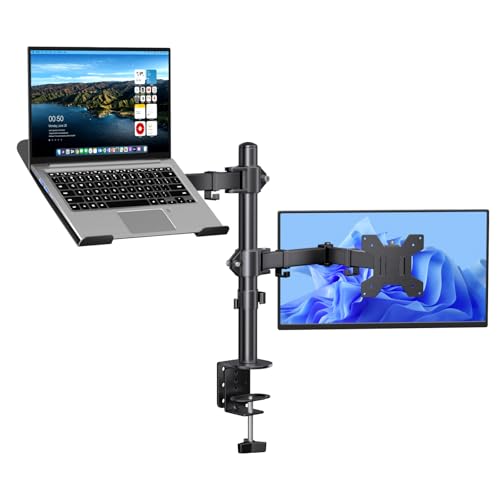
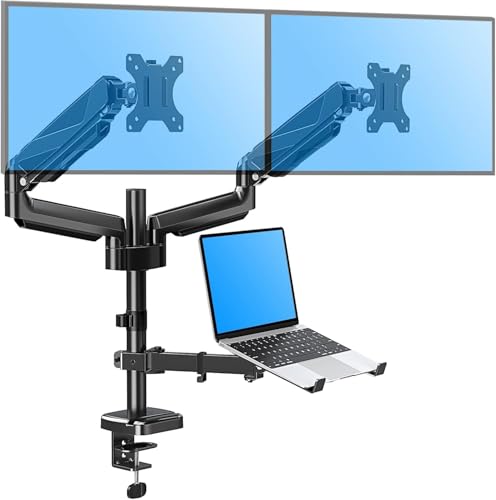

Weight Capacity and Counterbalance Springs
Weight capacity serves as the foundational metric when choosing any multi-display mounting system. Each mechanical or gas spring arm must comfortably bear the downward gravitational pull of your specific screen without sagging over time. If a display exceeds the arm rating by even a fraction of a pound, the internal tension cylinder will fail to hold its position.
To calculate your true load, check the manufacturer weight of your monitor without its original factory desktop base attached. A screen that weighs twenty pounds on your desk might only register fourteen pounds once you remove its heavy cast-iron foot. Make sure your notebook weight, including any rugged protective shell or docking dongles, stays within the rated limits of the laptop platform.
Gas spring mechanisms provide smooth, fluid motion that lets you nudge screens into position with a single fingertip. However, mechanical friction joints clamped to a central steel pole offer unmatched long-term rigidity for permanent static workstations. Choose gas-assisted arms if you frequently push screens back for collaborative desk meetings, or stick with solid mechanical collars for set-and-forget stability.
Display Size Compatibility and Wingspan
Stated diagonal screen size limits are directly linked to the physical reach and wingspan of the articulated metal arms. When a mount claims compatibility for dual twenty-seven-inch displays, it assumes standard sixteen-by-nine aspect ratio bezels placed side by side. Exceeding these diagonal dimensions prevents you from angling the monitors inward to form a comfortable ergonomic curve.
Curved panels require special consideration because their deeper chassis shifts the center of gravity outward away from the VESA bracket. This outward shift increases the rotational leverage on the tilt hinge, making screens prone to face-planting forward unexpectedly. Always subtract two inches from the rated screen limit if you intend to install aggressive one-thousand-R curved gaming panels.
Measure the total linear horizontal width of your desk before committing to a wide triple-arm configuration. If your desk sits directly against an office wall, long articulated arms may hit the drywall when pushed backward, forcing displays uncomfortably close to your face. Ensure the arm segments can fold neatly behind the screens or clear the rear boundary without obstruction.
Desktop Mounting Style: C-Clamp vs. Grommet Base
Securing a triple-display load requires a rock-solid mechanical anchor to prevent your entire setup from tipping forward onto the floor. Heavy-duty C-clamps slide around the outer edge of your desktop and tighten from underneath using threaded hand bolts. This approach preserves your furniture finish without requiring power drills or permanent alterations to the tabletop.
Grommet mounting offers an even cleaner aesthetic by passing a structural bolt directly through an existing desktop cable access hole. This method centers the immense downward clamping force evenly across the core of the desk rather than stressing the back perimeter edge. If your desk has built-in ports, integrating desk grommet outlets and power options can streamline both your mounting base and your electrical supply.
Check the maximum grip range of the clamping hardware against the exact thickness of your desktop slab. Most standard mounts accommodate surfaces ranging from half an inch up to three and a half inches thick. Ensure there are no crossbars, privacy skirts, or motorized motor housings blocking the clamp pads underneath the work surface.
Laptop Tray Dimensions, Clamping, and Thermal Dissipation
The laptop cradle functions as the third active screen holder in a high-efficiency triple-display workstation. A quality steel or aluminum tray must feature ventilated perforations across its baseplate to promote passive cooling under demanding processing tasks. Solid metal trays without cutouts trap rising heat, which forces your laptop internal cooling fans to spin at maximum velocity.
Retention tabs and safety clips keep your expensive mobile machine anchored during rapid arm adjustments or desk bumps. High-end trays utilize adjustable spring-loaded side clamps padded with non-marring silicone to secure the notebook chassis firmly in place. Verify that these side grips do not block crucial USB-C charging ports, audio jacks, or side-mounted power switches on your specific laptop.
Bottom lips along the front edge of the tray stop the laptop from sliding downward when tilted at aggressive viewing angles. If you plan to type directly on your machine keyboard rather than an external board, look for low-profile front lips that will not dig into your wrists. Trays with modular VESA backplates also allow you to swap the tray out for a third monitor in the future.
Articulation, Tilt, and Rotation Range
True ergonomic comfort depends on your ability to fine-tune the focal distance and visual angle of every display individually. Tilt mechanics should deliver at least forty-five degrees of upward adjustment to eliminate harsh reflections caused by overhead office fixtures. Swivel joints allow the outer screens to wrap around your peripheral vision, reducing continuous neck rotation during eight-hour shifts.
Full three-hundred-and-sixty-degree screen rotation lets you pivot a secondary screen into portrait orientation whenever you analyze long coding scripts, data sheets, or vertical documents. When evaluating our ultrawide arm vs laptop mount analysis, consider how rotation capabilities alter your digital workflow. A portrait screen alongside a landscape primary screen and a low laptop creates an exceptionally versatile command center.
Inspect the resistance tensioners located at each pivot elbow and tilt knuckle before completing your installation. Quality mounting kits include hex-key adjustment screws that allow you to balance arm firmness against screen weight precisely. Correct tension ensures your monitors stay perfectly level without drooping or bouncing every time you type vigorously.
Vertical Pole Height and Ergonomic Screen Stacking
Center pole height dictates how high you can elevate your screens above the desk surface, which directly impacts cervical spine alignment. An extra-tall vertical pole measuring over thirty inches allows stacked monitor arrangements where one screen hovers directly over the other. This vertical stacked orientation saves substantial horizontal desk width and keeps all monitors centered on your visual axis.
Standard seventeen-inch poles are ideal for panoramic side-by-side configurations where the laptop sits directly beneath or adjacent to the primary screens. Tall users, particularly those working at sit-to-stand desks, should prioritize extended center columns to ensure displays reach eye level when standing. Position your screens so the top third of the viewing area sits directly level with your natural resting gaze.
Independent height collars along the pole allow you to position the laptop tray lower than the flanking desktop monitors. This staggered height alignment creates a natural focal pathway, letting you monitor communication channels like Slack below your primary workspace. Look for tool-free quick-release collars if you anticipate modifying screen heights on a regular basis.
| Mounting Configuration | Recommended Screen Range | Weight Rating Per Arm | Primary Ergonomic Advantage |
|---|---|---|---|
| Gas Spring Articulated | 13″ – 27″ Displays | 17.6 – 19.8 lbs | Effortless dynamic adjustment for multi-user desks |
| Tall Pole Mechanical | 17″ – 32″ Displays | 19.8 – 22.0 lbs | Supports vertical screen stacking and tall standing users |
| Compact Dual-Link | 13″ – 27″ Displays | 15.4 – 18.0 lbs | Shallow profile that saves rear clearance against walls |
| Heavy-Duty Wide Span | up to 32″ Displays | 17.6 – 19.8 lbs | Accommodates large widescreen monitors with broad curve |
Integrated Cable Management and Clutter Control
A triple-screen workstation requires at least six dedicated cables running to your displays, dock, and power bricks. Without engineered cable channels, this tangle of wiring hangs in full view and catches on arm joints during articulation. High-end mounts integrate hollow composite raceways or heavy-duty snap-on clips along every segment of the metal arms.
Route your cables with generous slack around the pivoting elbows to avoid putting strain on delicate display ports. If you pull cords too tightly, swinging an arm forward could bend HDMI pins or snap video cables entirely. Pairing your monitor setup with standing desk cable trays underneath the tabletop creates a completely concealed wire routing system.
Center columns should feature internal routing pathways or dedicated base clips to guide grouped wiring down toward the power outlet. Detachable plastic clips that slide onto steel tubes keep the vertical drop clean and orderly. This thoughtful arrangement protects your electronics from accidental disconnections when adjusting the height of your sit-stand workstation.
Desk Material Strength and Structural Reinforcement
The concentrated pressure exerted by a dual-monitor and laptop mount can crush weak desk surfaces if not properly distributed. Solid hardwoods like oak, walnut, and birch easily support the focused clamp torque without flexing or denting. However, inexpensive honeycomb paperboard and hollow-core laminates will compress rapidly under the weight of three elevated devices.
If you must install a triple mount on a lightweight honeycomb desk, install a heavy-gauge steel reinforcement plate between the clamp and the wood. This plate spreads the clamping footprint across a broader surface area, preventing structural deformation and cracking over time. Never attach heavy clamp mounts to tempered glass desktops without specialized manufacturer-approved reinforcement hardware.
Inspect the underside of your desk to confirm the metal clamp rests completely flat against the structural substrate. Beveled edges, rounded bullnose moldings, and metal perimeter frames can prevent the bracket from seating flush, creating dangerous wobbling. A level, firmly seated clamp bracket guarantees your expensive computer hardware remains perfectly secure.
Detachable VESA Plates and Assembly Logistics
Mounting three heavy screens simultaneously can quickly become an awkward and frustrating solo assembly project. Detachable VESA plates make installation drastically safer by separating the hardware bracket from the structural supporting arm. You simply bolt the small steel plate to the back of your monitor while it rests safely on your bed or carpet.
Once the brackets are fastened, you lift the bare monitor and slide it directly into the locking receiver on the arm elbow. A secondary retention screw or push-latch locks the plate in place, eliminating the danger of the display sliding off accidentally. Standard seventy-five and one-hundred-millimeter hole patterns cover virtually all contemporary office and gaming computer displays.
Check the hardware kit for included metric screw assortments and rubber spacers to accommodate screens with recessed mounting areas. Some monitor models position their VESA holes deep inside a circular cavity that requires extra-long bolts and standoffs. Quality manufacturers include organized blister packs containing all necessary metric hardware, reducing unexpected trips to the local hardware store.
Why You Should Trust Us
Our review process relies on methodical analysis of structural design, engineering tolerances, and real-world owner experiences across diverse desktop environments. We gather verified mechanical specifications, stress-test data, and build material reports to identify which mounting systems provide reliable long-term durability. We cross-reference manufacturer claims against hundreds of real setup photos to evaluate true arm stability and real-world joint sag.
We do not accept paid manufacturer promotions or promotional review units designed to sway our editorial assessment. Every product comparison is constructed purely on mechanical utility, weight-bearing performance, articulation fluidity, and overall value. This transparent methodology ensures you receive objective, practical purchasing guidance tailored to real productivity demands.
Our technical guides receive regular seasonal updates to reflect emerging monitor form factors, heavier display standards, and evolving desk designs. Whenever hardware brands introduce reinforced brackets or revised spring systems, we re-evaluate our ratings to keep your workspace setup current. You can rely on our systematic assessments to build an office environment that genuinely improves your daily posture.
Final Thoughts
Selecting the ideal triple-display mounting system depends on the physical dimensions of your screens and your daily workflow requirements. For an optimal balance of dynamic flexibility and smooth positioning, we recommend the MOUNT PRO Dual Monitor and Laptop Mount for Max. Its gas spring engineering allows effortless daily adjustment, making it a standout choice for dynamic professionals who shift positions frequently.
If you manage your daily computing tasks on larger panels that demand extra horizontal reach, look no further than the HUANUO Dual Monitor and Laptop Mount for Max 32”. This heavy-duty system effortlessly supports twin thirty-two-inch screens alongside a seventeen-inch mobile workstation with zero structural wobble. Its rugged clamp design and high weight capacity provide rock-solid support for creative editors and data analysts.
Shoppers outfitting a home workstation on a stricter budget will appreciate the high-value utility of the Afaloona Dual Monitor and Laptop Stand for 13-32″. This streamlined stand offers dependable steel durability, built-in cable clips, and generous pole height adjustment at a remarkably accessible entry point. It cleanly lifts clutter off your desk surface without requiring a complicated installation procedure.
Before making your final choice, measure your work surface thickness and map out where your cords and power strips will run. You can explore additional ergonomic tips and setup recommendations in our ergonomic workspace guides. Upgrading your visual workstation setup will immediately boost your workflow efficiency while protecting your back and neck from persistent fatigue.
Frequently Asked Questions
Can I use the Best Laptop Stands for Dual Monitors with curved screens?
Yes, most triple-display mounts readily accept curved monitors as long as the screens stay within the rated weight limit and utilize standard VESA mounting patterns. However, curved glass pushes the monitor center of gravity forward, which increases torque on the tilt knuckle. To maintain stability, choose a mount rated slightly above the bare weight of your curved panels.
How do I stop my monitor arm from sagging downward?
Monitor sag almost always occurs because the internal counterbalance spring tension has not been calibrated for the specific weight of your display. Locate the hex-key tension screw on the arm elbow and turn it toward the plus symbol to tighten the internal spring. Continue adjusting until the screen floats weightlessly at your desired height without drifting downward.
What should I check before installing a mount on a glass desk?
Never attach a heavy multi-screen clamp directly to an unreinforced glass desk because concentrated point pressure can shatter the tempered panel. You must install a specialized steel reinforcement plate kit to distribute the downward clamping load across a wider surface area. Alternatively, select a standalone free-standing base mount that rests flat on the glass without edge tension.
Can the laptop tray be removed to mount a third monitor later?
Most premium dual monitor and laptop stands connect their notebook trays to a standard seventy-five or one-hundred-millimeter VESA bracket plate. This modular connection allows you to detach the laptop tray in seconds and bolt on a third computer monitor instead. Check the product specifications to confirm the notebook arm uses a standard VESA plate interface.
What is the top-rated option among Best Laptop Stands for Dual Monitors in 2026?
The highest-rated solutions in 2026 combine gas spring articulation for the monitors with a stable, perforated steel laptop shelf. Systems with dual mounting methods, such as both C-clamp and grommet options, provide the greatest long-term versatility across different desk types. Look for models supporting up to twenty pounds per arm to future-proof your multi-screen setup.
Do monitor arms shake while typing vigorously at a standing desk?
Minor screen bounce can happen if your standing desk frame lacks structural rigidity or if the clamp bracket is loose. To minimize vibration, ensure the desk clamp is tightened down completely and keep articulated arms folded closer to the central pole. Using an external keyboard on your desktop rather than typing directly on the elevated laptop tray also eliminates screen wobble.
Will a C-clamp damage the surface finish of my expensive wood desk?
Quality desk mounts feature non-slip rubber or thick EVA foam pads on both the upper and lower clamp surfaces to prevent scratches. If you own an expensive solid wood desk, you can slip a thin piece of protective felt or leather between the bracket and the wood. This soft barrier protects the varnish from pressure dents without sacrificing any clamping friction.
How do I calculate the correct focal distance for my dual screens?
A reliable ergonomic guideline is to place your primary monitor roughly an arm length away from your face while sitting upright. When you extend your arm straight forward, your fingertips should lightly graze the surface of the display glass. Angle your secondary monitor and elevated laptop inward slightly so your eyes can scan across all three screens without excessive head rotation.
Are these multi-screen mounts compatible with Apple MacBooks?
Yes, the laptop trays on these mounts support MacBook Air and MacBook Pro models ranging from thirteen up to sixteen inches in size. Make sure your Thunderbolt or USB-C docking hub cables are long enough to reach the elevated tray height comfortably. For more workstation hardware ideas, browse our uncategorized office gear archive.
Can I position one of my monitors in portrait mode while using a laptop stand?
Nearly all articulated monitor arms feature three-hundred-and-sixty-degree rotational VESA plates that allow full vertical portrait orientation. Setting a secondary screen vertically is especially useful for reading legal briefs, reviewing long programming code, or tracking social media streams. Simply verify that your video and power cords have adequate length to rotate without snagging.