Perch stools are one of the most misunderstood pieces of ergonomic seating on the market. They look like a cross between a bar stool and a leaning rail, and most people who see one for the first time have no idea how to sit on it, adjust it, or even why they’d want one over a regular chair. If you’ve been told a perch stool could help your posture, your circulation, or your energy levels at work, this guide walks you through everything a beginner needs to know before buying and using one.
By the end of this guide you’ll understand what a perch stool actually does, how it differs from a standard task chair or a saddle stool, how to size and adjust one correctly, and how to use it safely so you get the ergonomic benefits without straining your back or legs.
What Is a Perch Stool, Exactly?
A perch stool is a tall, narrow, often backless seat designed to support you in a semi-standing position rather than a full sit. Instead of settling your full body weight onto the seat the way you would on an office chair, you “perch” against it — your hips and thighs bear part of your weight while your legs still do some of the work of standing. The seat is usually angled slightly forward or has a rounded, saddle-like profile to encourage this posture.
Perch stools are popular in environments where workers move between sitting and standing frequently: reception desks, retail checkout counters, salons, laboratories, drafting tables, and increasingly, home offices paired with a standing desk. They’re not meant to replace a full-support chair for long, uninterrupted sitting — they’re meant to bridge the gap between sitting and standing.
Who Actually Benefits From a Perch Stool?
Perch stools aren’t for everyone, and understanding who benefits helps you decide if one belongs in your setup.
- Standing desk users who want occasional support without fully sitting down and losing the benefits of an upright posture.
- Reception and front-desk staff who need to greet visitors while still having a moment of rest between interactions — many businesses pair a perch stool with office chairs for reception areas to give staff both options depending on the task.
- Salon and spa professionals who are on their feet for hours and need brief relief without sitting down fully between clients — a role often covered by best office chairs for salons for longer seated services.
- Lab technicians and drafters who need to lean in over a counter or table at a height that a normal chair can’t reach comfortably.
- Anyone with lower back sensitivity who finds that full sitting for hours aggravates discomfort, since perching keeps the spine more upright and shifts some load to the legs.
Perch Stool vs. Saddle Stool vs. Standing Stool
Beginners often confuse perch stools with two closely related products. Knowing the difference will help you buy the right one.
Perch Stool
A perch stool has a flatter or gently angled seat, usually round or oval, set at a height between a standard chair and full standing height. It’s built for brief support, not extended sitting.
Saddle Stool
A saddle stool has a split, horse-saddle-shaped seat that opens the hip angle more aggressively. It’s designed for longer periods of active sitting and is common in dental, medical, and tattoo studios where precise posture control matters for hours at a time.
Standing Stool (Sit-Stand Stool)
A standing stool, sometimes called a leaning stool, is typically taller and more minimal, often just a small platform on a pole with a wide base. It offers the lightest touch of support and is meant purely to take pressure off your legs during standing work, not to be sat on in the traditional sense.
If you’re comparing all three types side by side before buying, browsing the full range of Perch Stools available is a good starting point, since most retailers group these variants together.

Key Features to Look For as a Beginner
Adjustable Height
Almost every perch stool worth buying has a pneumatic gas-lift lever, the same mechanism found on office chairs. Height range matters more here than on a normal chair because you need the seat to sit correctly relative to your desk or counter height, not just relative to your own leg length.
Seat Shape and Padding
Look for a seat that’s contoured, not flat. A slight forward tilt or waterfall front edge (where the front of the seat curves downward) reduces pressure on the back of your thighs, which matters a lot when you’re perching rather than fully sitting. Padding should be firm rather than plush — a soft cushion actually works against the perching posture by letting you sink in too far.
Base Stability
A wide five-point base with locking or non-locking casters (depending on your flooring) keeps the stool stable while you shift your weight. Avoid narrow four-leg bases unless the stool is meant to stay in one fixed spot, like at a reception counter.
Footrest Ring
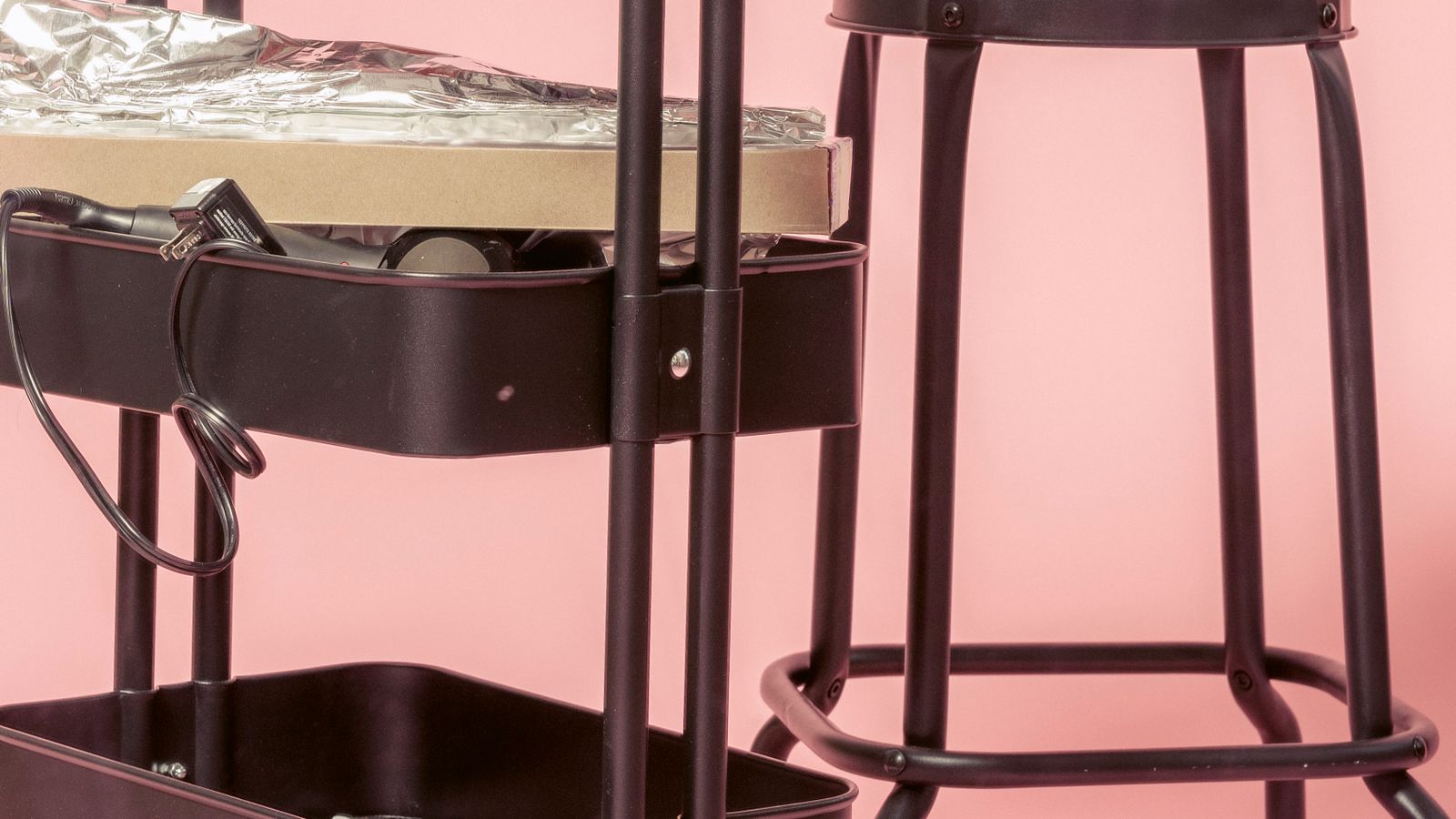
Many perch stools include a circular footrest ring around the base. This isn’t decorative — it gives your feet a place to rest when the seat is set high, which takes pressure off your lower back and improves circulation compared to letting your feet dangle.
Tilt or Rock Mechanism
Higher-end perch stools include a small amount of seat tilt or rock, letting you shift your pelvis slightly forward and back. This subtle movement is actually one of the biggest ergonomic advantages over a static stool, since it encourages small postural changes throughout the day instead of locking you into one position.
How to Choose the Right Height Range
Getting the height wrong is the single most common mistake beginners make with a perch stool. As a general rule:
- The seat should sit roughly 8 to 12 inches below your work surface when you’re standing next to it.
- Your feet should be able to touch the floor or the footrest ring without your knees rising above your hips.
- If you’re using the stool at a standing desk, measure your desk’s standing height first, then subtract that gap to find the seat height range you need.
Most perch stools list an adjustable range, commonly somewhere between 24 and 34 inches. If your desk is on the taller side, double-check the stool’s maximum height before buying — some budget models top out lower than tall users expect.
How to Sit on a Perch Stool Correctly
Using a perch stool properly is different from sitting in a normal chair, and it takes a little practice.
- Set the height first. Adjust the seat so your hips are just slightly above the height they’d be if you were sitting fully. You want roughly 60 to 70 percent of your body weight resting on the seat, with the rest supported by your legs.
- Position your feet. Place your feet flat on the floor or on the footrest ring, shoulder-width apart, so your legs form close to a 90 to 110 degree angle at the knee.
- Lean back gently against the seat. Don’t hover above it — let your body weight settle into the contour so your lower back stays naturally upright rather than curved.
- Keep your spine tall. A perch stool has no backrest, so your core does a bit of the work a chair’s back support normally does. Avoid slouching forward over your desk.
- Shift your weight periodically. Every 15 to 20 minutes, rock slightly forward and back or stand up fully for a moment. The perch stool works best as part of a movement routine, not a fixed posture held all day.
- Alternate with full standing or sitting. Treat the perch stool as one position among several throughout your day rather than your only seat.
Common Beginner Mistakes
- Setting the seat too low. This turns the perch stool into an uncomfortable, unstable version of a regular chair, defeating its purpose.
- Sitting fully instead of perching. If you find yourself putting all your weight on the seat for long stretches, the height is probably too low, or you may actually need a full task chair instead.
- Ignoring the footrest ring. Letting your feet dangle for hours can cause circulation issues and lower back strain — always use the ring or the floor.
- Staying in one position too long. A perch stool is meant to encourage movement. Sitting rigidly still on one for hours removes most of its ergonomic benefit.
- Buying based on looks alone. Many inexpensive perch stools skip the contoured seat or forward tilt that makes the posture comfortable — always check the seat shape before buying, not just the price.
Perch Stool Budget Guide
Prices for perch stools vary widely depending on materials and mechanisms.
Entry-Level ($60–$120)
Basic pneumatic height adjustment, vinyl or fabric seat, simple five-star base. Fine for occasional use or light-duty settings like a home office corner.
Mid-Range ($120–$250)
Better padding, waterfall seat edge, sturdier base, sometimes a footrest ring and tilt function. This range covers most reception, retail, and salon use cases well.
Premium ($250 and up)
Commercial-grade construction, adjustable seat depth or tilt tension, medical-grade upholstery (common in clinical settings), and longer warranties. Worth it for all-day professional use, especially in salons or clinics where the stool sees heavy daily wear.
Maintenance and Care Tips
Perch stools take less maintenance than a full office chair, but a few habits extend their lifespan:
- Wipe down the seat weekly, especially in salons or clinical settings where spills and product residue are common.
- Check the gas-lift cylinder periodically — if the seat starts sinking under normal weight, the cylinder likely needs replacing.
- Tighten base bolts every few months, since frequent standing and sitting transitions can loosen hardware over time.
- Replace casters if the stool is used on hard flooring daily; wheels wear out faster on tile or concrete than on carpet.
Frequently Asked Questions
Is a perch stool good for bad posture?
Yes, when used correctly. Because there’s no backrest to slouch against, a perch stool naturally encourages a more upright spine. However, it works best as one part of a varied routine that includes standing and full sitting, not as a permanent fix on its own.
Can I use a perch stool as my only office chair?
It’s not recommended for full workdays of continuous sitting. Perch stools are designed for shorter, active periods. For long stretches of focused desk work, pair it with a proper task chair and alternate between the two.
Do perch stools work with any desk height?
Most adjustable perch stools have a wide enough height range to work with both standard desks and standing desks, but always check the maximum and minimum height listed by the manufacturer against your desk’s height before buying.
Are perch stools comfortable without a backrest?
They can be, as long as the seat has a contoured, waterfall-edge design and you’re perching rather than fully sitting. Comfort depends heavily on correct height adjustment and using the footrest ring.
What’s the difference between a perch stool and a regular bar stool?
A bar stool is built purely for casual seating at a fixed height, usually with a flat seat and no ergonomic contouring. A perch stool is engineered specifically for supportive, active sitting during work, with adjustable height and a seat shape designed to encourage good posture.
Final Thoughts
A perch stool isn’t a replacement for your main office chair, but it’s a genuinely useful tool for anyone who splits their time between sitting and standing throughout the day. The key to getting real value from one is setting the height correctly, choosing a model with a contoured seat and footrest ring, and using it as part of a movement routine rather than a fixed position you hold for hours. Once you’ve got the basics down, browsing dedicated Perch Stools picks, along with related seating like office chairs for reception areas and best office chairs for salons, will help you find the right combination of seats for your specific workspace.