

Fast games benefit from more than raw frame rate, especially when distracting bezels interrupt your view across a wide desk setup. Best Frameless High Refresh Rate Monitors combine smoother motion, cleaner multi-screen arrangements, and modern features for gaming, work, and entertainment.
We compared 7 models from brands including LG, KTC, ASUS and more, covering affordable Full HD displays, sharper QHD screens, curved ultrawide panels, and extremely fast gaming options. This guide helps you avoid paying for refresh speed your computer cannot use while identifying the specifications that improve everyday viewing.
Bezel design is only one part of the decision. Before choosing a screen, consider resolution, graphics hardware, adaptive synchronization, panel response, ergonomics, ports, and eye comfort, then compare those needs with your desk and typical games. A related ultrawide arm, glare filter, and laptop mount guide can also help plan the surrounding workspace.



Best Frameless High Refresh Rate Monitors Buying Guide
1. Refresh Rate and Realistic Frame Rates
Refresh rate describes how many times a monitor can update its image each second. Higher values make camera movement, scrolling, and cursor motion appear more fluid, while reducing the visible gap between your input and the next displayed frame.
Compare the monitor’s maximum refresh rate with the frame rates your graphics card can actually produce. A 240Hz display is most useful when your system regularly reaches very high frame rates, whereas a 120Hz or 180Hz panel may deliver better value for demanding games.
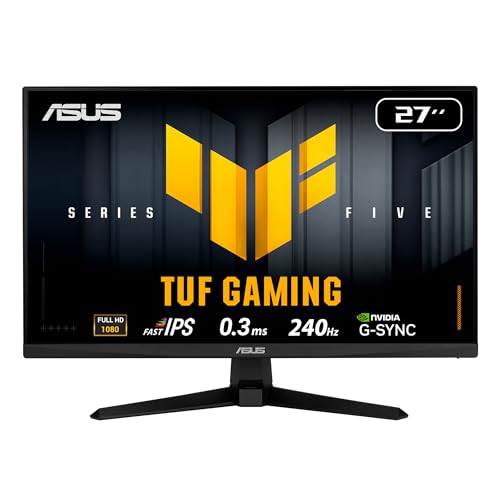
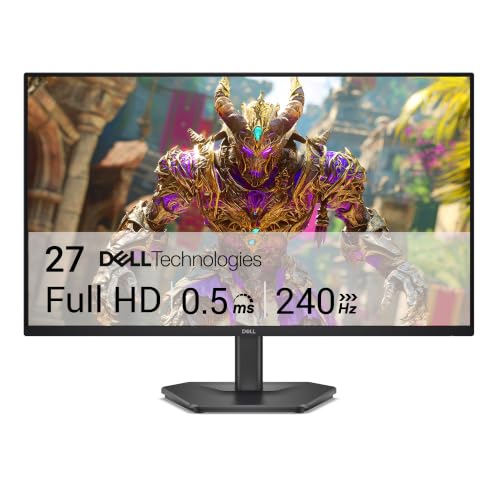
Competitive players may prioritize the ASUS TUF VG279QM5A 27 Inch 1080p 240Hz Fast IPS or Dell 27 240Hz Gaming Monitor – SE2726HG. For mixed gaming and productivity, a QHD screen with 120Hz to 180Hz often balances clarity and smoothness more effectively.
2. Resolution, Screen Size, and Pixel Density
Resolution determines how much detail the display can show, while screen size affects viewing distance and workspace scale. Full HD remains practical for fast gaming at modest hardware requirements, but QHD produces noticeably sharper text, interfaces, and distant game objects.
At larger sizes, QHD generally maintains a denser, cleaner image than Full HD. The Samsung 27 inch Odyssey G5 and KTC 32 Inch 2K Monitor 120Hz offer more pixels than the Full HD alternatives, making them attractive for editing, office work, and visually detailed games.
Use a simple rule when comparing models: choose Full HD for maximum frame rates on affordable hardware, QHD for balanced sharpness, and ultrawide QHD when horizontal workspace matters. Ensure your desk allows a comfortable viewing distance before selecting a larger panel.
3. Panel Technology and Image Quality
IPS panels are valued for broad viewing angles and consistent color, while curved panels can create a more enveloping perspective. Fast IPS designs also reduce motion problems without requiring the narrower viewing experience associated with some older gaming panels.
Look beyond marketing labels and compare color coverage, brightness, HDR support, and stated contrast features. The AOC model lists wide sRGB coverage, while the LG 32GS60QC-B Ultragear 32-inch Curved adds HDR10, a curved viewing profile, and a three-side virtually borderless design.
Color coverage does not automatically guarantee professional accuracy, because calibration and factory tuning also matter. For general gaming, prioritize motion and viewing comfort first; for creative work, select a model with dependable color coverage and enough adjustment control.
4. Response Time and Motion Clarity
Response time measures how quickly pixels change from one color or shade to another. Slow transitions can create ghosting behind moving objects, which is particularly distracting in shooters, racing games, and fast camera pans.
Compare response-time claims carefully because minimum figures may apply only under specific overdrive settings. Fast IPS models such as the ASUS display and Dell display advertise very quick response performance, but real results still depend on refresh rate, overdrive tuning, and the game’s frame pacing.
Choose an overdrive mode that removes trailing without producing bright inverse halos around moving objects. If possible, use a balanced setting first, then test dark scenes and high-contrast edges rather than selecting the fastest advertised mode automatically.
5. Adaptive Sync and Input Smoothness
Adaptive synchronization matches the monitor’s refresh timing to the graphics card’s changing frame rate. This reduces tearing and stuttering when performance fluctuates, producing a steadier image than a fixed refresh rate can provide.
FreeSync, FreeSync Premium, G-SYNC compatibility, and HDMI VRR can serve similar purposes, but supported ranges and connection requirements differ. The AOC, Samsung, ASUS, KTC, LG, and Dell options list synchronization features, so verify which input supports the desired range before purchasing.
Adaptive sync cannot create extra frames, and it does not replace a capable graphics card. Enable the feature in the monitor menu and graphics driver, then cap game frame rates slightly below the display’s upper range for steadier operation.
6. Frameless Design and Curvature
Frameless usually means a narrow bezel on three sides rather than literally having no border. The result is less visual interruption around the image, especially when two or more screens sit beside each other.
Flat displays are usually easier to align in a conventional multi-monitor arrangement, while curved screens can keep the edges closer to your natural viewing angle. The LG uses a pronounced 1000R curve, and the Sceptre offers a 1500R curved ultrawide format.
For a single screen, choose curvature based on viewing distance and personal preference rather than bezel language alone. For multiple screens, matching size, resolution, curve, and stand height matters more than choosing the narrowest advertised bezel.
7. Connectivity and Console Compatibility
Ports determine whether your computer, console, headset, and secondary devices can connect without adapters. DisplayPort is commonly useful for high refresh PC gaming, while HDMI supports consoles and many laptops.
Review the exact input version and its maximum resolution-refresh combination rather than counting ports alone. The Sceptre provides two HDMI ports and two DisplayPort inputs, while several other displays combine HDMI with DisplayPort for flexible desk arrangements.
Console users should confirm that the chosen screen accepts the console’s supported resolution and refresh modes. A monitor may advertise a high PC refresh rate but provide a different ceiling through HDMI, so check the connection you intend to use.
| Model | Resolution | Refresh rate | Useful distinction |
|---|---|---|---|
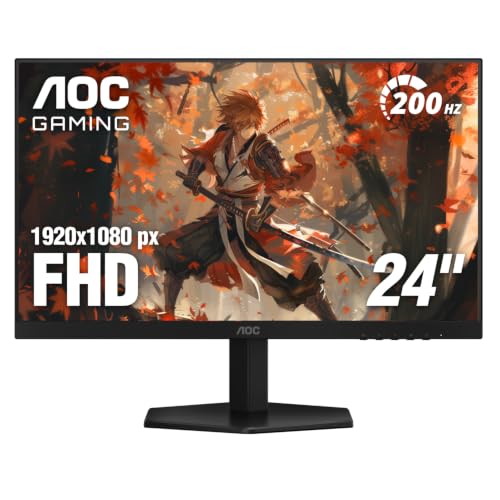
| AOC 24 inch Gaming Monitor FHD 200Hz IPS NVIDIA G-SYNC | Full HD | 200Hz | Compact frameless design and wide color coverage |
| Samsung 27 inch Odyssey G5 | QHD | 180Hz | HDR10 and adjustable ergonomic stand |
| ASUS TUF VG279QM5A 27 Inch 1080p 240Hz Fast IPS | Full HD | 240Hz | Fast IPS and ELMB SYNC |
| KTC 32 Inch 2K Monitor 120Hz | QHD | 120Hz | Large IPS screen with eye-care features |
| LG 32GS60QC-B Ultragear 32-inch Curved | QHD | 180Hz | 1000R curve and virtually borderless sides |
| Dell 27 240Hz Gaming Monitor – SE2726HG | Full HD | 240Hz | Fast IPS and TÜV eye-comfort certification |
| New! Sceptre Curved 34-inch Prime Gaming Monitor | Ultrawide QHD | Up to 240Hz | Wide workspace, speakers, and multiple inputs |
8. Ergonomics, Mounting, and Desk Fit
A high-refresh display is less useful when poor positioning causes neck, shoulder, or eye discomfort. Check whether the stand supports tilt, height, pivot, or swivel adjustments, and measure the base before placing it on a crowded desk.
The Samsung includes tilt, pivot, and height adjustments, while the KTC supports tilt and VESA mounting. VESA compatibility can be more important than a basic stand when you use a monitor arm or need to reclaim desk depth.
Position the top of the usable screen near eye level and keep viewing distance appropriate for its size. If you are building a broader workstation, our guide to standing desk cable trays can help keep high-bandwidth display cables organized.
9. Eye Comfort and Long-Session Features
Long gaming and work sessions place demands on brightness, flicker behavior, viewing distance, and ambient lighting. Low-blue-light modes and flicker-reduction systems can make extended use more comfortable, although they cannot compensate for excessive brightness or poor posture.
The KTC lists flicker-free and low-blue-light features, while the Dell carries TÜV Rheinland three-star eye-comfort certification. These features are useful comparison points, but certification details should be considered alongside adjustability and your room’s lighting.
Start with moderate brightness and increase it only when reflections make the image difficult to see. Take regular distance breaks, keep the display free from direct glare, and use a warmer color mode during late-night noncompetitive sessions.
10. Speakers, Controls, and Extra Gaming Tools
Secondary features can improve convenience, but they should not outweigh resolution, motion quality, and compatibility. Built-in speakers are useful for casual audio, while a headphone output can simplify switching between devices.
The Sceptre includes integrated speakers, and the ASUS provides mouse-based DisplayWidget Center controls. The LG adds gaming modes, Dynamic Action Sync, Black Stabilizer-style functionality, and an on-screen crosshair or counter approach depending on its available settings.
Prioritize extras that match your routine rather than selecting the longest feature list. A competitive player may appreciate motion tools, whereas an office user may gain more from flexible inputs, speakers, height adjustment, and reliable color.
Why You Should Trust Us
We shortlisted these displays by comparing published specifications, verified product features, screen formats, refresh-rate tiers, panel descriptions, synchronization support, and connection options. We also considered how each model fits a distinct use case instead of treating maximum refresh rate as the only measure of quality.
Our methodology separates directly stated features from assumptions. We do not claim physical testing where the supplied product data does not support it, and we avoid presenting advertised response times as guaranteed real-world measurements across every game.
The comparison can remain useful as specifications and availability change because the article uses the site’s product database for the displayed lineup. We recommend checking the current listing, supported inputs, included cables, and return terms before completing your purchase.
Final Thoughts
Our best overall choice is the Samsung 27 inch Odyssey G5 (G51F) Series QHD (1440P) because it combines QHD detail, a fast 180Hz refresh rate, HDR10, adaptive synchronization, and a flexible stand. It suits gamers who want sharper visuals without moving to an especially large or ultrawide chassis.
Our best value direction is the AOC 24 inch Gaming Monitor FHD 200Hz IPS NVIDIA G-SYNC. Its compact Full HD format, 200Hz motion, Adaptive-Sync support, broad color coverage, and three-sided frameless design make it a strong match for budget-conscious competitive setups.
For the fastest Full HD gaming experience, consider the ASUS TUF VG279QM5A 27 Inch 1080p 240Hz Fast IPS. Its Fast IPS panel, very quick stated response, G-SYNC compatibility, FreeSync Premium, and ELMB SYNC features target players who value motion clarity and immediate control.
If your priority is immersion and horizontal workspace, the New! Sceptre Curved 34-inch Prime Gaming Monitor offers an ultrawide format, curved screen, high refresh potential, speakers, and several inputs. For more office-focused accessories, browse the Guides category before finalizing your desk arrangement.
FAQs
What makes a monitor frameless?
A frameless monitor generally uses very narrow bezels on three sides, creating a cleaner image boundary. It is especially helpful for multi-monitor setups, although the panel still has a small physical border and may show a gap between screens.
Is 240Hz noticeably better than 180Hz?
The difference can be visible to competitive players who maintain very high frame rates and value lower frame intervals. For many users, resolution, adaptive sync, response tuning, and consistent performance matter more than moving from 180Hz to 240Hz.
What graphics card do I need for a high refresh monitor?
The required graphics card depends on the game, resolution, quality settings, and target frame rate. Full HD generally requires less rendering power than QHD or ultrawide QHD, so choose hardware capable of reaching the refresh range you intend to use.
Is QHD worth choosing over Full HD?
QHD is usually worthwhile on larger screens or when you want sharper text and more detailed game worlds. Full HD can be preferable when competitive frame rates and lower hardware demands take priority.
Do all high refresh monitors work with consoles?
Many can connect to consoles, but the console determines the maximum supported resolution and refresh mode. Confirm the HDMI capability and supported console settings rather than relying on the monitor’s maximum PC refresh specification.
Should I choose a curved or flat gaming monitor?
Curved screens can make large or ultrawide displays feel more immersive by bringing the edges toward you. Flat models are often simpler for conventional multi-monitor alignment, so desk layout and viewing distance should guide the decision.
Does adaptive sync reduce input lag?
Adaptive sync primarily reduces tearing and stutter when frame rates change, which can make control feel more consistent. It does not automatically reduce every source of input lag, so low-latency modes, frame pacing, and game settings remain relevant.
Are IPS monitors good for fast gaming?
Modern Fast IPS monitors can deliver quick pixel transitions, broad viewing angles, and strong color performance. Actual clarity varies with overdrive tuning, refresh rate, and individual implementation, so specifications should be compared rather than generalized.
What is the top-rated option among Best Frameless High Refresh Rate Monitors in 2026?
The lineup includes several highly rated specifications, but the right choice depends on resolution, size, and frame-rate goals. The Samsung is a balanced QHD option, while AOC, ASUS, and Dell focus more directly on fast Full HD play.
Can a high refresh monitor improve office work?
A higher refresh rate can make scrolling, pointer movement, and window dragging feel smoother during ordinary work. It will not improve document quality as much as resolution, text scaling, ergonomic adjustment, and comfortable brightness.


