
Government agencies and municipal departments handle relentless streams of paper applications, legal filings, and public records every day. Transitioning these physical files into secure digital archives requires specialized hardware capable of reliable feeding, rapid image processing, and tight enterprise security. Choosing the right workstation scanner prevents document backlog while protecting sensitive citizen information from unauthorized exposure.
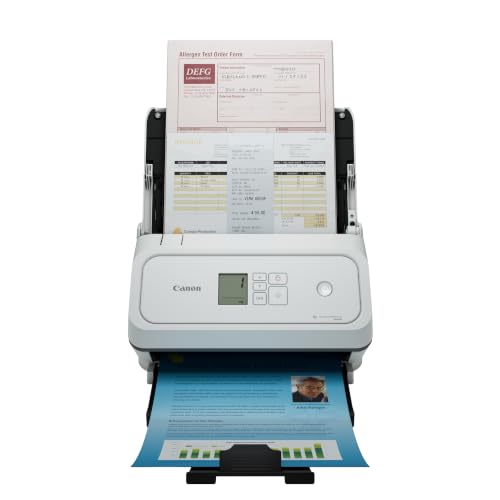
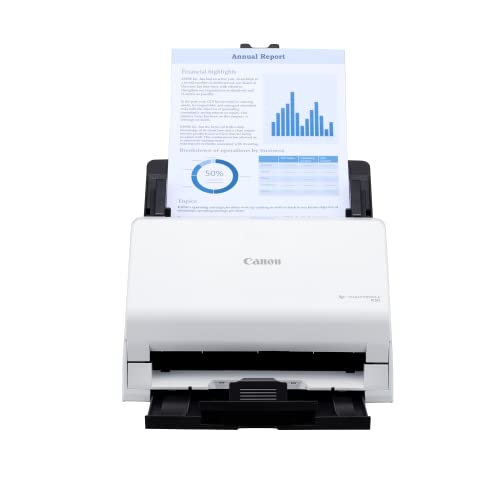
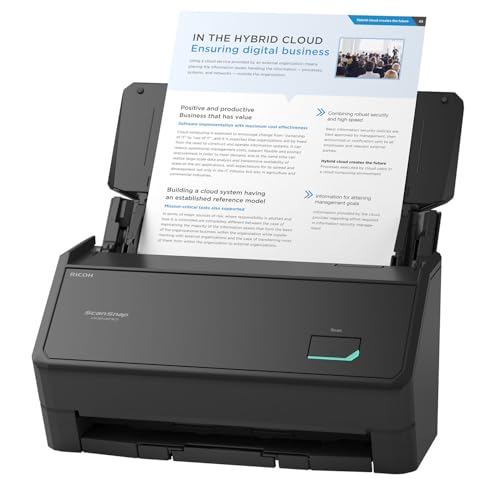
Modern public sector workflows demand equipment that integrates effortlessly with document management systems through standard industry drivers. Many departments struggle with frequent paper jams, incomplete multi-page scans, or software bottlenecks that slow down citizen service counters. Our updated September 2026 evaluation compares 10 dedicated desktop units across reputable brands like ScanSnap, Canon, Epson to identify dependable options for your office.
Whether your team digitizes historical archives or handles front-desk licensing, having the right capture tool makes all the difference in daily operational efficiency. You can explore our broader collection of office equipment guides to optimize every facet of your administrative workspace. Review the shortlisted options below to find the ideal capture hardware for your departmental requirements.



Daily Duty Cycle and Intake Volume
Daily duty cycle defines how many sheets a scanner can reliably process per business day without experiencing premature mechanical failure or roller degradation. Public sector offices often run multi-hour batch operations during audit seasons or public records digitization pushes. Selecting a unit rated well above your average daily intake prevents costly administrative downtime and constant maintenance requests.
Manufacturers measure throughput speed in pages per minute for single-sided sheets and images per minute for double-sided records. When evaluating scanner throughput, ensure that advertised speed ratings remain consistent when scanning in full color at 300 dots per inch. Many entry-level machines slow down substantially when image processing filters and optical character recognition engines run simultaneously.
A practical rule of thumb for administrative offices is to calculate your peak weekly intake and multiply it by two. If your department processes one thousand pages per day, choose a scanner with a daily duty cycle of at least three thousand sheets. This operating buffer ensures that transport rollers and internal bearings last throughout their projected multi-year service lifecycle.
Driver Architecture and Enterprise Software Compatibility
Enterprise document management repositories in public agencies rely on standardized communication drivers to ingest files directly from desktop scanners. TWAIN, ISIS, WIA, and SANE drivers serve as the critical bridge between your physical scanner hardware and backend records management databases. Scanners lacking dedicated TWAIN or ISIS drivers often force staff to perform cumbersome multi-step export procedures.
ISIS drivers provide the highest processing stability and batch indexing throughput for high-volume municipal archive installations. TWAIN drivers offer universal compatibility across virtually all commercial imaging programs and enterprise content management platforms. Before procuring equipment, verify whether your agency software requires certified driver compliance or proprietary vendor applications.
Agency technical teams should always confirm that manufacturer driver packages support locked-down operating systems and enterprise deployment scripts. Hardware that operates exclusively through consumer-focused cloud portals often violates municipal software installation guidelines. Standardized driver support ensures that your scanner fleet remains functional across multiple operating system upgrade cycles.
Hardware Security and Data Transmission Safeguards
Handling public records, identity documents, and tax filings requires rigorous security measures at every point of electronic capture. Scanners deployed in government offices must prevent unauthorized document caching on local internal solid-state memory modules. Secure hardware firmware should support enterprise authentication protocols and encrypted network transmission channels like SFTP and HTTPS.
Network-enabled desktop scanners should feature administrative access locks that prevent staff from transmitting records to unapproved external cloud destinations. Triple-layer security architectures protect physical device access, active network connections, and transmitted payload data against interception. Look for devices that allow IT managers to disable unnecessary wireless radios and USB mass storage modes remotely.
When selecting scanners for public intake counters, choose models with physical Kensington lock slots to prevent hardware theft. Ensure that device memory automatically purges image buffer data immediately after file transmission completes successfully. These combined precautions protect citizen confidentiality and satisfy government data protection mandates.
Optical Character Recognition and Searchable Formats
Optical character recognition software converts scanned physical letterforms into editable and machine-searchable digital text layers. Public records custodians rely on searchable PDF files to satisfy Freedom of Information Act requests rapidly. High-precision character extraction algorithms eliminate manual indexing time and make dense legal files instantly searchable by keyword.
Accurate character recognition depends heavily on optical resolution, sensor quality, and intelligent background contrast adjustment. Top-tier capture software can generate PDF and PDF-A archival files that comply with permanent government digital preservation standards. Verify that the included conversion software supports conversion directly into structured formats like Microsoft Word and Excel.
Test optical character recognition accuracy against degraded historical records, faint dot-matrix prints, and handwritten administrative forms. High-quality scanner software packages apply automated thresholding to separate faint ink strokes from yellowed background paper. This capability preserves vital historical data that basic consumer desktop utilities often obscure or discard entirely.
Ultrasonic Multi-Feed Detection and Paper Handling
Multi-feed errors occur when two overlapping pages pass through the scanner transport rollers simultaneously without detection. In a government setting, a missed page can omit vital evidence from a court docket or lose an application attachment. Ultrasonic sensors detect air gaps between overlapping sheets to halt paper intake instantly before data loss occurs.
Advanced document feeders combine ultrasonic wave sensors with active separation roller assemblies to handle mixed paper weights smoothly. Look for dynamic skew correction technology that mechanically straightens crooked sheets before they enter the optical imaging path. Robust feeding systems reduce manual paper preparation time and eliminate frustrating document jams.
For operations that process documents with attached adhesive notes or taped receipts, choose scanners with intelligent multi-feed bypass options. This feature allows operators to confirm intentional overlaps without aborting the entire multi-page batch. Reliable paper handling preserves original paper integrity while keeping departmental scanning queues moving efficiently.
Automated Image Enhancement and De-skewing
Raw document scans often suffer from punch hole shadows, skewed margins, folded corners, and distracting background bleed-through. Built-in image enhancement processing corrects these visual imperfections automatically before sending the digital file to storage. Automated blank page deletion removes unprinted reverse sides to keep overall digital archive file sizes compact.
Hardware-level image processing performs color dropout to remove colored background lines from pre-printed government carbon forms. This feature isolates critical handwritten user entries and improves backend optical character recognition precision substantially. Automatic orientation detection rotates upside-down pages correctly regardless of how the physical stack was loaded.
Investing in reliable automated image enhancement eliminates the need for staff to inspect every page manually on their monitors. Departmental workers can load large document batches into the feeder and return immediately to higher-priority administrative tasks. Consistent image clean-up ensures that archived records meet strict state and federal readability standards.
Media Versatility and Mixed Batch Processing
Municipal intake counters must process an unpredictable variety of physical media ranging from thin receipts to rigid plastic identification cards. Dedicated document scanners with flexible paper paths handle diverse media thicknesses in a single unattended feed stack. Straight-through feed paths prevent thick embossed badges, passports, and driver licenses from jamming inside the mechanism.
Check the minimum and maximum paper weight ratings, usually specified in grams per square meter, before purchasing your fleet. Premium desktop models can scan continuous banner documents and legal real-estate plats up to several feet in length. Versatile paper handling ensures that intake staff never need secondary specialty flatbed scanners for odd-sized records.
If your office regularly scans delicate historical manuscripts or torn historical receipts, verify carrier sheet compatibility. Carrier sheets protect fragile documents from transport roller tension while allowing full optical capture. Broad media flexibility turns your desktop scanner into a universal digitization workstation for all citizen documentation.
Connectivity and Departmental Workstation Ergonomics
Choosing between dedicated USB connections and shared Ethernet network interfaces depends entirely on your office layout and security posture. USB connections offer isolated security for sensitive individual workstations handling classified personnel or financial records. Gigabit Ethernet and secure Wi-Fi connections allow multiple caseworkers to share a centralized desktop capture station efficiently.
Physical footprint is an equally critical consideration for crowded administrative desks and customer service transaction counters. Compact vertical feed scanners save substantial desk space and maintain a clean workflow when paired with standing desk cable trays that keep cords organized. Units with folding input and output trays keep workstation surfaces clear when the device sits idle.
Evaluate whether your caseworkers require direct touchscreen profile selection to route scans directly to designated network folders. Programmable one-touch scan buttons simplify recurring intake workflows and minimize operator training requirements for temporary staff. Selecting an ergonomically sound and properly connected scanner ensures smooth integration into your daily office routine.
Government Office Scanner Specification Matrix
Comparing technical specifications side by side helps agency purchasing officers match hardware capabilities to specific workload demands. The table below outlines key benchmark metrics across standard administrative scanning tiers.
| Workload Tier | Scanning Speed (Color) | ADF Sheet Capacity | Daily Duty Cycle | Driver Support | Recommended Use Case |
|---|---|---|---|---|---|
| Mobile Intake | 5.5 sec / page | Single Sheet Feed | 300 sheets | TWAIN, WIA | Field audits, offsite inspections, mobile caseworkers |
| Front Desk Counter | 25 to 35 ppm | 20 to 50 sheets | 1,500 to 3,000 sheets | TWAIN, WIA | Citizen intake desks, licensing counters, permit processing |
| Departmental Workgroup | 40 to 45 ppm | 60 to 80 sheets | 4,000 to 6,000 sheets | TWAIN, ISIS, WIA | Shared records divisions, court filing rooms, legal departments |
| High-Volume Archival | 45+ ppm / 90 ipm | 100 sheets | 7,000+ sheets | TWAIN, ISIS, SANE | Central archives, historical record conversion, daily batch intake |
Why You Should Trust Us
Our evaluation team analyzes commercial office hardware by reviewing manufacturer technical schematics, verified enterprise deployments, and compliance standards. We focus on critical operational parameters including paper transport reliability, optical clarity, driver architecture, and long-term mechanical durability. Our analysis remains entirely independent, objective, and driven by the rigorous demands of modern public sector administration.
We assess scanner performance across varied document types, examining how well separation rollers handle mixed paper weights and degraded public records. We cross-reference software compatibility across leading electronic document management platforms to ensure real-world usability. Our review criteria prioritize data protection safeguards, network security protocols, and total cost of ownership over consumer novelty features.
Our product rankings update continuously through our dynamic data platform to reflect current hardware revisions and market availability. By tracking driver support updates and enterprise reliability metrics, we deliver accurate purchasing guidance for public sector decision-makers. You can depend on our transparent methodology to select dependable office technology for your department.
Final Thoughts
Equipping an administrative division with the right document capture hardware eliminates scanning backlogs and reinforces data governance protocols. For shared departmental workgroups needing robust network integration and advanced security, we recommend the Brother ADS-4300N Professional Desktop Scanner. Its fast 40 page-per-minute duplex engine, generous 80-sheet auto feeder, built-in Ethernet connectivity, and comprehensive TWAIN and ISIS driver support make it an outstanding institutional choice.
For dedicated administrative desks needing high-speed batch conversion at an economical price point, the Epson Workforce ES-400 II High-Speed Color Duplex delivers exceptional value. It features reliable ultrasonic double feed detection, a 50-sheet document feeder, and seamless TWAIN driver integration for everyday municipal workflow tasks. Keeping power cables tidy around these desktop units is simple when utilizing desk grommet outlets to manage workstation power feeds.
If your records division manages heavy continuous intake batches, the Epson DS-530X Color Duplex Desktop Document stands out with its heavy-duty 7,000-sheet daily duty cycle and 100-page automatic feeder. Meanwhile, caseworkers seeking rapid one-touch operation for standard document forms will appreciate the intuitive simplicity of the ScanSnap iX2400 High-Speed One-Touch Button Color. Aligning your procurement choice with your department’s specific volume and driver requirements ensures smooth public operations for years to come.
FAQs
Why are TWAIN and ISIS drivers essential for municipal record workflows?
TWAIN and ISIS drivers allow specialized government document management software to control scanner hardware directly without intermediate third-party utilities. This native communication facilitates automatic file indexing, metadata tagging, and direct database injection during batch intake. Without these drivers, administrative staff must manually save, rename, and upload files individually, creating severe workflow bottlenecks.
How does optical character recognition support public record retention compliance?
Optical character recognition converts scanned paper images into searchable text layers, enabling rapid electronic discovery across thousands of archived municipal filings. Creating searchable PDF and PDF-A files ensures compliance with state public records access laws and Freedom of Information mandates. Searchable digital archives allow staff to locate specific citizen records within seconds during administrative audits.
What daily duty cycle should a government records division target in 2026?
A busy municipal records division should target a scanner with a rated daily duty cycle of at least 4,000 to 7,000 pages. Choosing a scanner with an ample duty cycle buffer protects transport rollers, feed tires, and imaging sensors from premature wear during peak audit periods. High duty cycle ratings also correlate with more durable mechanical assemblies designed for years of continuous departmental use.
How do ultrasonic double feed sensors protect critical citizen paperwork?
Ultrasonic sensors emit high-frequency sound waves across the document paper path to measure the precise thickness of passing media. When two overlapping pages pass simultaneously, the sensor detects the trapped air gap and halts scanning immediately. This automated safeguard prevents missing pages from court dockets, deed records, or legal applications without requiring manual operator verification.
Which hardware security protocols matter most when digitizing citizen records?
Government scanners should offer secure network communication channels including SFTP, HTTPS, and 802.1X enterprise authentication to safeguard data in transit. Devices should automatically purge scanned image data from volatile buffer memory as soon as file transmission completes. Administrators should also have the capability to lock control panels and disable unneeded wireless communication ports remotely.
Can modern desktop scanners process rigid identification cards and thin carbon forms?
Yes, modern commercial desktop scanners feature versatile straight-through transport paths capable of feeding thick plastic driver licenses and delicate carbon forms. Advanced separation rollers adjust pressure dynamically to accommodate mixed-thickness batches without causing paper crumpling or feed jams. For extremely delicate historical documents, protective carrier sheets allow safe optical scanning without roller friction.
What makes single pass duplex scanning superior for administrative case files?
Single pass duplex scanners capture both sides of a document simultaneously using dual internal optical sensor arrays. This design doubles scanning speed compared to older reversing automatic document feeders that physically flip each sheet of paper. Eliminating mechanical paper reversal drastically reduces the probability of document jams and extends the working life of fragile paperwork.
How does automated de-skewing improve compliance with digital archive standards?
Automated de-skewing algorithms mathematically detect tilted margins and rotate document images to precise vertical alignment before file creation. Straightened text lines dramatically improve optical character recognition precision and ensure clean visual presentation in public access portals. Proper image alignment also prevents file margins from being clipped during automated digital archival processing.
Is direct network scanning preferable over local USB connections in government departments?
Direct network scanning via Gigabit Ethernet allows an entire team of caseworkers to utilize a single high-performance capture station efficiently. Centralized network units reduce hardware procurement costs while sending scanned files straight to shared network repositories or secure email inboxes. Local USB connections remain preferable for dedicated workstations handling highly classified or legally restricted personnel files.
How should an agency calculate the total cost of ownership for Best Document Scanners for Government Offices?
Calculating total cost of ownership requires evaluating initial hardware acquisition, periodic roller replacement kits, maintenance contracts, and bundled software licensing fees. Investing in reliable hardware with durable feed rollers prevents costly administrative delays and expensive third-party IT support calls. Creating an organized workstation environment with office wall panels helps dampen acoustic noise in high-volume scanning rooms.