If a full-size mouse leaves your fingers stretching for the side buttons or your palm sliding forward every time you click, the real fix usually isn’t a mouse labeled “ergonomic” in general — it’s one built with a shorter, narrower body that actually matches your hand span. The best ergonomic mice for small hands trade a long, palm-grip shell for a compact footprint sized for a claw or fingertip grip, so your fingers land naturally on the buttons instead of overreaching for them. Based on real Amazon listings, our top pick for most shoppers researching ergonomic mice for small hands is the Perixx PERIMICE-519 Wired Ergonomic Vertical Mouse, one of the few listings in this category that states an exact body size — 105 x 67 x 58 mm — instead of leaving you to guess from a product photo.



![J-Tech Digital Wireless Ergonomic Vertical Mouse for Small Hands with USB Nano Transceiver, AA Battery, 3 DPI, Compatible with Mac and PC, Pink [V628M-2.4GP]](https://m.media-amazon.com/images/I/61JqG+kBZDL._AC_SL1500_.jpg "J-Tech Digital Wireless Ergonomic Vertical Mouse for Small Hands with USB Nano Transceiver, AA Battery, 3 DPI, Compatible with Mac and PC, Pink [V628M-2.4GP]")


Top Picks at a Glance
- Best Overall: Perixx PERIMICE-519 Wired Ergonomic Vertical Mouse – Portable Small Design — a compact vertical mouse with a listed 105 x 67 x 58 mm body, sized specifically as a portable small design rather than a shrunk-down standard mouse.
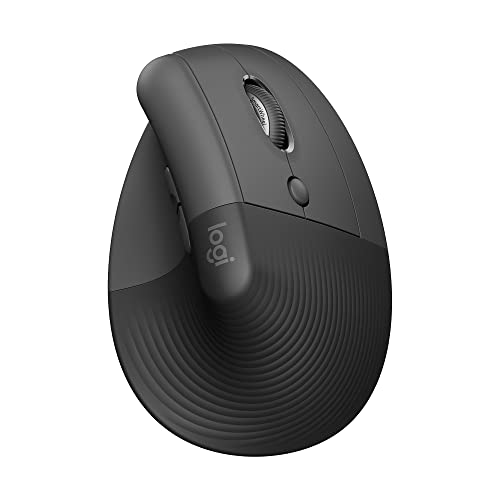
- Best Premium Vertical: Logitech Lift Vertical Ergonomic Wireless Mouse — a well-known brand’s lower-profile vertical mouse, built smaller than Logitech’s standard MX Vertical for a more contained grip.
- Best Wireless Mini: Perixx PERIMICE-719 Right-Handed Wireless Mini Vertical Mouse — a dedicated mini vertical mouse with 3-level DPI, built on the same compact-body philosophy as its wired sibling.
- Best for Dedicated Small Sizing: Evoluent VM4S Ergonomic Vertical Mouse Right Hand Small — sold in a distinct Small body alongside Evoluent’s Medium version, so the size is a stated spec rather than a guess.
- Best Value: seenda MOU-302 Wireless Bluetooth Ergonomic Vertical Mouse — listed for small and medium hands with quiet clicks and a compact vertical shape at a mid-range price.
- Best Budget Wireless: J-Tech Digital Wireless Ergonomic Vertical Mouse for Small Hands — an affordable nano-receiver option built specifically around a smaller vertical body.
- Best Wired Budget: SANWA Wired Ergonomic Mouse for Small & Medium Hands — a plug-and-play vertical mouse with a compact shell at one of the lowest price points in this roundup.
- Best Bluetooth Multi-Device: SABLUTE MAM3 Bluetooth Mouse for Small and Medium Hands — a compact vertical mouse built for switching between up to three connected devices.
Why Mouse Body Size — Not Just “Ergonomic” — Matters for Small Hands
“Ergonomic” on an Amazon listing usually just means the mouse has some kind of angled or vertical shape meant to reduce wrist strain. It doesn’t tell you whether that shape was built for a large palm or a small one. That distinction matters more than the ergonomic label itself, because a vertical mouse designed around an average-to-large hand can leave someone with a smaller hand reaching just as far as they would on a standard mouse — the wrist angle improves, but the overreach problem doesn’t. The best ergonomic mice for small hands solve both issues at once: a rotated grip angle to ease wrist strain, plus a shorter, narrower body so your fingers naturally rest on the primary buttons instead of stretching toward them.
Two measurements matter most here. Overall body length determines whether your fingertips land on the click buttons at a relaxed angle or have to extend forward to reach them. Body width determines whether your palm and thumb wrap comfortably around the shell or splay outward to hold onto a shape that’s simply too wide. When a listing like the Perixx PERIMICE-519 states its footprint in millimeters, that’s a far more reliable signal for shoppers comparing ergonomic mice for small hands than a listing that just says “ergonomic” and leaves sizing to the product photos.
Palm Grip vs. Claw Grip vs. Fingertip Grip: Which Fits Small Hands
How you naturally hold a mouse changes which body size actually feels right, and it’s worth understanding before comparing specific ergonomic mice for small hands. A palm grip rests the entire hand flat against the mouse, with the palm bearing weight on the rear of the shell — this style generally wants a longer, taller body to fill out under the hand, which is why it tends to suit larger hands better. A claw grip lifts the palm slightly off the shell while the fingertips curl down to press the buttons, working well with a shorter, lower-profile body. A fingertip grip goes further still, with only the fingertips making contact and the palm staying off the mouse entirely, which pairs best with the smallest, lowest-profile shells in this category.
Most people shopping for ergonomic mice for small hands gravitate toward a claw or fingertip grip once they try a compact vertical mouse, simply because a smaller hand can’t comfortably fill out a body sized for palm grip. If you’re not sure which grip you use, rest your hand on your current mouse in a relaxed position: if your palm is flat and fully in contact with the shell, you’re using palm grip; if your palm hovers slightly with your fingers doing most of the work, you’re already closer to claw or fingertip grip, and a smaller-bodied mouse will likely feel more natural than a full-size one.
Reading Amazon Listings for Real Mouse Dimensions
Not every listing states a mouse’s actual body dimensions, which makes comparison shopping harder than it should be. The Perixx PERIMICE-519 is a useful reference point here because its title spells out a 105 x 67 x 58 mm footprint directly — that kind of specificity lets you compare it against a mouse you already own rather than guessing from a stock photo. Other listings in this space, including several models labeled “for small hands” or “small/medium hands,” describe the intended fit without listing exact measurements, which means the size claim is closer to a marketing description than a verified spec.
When a product page doesn’t list dimensions, it’s worth checking the customer photos and reading a handful of reviews for comments about size before assuming the mouse will fit. Terms like “mini,” “compact,” and “portable small design” are reasonable signals when a brand uses them consistently across a product line — as Perixx does across its PERIMICE-519 and PERIMICE-719 models — but they’re not a substitute for an actual measurement when one is available. If you’re shopping for ergonomic mice for small hands and dimensions matter more to you than price or brand, prioritize listings that give you a number to check against your own hand.
Vertical Mice in Small/Mini Sizing vs. Standard Vertical Mice
Vertical mice are one of the most common styles among ergonomic mice for small hands, but “vertical” by itself doesn’t guarantee a small body — plenty of vertical mice are built at standard or even large scale. This is where checking for a stated size variant matters. Evoluent, for example, sells its VM4S in a distinct Small body alongside a separate VMDM model in Medium, so the sizing is an explicit spec choice rather than something you have to infer. Picking the Small version specifically, rather than assuming any Evoluent vertical mouse will fit a smaller hand, is the difference between a mouse that actually reduces overreach and one that recreates the same problem in a vertical shape.
A similar logic applies to brand-name options like the Logitech Lift Vertical Ergonomic Wireless Mouse, which is built with a noticeably lower, more contained profile than Logitech’s larger MX Vertical model. If you’ve tried a standard-size vertical mouse and still found it too big, that’s usually a sign to look specifically for a mini or small-labeled variant within the same product family — including the Perixx PERIMICE-719 Wireless Mini Vertical Mouse — rather than assuming vertical mice as a category will automatically solve the sizing problem.
Trade-Offs When Choosing a Smaller Mouse Body
Shrinking a mouse’s body doesn’t come free. Some compact and mini vertical mice trim the number of side buttons compared to their full-size counterparts, since there’s simply less shell real estate to work with. Battery life on wireless models can also run shorter on smaller bodies, since there’s less room for a large cell. None of this makes ergonomic mice for small hands a worse category to shop in — it just means it’s worth checking button count and stated battery life if those features matter to your workflow, rather than assuming a compact mouse automatically matches a full-size one on everything except dimensions.
Price is another trade-off worth flagging. A dedicated small-body mouse like the Evoluent VM4S, sold specifically as the Small variant in its lineup, sits well above the budget-friendly options in this roundup, while mice like the SANWA Wired model or the J-Tech Digital Wireless option land near the lower end of the price range. Neither approach is automatically better — a higher price mainly buys you a more established brand and a longer track record of that specific size variant, not necessarily a smaller body than the budget alternatives. When you’re comparing ergonomic mice for small hands across this price spread, checking review counts and ratings alongside price is a more reliable way to judge build quality than price alone.
Wired, Wireless, and Bluetooth Options for Small-Hand Ergonomic Mice
Connection type doesn’t change a mouse’s body size, but it’s still a real factor once you’ve narrowed down ergonomic mice for small hands by dimensions. Wired options, like the Perixx PERIMICE-519 and the SANWA model in this guide, remove battery concerns entirely and tend to sit at the lower end of the price range. 2.4GHz wireless options, including the J-Tech Digital and Perixx PERIMICE-719, trade a small USB receiver for cable-free movement, which matters if your desk setup doesn’t have a spare port to spare. Bluetooth models, such as the seenda MOU-302 and the SABLUTE MAM3, typically support switching between multiple paired devices, which is worth prioritizing if you regularly move between a laptop and a desktop or tablet.
None of these connection types is inherently more ergonomic than another — the body size and grip style still do the heavy lifting. Pick the connection type that fits how you actually work, then confirm the specific model comes in a size built for a smaller hand rather than assuming any wireless or Bluetooth mouse will automatically be compact. Whatever connection you land on, the sizing questions covered above still decide whether it belongs on a shortlist of ergonomic mice for small hands.
How We Evaluated These Ergonomic Mice for Small Hands
Every product in this guide was sourced from real Amazon listings using Crawlbase to pull live search results for terms including “ergonomic mouse small hand compact” and “mini vertical mouse small hands.” We prioritized listings that either stated an exact body size in millimeters, like the Perixx PERIMICE-519, or that carried a consistent “Small,” “Mini,” “Compact,” or “for Small Hands” label directly in the product name, and we cross-checked product names, pricing, star ratings, and review counts against the live listing data before including anything here. We did not assign dimensions to models that don’t publish them, and pricing, availability, and star ratings can shift after publication, so it’s worth confirming current listing details before you buy.
Common Mistakes When Shopping for Ergonomic Mice for Small Hands
- Shopping by the word “ergonomic” alone. An ergonomic shape doesn’t guarantee a body sized for a smaller hand — check dimensions or a stated size variant instead.
- Assuming all vertical mice are the same size. Many brands, including Evoluent, sell the same vertical mouse in multiple sizes — picking the wrong one recreates the overreach problem in a different shape.
- Sticking with palm grip on a small-bodied mouse. A shorter, lower-profile shell is usually built around claw or fingertip grip, not a full palm grip.
- Trusting “for small hands” without checking reviews. Not every listing publishes exact measurements, so recent customer feedback on fit is often more reliable than the title alone.
- Overlooking button count and battery life. Smaller bodies sometimes trim these features compared to full-size versions in the same product line.
- Choosing price over verified sizing. A cheaper mouse that isn’t actually built smaller won’t fix the reaching and stretching that prompted the search in the first place.
Buying Checklist
- Look for a stated body size in millimeters when available, and compare it against a mouse you already own.
- Identify whether you naturally use a palm, claw, or fingertip grip before choosing a body size.
- If shopping a vertical mouse brand with multiple sizes, confirm you’re ordering the Small or Mini variant, not the Medium or Standard one.
- Check the button count and battery life if those features matter, since smaller bodies sometimes trim them.
- Read recent reviews specifically for comments on hand size and comfort, not just build quality.
- Match connection type — wired, 2.4GHz wireless, or Bluetooth — to how you actually use your desk setup.
- Balance price against verified sizing rather than assuming a cheaper option is automatically smaller.
- Shortlist two or three ergonomic mice for small hands and compare their stated dimensions side by side before ordering.
Frequently Asked Questions
How do I know if my hands are small enough to need a dedicated mouse size?
A simple check is resting your hand on your current mouse: if your fingers extend well past the primary buttons or your palm hangs off the back edge, the mouse’s body is likely too long for a comfortable grip. Comparing your hand length to a listed body size, when one is available, is more reliable than guessing from a product photo, and it’s the same check worth running before buying any of the ergonomic mice for small hands featured in this guide.
What’s the difference between claw grip and fingertip grip, and which fits small hands better?
Claw grip keeps the palm slightly raised off the mouse while the fingertips curl down onto the buttons, working well with a shorter, lower-profile body. Fingertip grip goes a step further, with only the fingertips touching the mouse and the palm staying off the shell entirely, which suits the smallest bodies in this category. Both tend to fit smaller hands more comfortably than a full palm grip, which generally wants a longer, taller shell.
Are vertical mice a good fit for small hands, or are they built for larger hands only?
Vertical mice come in a range of sizes, so the shape itself isn’t the deciding factor — the specific body size is. Some vertical mice, like the Evoluent VM4S in its Small variant or the Perixx PERIMICE-519 and PERIMICE-719, are built or sized specifically for smaller hands, while other vertical mice in the same brand lineups are sized for medium or larger hands. Checking for a stated Small or Mini size matters more than assuming vertical shape alone solves the fit problem.
Do smaller ergonomic mice have fewer features than full-size ones?
Sometimes. A smaller body can mean fewer side buttons or shorter battery life compared to a full-size version in the same product line, simply because there’s less room inside the shell. It’s worth checking button count and battery specs before buying, rather than assuming any of the ergonomic mice for small hands here will match a full-size model on everything but dimensions.
How can I tell if an Amazon listing’s size claim is accurate?
Look for a listing that states exact dimensions in millimeters or inches, as the Perixx PERIMICE-519 does with its 105 x 67 x 58 mm body. When a listing only says “for small hands” or “small/medium hands” without a number, checking customer photos and recent reviews for comments on fit is a more reliable way to confirm sizing than the product title alone.
Should teenagers or younger users with smaller hands use these mice too?
In general, yes — the sizing principles here are based on hand dimensions rather than age, so a compact or mini ergonomic mouse can suit a teenager or any adult with a smaller hand span. It’s still worth checking a specific listing’s stated size or reviews for fit before buying, the same way you would for an adult-sized hand.
Choosing among ergonomic mice for small hands ultimately comes down to matching body length, body width, and grip style to your actual hand rather than trusting the word “ergonomic” on its own. Whether you land on the dimension-forward Perixx PERIMICE-519, a brand-name pick like the Logitech Lift, or one of the budget-friendly vertical options above, checking the details in this guide against the 8 picks here should make the decision easier. If your priority is a different angle entirely, our related guides may fit better: for a bigger palm and a longer, deeper shell, see best ergonomic mice for large hands; for wrist-angle and strain-focused picks, see best ergonomic mice for wrist pain. And if you’re also sizing up the rest of your desk to match a smaller hand span, our guides to ergonomic keyboards for small hands and desk pads round out a 2026 setup built around your actual hand size rather than a generic “ergonomic” label.