
If you’re shopping for office chairs for tailbone pain, the feature that actually matters is the shape of the seat pan itself, not just how thick the padding is. A waterfall-edge seat — a front edge that curves downward instead of ending in a hard, squared-off lip — shifts your weight forward onto your thighs and hips instead of straight down onto the tailbone, and some chairs pair that shape with extra contouring in the seat foam for added relief. That’s a different approach than a coccyx cushion you place on top of an existing chair; these are full chairs built around the design from the ground up. Based on real Amazon listings and current review data, our top pick for most shoppers is the Office Chair for Long Hours & Lower Back Pain Relief – Waterfall-Edge PU Seat Cushion, which pairs a well-reviewed waterfall-edge seat with adjustable lumbar support and flip-up armrests at a reasonable price. No chair is a medical treatment, and none of these can diagnose or cure tailbone pain — but for many people, office chairs for tailbone pain built around this seat shape may help reduce direct pressure on the coccyx during long sitting sessions. If your pain is severe, sudden, or tied to a recent injury, that’s a conversation for a doctor, not a furniture decision.





Top Picks at a Glance
- Best Overall: Office Chair for Long Hours & Lower Back Pain Relief – Waterfall-Edge PU Seat Cushion — a well-reviewed, affordably priced chair built around the waterfall-edge shape with adjustable lumbar support.
- Best Budget: Scranton & Co Fabric Posture Office Chair, Adjustable Arms, Burgundy Finish, Ergonomic Design, Lumbar Support, Waterfall Seat Edge — a straightforward posture-focused chair with the waterfall seat edge at the lowest price in this roundup.
- Best Premium: Certified Refurbished Zody Brown Chair | Advanced Dual Lumbar with Individual Side Adjustment, Pelvic Support, 4D Armrests & Waterfall-Edge Seat — a refurbished commercial ergonomic chair with dual lumbar adjustment and a 12-year warranty.
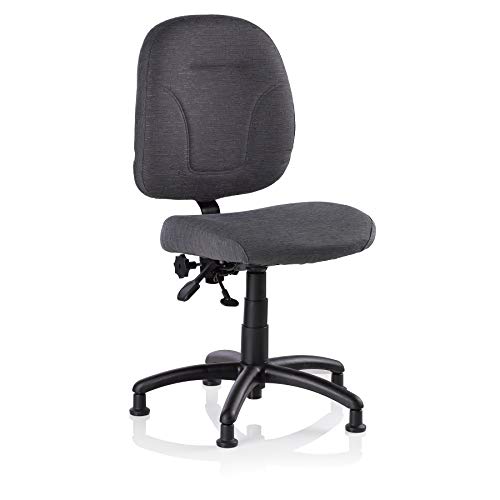
- Best for Long Hours & Heavy Use: Reliable Ergonomic Task Chair, Sewing Chair, Adjustable Height, Grey | Contoured Cushion, Waterfall Seat Edge — commercial-quality construction rated for 250 lbs and built for repeated daily use.
- Best Refurbished Value: Certified Refurbished Chadwick Task Chair – Adjustable Height Upholstered Waterfall Edge Seat — a repackaged commercial chair with upholstered waterfall-edge seating and a steel base.
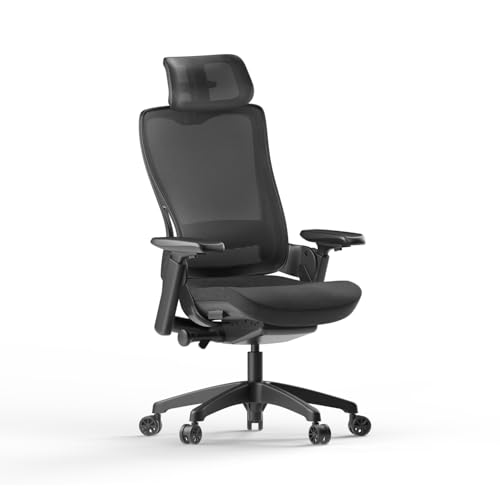
- Best Mesh Design: Elgato Embrace Ergonomic Studio Chair, Mesh Back | Waterfall edge seat, 4D armrests — a breathable mesh-back chair with a five-step recline and waterfall-edge seat.
- Best Ventilated Seat: National Public Seating Ribbed Ventilation Design Height Adjustable Task Chair with Polyurethane Seat and Waterfall Edge — a ribbed, ventilated task chair suited to warmer rooms or longer stretches of sitting.
- Best for Guest & Reception Seating: ANTAKIPRO Stationary Office Chair – Ergonomic Guest Chair with Waterfall Cushion Seat, Back Card Pocket & Armrests — a stackable, stationary chair for waiting rooms and shared spaces that still uses the waterfall cushion shape.
What a Waterfall-Edge Seat Actually Does for Tailbone Pain
A waterfall-edge seat is exactly what it sounds like: instead of the front of the seat pan cutting off in a hard, flat line, it curves downward like the lip of a waterfall. On a standard flat-front chair, that hard edge presses into the back of your thighs, which tends to push your hips backward and downward into the seat — and that backward shift puts more direct weight on the tailbone. A waterfall edge removes that pressure point, which lets you sit with your weight distributed more evenly across your thighs and sit bones instead of concentrated at the back of the seat.
This is the core mechanism behind nearly every chair in this guide. Some of these office chairs for tailbone pain pair the waterfall edge with additional foam contouring or a slightly recessed center channel, adding a second layer of relief on top of the edge shape itself. Others rely on the waterfall edge alone, paired with a firmer, higher-density foam that holds its shape under regular use. Either way, the goal is the same: reduce how much direct, concentrated pressure lands on the coccyx while you’re seated for hours at a time.
Full Chair vs. Add-On Coccyx Cushion — Which Should You Buy
It’s worth being clear about what this guide covers versus what it doesn’t. This article is about full office chairs for tailbone pain — chairs where the waterfall-edge seat pan or coccyx-relief shaping is built into the chair itself. If you already like your current chair and just want to address tailbone pressure without replacing the whole thing, a dedicated coccyx cushion is usually the faster, cheaper fix; our best coccyx seat cushions guide covers those U-shaped and donut-cutout add-on pads in detail.
Where a full chair makes more sense is when your existing chair is old, poorly fitted to your body, or being replaced anyway — in that case, buying office chairs for tailbone pain with the waterfall edge built in avoids stacking a cushion on top of a chair that may have other problems, like worn-out lumbar support or a seat pan that’s simply the wrong size. A built-in design also can’t slide out of place the way an add-on cushion sometimes does on a slick or worn chair surface. If budget or portability matters more than a full replacement, though, a cushion on your current chair is a perfectly reasonable starting point instead.
Seat Depth Adjustment — Why Fit Matters More Than the Feature Itself
A waterfall edge only helps if it actually lines up behind your knees correctly, and that’s where seat depth adjustment comes in. Seat depth sliders let you move the seat pan forward or backward independent of the backrest, so the curved front edge sits in the right spot for your leg length rather than a one-size-fits-all position. Without that adjustment, a taller or shorter person can end up with the waterfall edge either too far forward (barely touching the legs) or too far back (not clearing the knees at all), which undercuts the whole point of buying office chairs for tailbone pain in the first place.
Not every chair in this price range includes seat depth adjustment — some budget and mid-range options rely on a single, fixed seat length that’s sized for an average adult frame. That’s not necessarily a dealbreaker, but it’s worth checking the listed dimensions against your own leg length before assuming the waterfall edge will land where you need it. Chairs with adjustable arms, height, and tilt but no seat depth slider can still work well for many people; it’s simply one more variable to check rather than assume.
Seat Material and Foam Construction
Seat material affects both comfort and how long the waterfall-edge shape holds up under daily use. Molded PU foam and upholstered foam seats tend to keep their contour longer than lower-density padding, which matters because a waterfall edge that flattens out over months of sitting loses much of its pressure-relief benefit. Mesh seats, like the design used in our Best Mesh Design pick, trade a bit of that structured contour for breathability, which is worth prioritizing if you run warm or sit in a room without much airflow.
A few office chairs for tailbone pain in this category go a step further and combine the waterfall edge with additional shaping in the center of the seat, effectively layering a coccyx-relief contour on top of the edge design. This isn’t the same as a separate cutout cushion, but it serves a similar purpose — reducing direct contact under the tailbone rather than just changing the angle of the seat front. If tailbone sensitivity is your main concern, it’s worth reading the product description and photos closely to see whether a chair uses the waterfall edge alone or combines it with extra contouring.
Recline, Lumbar Support, and Weight Distribution
The seat pan isn’t the only part of the chair that affects tailbone pressure — recline angle and lumbar support both change how weight moves through your hips and lower back while you sit. Reclining slightly backward shifts some of your body weight into the backrest instead of straight down through the seat, which can reduce the load on the tailbone during long stretches at a desk. A locking recline, rather than a chair that only tips freely, lets you hold that position instead of constantly readjusting.
Lumbar support plays a supporting role here too. When your lower back is properly supported, you’re less likely to slump forward and roll your hips into a position that concentrates weight on the tailbone. Several office chairs for tailbone pain in this guide pair the waterfall edge with adjustable or dual lumbar support, which is worth prioritizing if you already deal with lower back discomfort alongside tailbone sensitivity, since the two often show up together during long sitting sessions.
Budget vs. Premium — What You’re Actually Paying For
This category spans a wide price range, and the differences aren’t just cosmetic. Budget options in the $145–$160 range typically use a fixed seat, simpler flip-up arms, and a basic mechanism — solid for shorter workdays or lighter use, but without much room to fine-tune fit. Mid-range chairs around $230–$300 usually add sturdier commercial-grade construction, higher weight capacity, and more consistent build quality, which matters if you’re sitting in the chair most of the day, every day.
At the premium end, refurbished commercial ergonomic office chairs for tailbone pain in the $400–$505 range bring features like dual-zone lumbar adjustment, 4D armrests, and multi-year warranties, alongside the waterfall-edge seat itself. These chairs were originally designed for demanding office environments, so the refurbished versions often deliver more adjustability per dollar than a comparably priced new chair. Whether that premium is worth it depends on how many hours a day you’re actually sitting and how much fine-tuned adjustability you expect to use.
What These Chairs Can (and Can’t) Do for Tailbone Pain
It’s worth being direct about what this product category is and isn’t. Office chairs for tailbone pain with a waterfall-edge seat or built-in coccyx-relief contouring are designed to reduce direct pressure on the tailbone while sitting, and many people find that switching to this seat shape makes long workdays noticeably more comfortable. That said, a chair — no matter how well designed — is not a diagnosis, a treatment, or a guaranteed fix for tailbone or coccyx pain. It’s a piece of furniture that may help reduce pressure for some people in some situations, not a medical device.
If your tailbone pain is new, severe, worsening, or connected to a recent injury or fall, that’s a situation for a doctor to evaluate, not something to resolve by buying a chair. A well-designed seat can be a reasonable, practical thing to try alongside professional guidance for everyday discomfort from long sitting, but it shouldn’t replace medical evaluation for persistent or serious pain. Treat marketing language like “ergonomic” or “pain relief” on any listing as a general description of the design, not a personal medical claim about your specific situation.
How We Evaluated These Office Chairs for Tailbone Pain
Every chair in this guide was pulled from real, current Amazon listings rather than invented or assumed. We specifically looked for chairs whose listings named a waterfall-edge seat pan or a built-in coccyx-relief seat design, then cross-checked that language against product photos and descriptions rather than titles alone. We excluded standalone cushions and pads from this roundup entirely, since those are covered separately in our coccyx seat cushions guide. Star ratings, review counts, and pricing were checked directly against each listing rather than estimated, and we compared seat depth adjustability, recline and lumbar features, weight capacity, and build quality across budget, mid-range, and premium options. Pricing, ratings, and review counts reflect what was published on Amazon at the time of research and can shift over time.
Common Mistakes When Buying an Office Chair for Tailbone Pain
- Assuming any “ergonomic” chair has a waterfall edge. Plenty of ergonomic-labeled chairs still use a flat, squared-off seat front — check the listing and photos for the waterfall shape specifically.
- Ignoring seat depth and leg length fit. A waterfall edge that doesn’t land behind your knees correctly won’t deliver the pressure relief it’s designed for.
- Buying on price alone. A cheaper chair isn’t automatically wrong, but low-density foam can flatten the waterfall contour faster, reducing its benefit over time.
- Skipping recline and lumbar features. Seat shape matters, but backrest support and recline angle also affect how much weight ends up on the tailbone.
- Expecting the chair to guarantee relief. A well-designed seat may help reduce pressure, but it isn’t a treatment, and persistent or severe tailbone pain deserves medical attention rather than another product swap.
Buying Checklist
- Confirm the seat pan has a visible waterfall edge or built-in coccyx-relief contour in product photos, not just pain-relief wording in the title.
- Check whether the chair has seat depth adjustment, and compare it to your own leg length before buying.
- Look at foam density or seat material — molded or higher-density foam tends to hold its contour longer than basic padding.
- Prioritize adjustable or dual lumbar support alongside the seat shape if lower back discomfort is also a factor.
- Check recline range and whether the recline locks in place rather than only tipping freely.
- Match weight capacity and build quality to how many hours a day you’ll actually be sitting.
- Compare budget, mid-range, and premium options against your own price ceiling and how much adjustability you’ll realistically use.
Frequently Asked Questions
What is a waterfall-edge seat, and why does it matter for tailbone pain?
A waterfall-edge seat has a front edge that curves downward instead of ending in a hard, flat lip. That shape reduces pressure behind the knees and helps shift body weight forward onto the thighs and hips instead of straight down onto the tailbone, which is why it’s the defining feature across office chairs for tailbone pain in this category.
Is a built-in coccyx cutout in a chair seat the same as a coccyx cushion?
Not exactly. A coccyx cushion is a separate pad you place on top of any chair, usually with a U-shaped or donut cutout. Some office chairs for tailbone pain instead build coccyx-relief contouring directly into the seat foam alongside the waterfall edge, which serves a similar purpose without needing a separate accessory.
Should I buy a new chair or just add a cushion to my current one?
If your current chair is otherwise in good shape and comfortable, a coccyx cushion is usually the simpler, less expensive fix — see our coccyx seat cushions guide for that option. A full chair replacement makes more sense if your existing chair is worn out, poorly adjustable, or you’re replacing it anyway.
Does seat depth adjustment really matter that much?
Yes. A waterfall edge only helps if it lands in the right spot behind your knees, and that position depends on your leg length. Without seat depth adjustment, a fixed seat pan may not line the waterfall edge up correctly for your body, especially if you’re notably taller or shorter than average.
Are mesh or foam seats better for tailbone pain?
Neither is objectively better — foam seats tend to hold a molded contour longer, while mesh seats prioritize breathability and can feel cooler over long sessions. If you run warm or sit in a poorly ventilated room, mesh may be worth the trade-off; if shape retention matters more, a higher-density foam seat is usually the safer bet.
When should I see a doctor instead of just buying a new chair?
If tailbone pain is new, severe, sudden, tied to a fall or injury, or isn’t improving over time, it’s worth having a doctor evaluate it rather than relying on a chair alone. Office chairs for tailbone pain can be a reasonable, practical part of managing everyday discomfort, but they aren’t a substitute for medical care when pain is serious or persistent.
Choosing the right office chair for tailbone pain comes down to matching seat shape, depth adjustment, material, and recline to how and where you actually sit, rather than picking whichever listing uses the most convincing pain-relief language. If you’d rather address tailbone pressure without replacing your current chair, our best coccyx seat cushions guide covers add-on options instead. For readers managing broader joint or seated-comfort needs, our office chairs for arthritis guide looks at adjustability for wider mobility concerns, and our back support cushions guide covers lumbar-focused support separately from the seat itself. Compare the 8 options above against your own body, budget, and daily sitting routine before deciding which office chair for tailbone pain fits your 2026 setup.