
If your compact walking pad or under-desk treadmill sits directly on your floor, you have probably already noticed the thumping, the sliding, or the faint dents forming in your carpet or hardwood. A dedicated desk treadmill mat solves all three problems at once: it protects your flooring, dampens vibration and noise, and keeps the machine from creeping while you walk. Choosing the right one isn’t complicated, but it does come down to a few specific details — size relative to your treadmill’s footprint, thickness, material, and how well it grips both the floor and the machine. This guide walks through exactly what to check before you buy, and highlights 8 desk treadmill mats worth comparing based on real Amazon listings.




Top Picks at a Glance
- Best Overall: Stepwaver Walking Pad Mat — a high-density, 1/4-inch mat built for both carpet and hardwood floors, a solid middle ground of thickness, grip, and price for most desk treadmill setups.
- Best Budget: Walking Pad Treadmill Mat (55″ x 24″) — a straightforward floor protector sized for compact walking pads, priced for anyone who just wants basic coverage without extras.
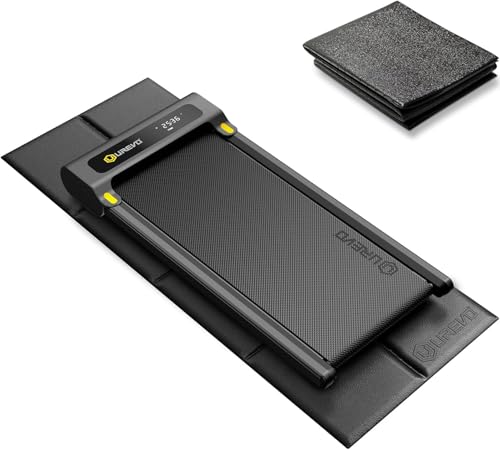
- Best for Hardwood Floors: UREVO Foldable Treadmill Mat — designed to sit under a walking pad on hardwood and carpet alike, with a foldable design that makes it easy to store.
- Best for Multiple Sizes: HAPBEAR Treadmill Mat — offered in several footprint sizes, so you can match the mat closely to your specific treadmill or walking pad dimensions.
- Best Premium: Stepwaver Extra Large Treadmill Mat — a 79″ x 39.4″ mat available in multiple thickness options, aimed at larger compact treadmills that need more coverage.
- Best Compact: Compact Under Desk Treadmill Mat (51″ x 23.6″) — a smaller footprint built specifically for tight under-desk spaces where every inch matters.
- Best for Carpet: VTORY Walking Pad Mat — a foldable, high-density mat marketed for carpeted floors that also holds up on other surfaces.
- Best Thick Cushioning: 57″ x 25″ Tailor-Made Walking Pad Mat — a 6mm-thick option for anyone prioritizing extra noise and vibration absorption over a slimmer profile.
Why an Under-Desk Treadmill Mat Matters
A desk treadmill mat is not the same product as a full-size gym treadmill mat. Under-desk treadmills and walking pads are lighter and lower to the ground, but they’re also used for hours at a stretch, often on carpet or hardwood in a home office, apartment, or shared living space. Without a mat, the constant footfall and motor vibration can transfer straight into the floor — a real issue if you work above a downstairs neighbor or in an older home with less sound insulation. It absorbs a meaningful portion of that impact before it reaches the subfloor.
Floor protection is the other half of the equation. Rubber and plastic feet on a treadmill can leave indentations in carpet fibers or scuff marks on hardwood and laminate over months of daily use. A properly sized desk treadmill mat spreads the machine’s weight over a larger surface area, which reduces localized pressure and keeps your flooring looking the way it did before you started walking at your standing desk every day.
Sizing: Matching the Mat to Your Treadmill’s Footprint
Before comparing materials or thickness, measure your treadmill or walking pad’s actual footprint — length and width, including any part of the frame or handrail base that extends beyond the belt. A desk treadmill mat should extend a few inches past every edge of that footprint, typically two to four inches per side. This margin matters more than it seems: if the mat is flush with or smaller than the machine, your feet can still land on bare floor during a longer stride, which defeats the purpose of buying one in the first place.
Compact walking pads generally need less coverage than a bulkier under-desk treadmill with a taller console, so don’t assume one universal size fits every setup. Several of the mats compared here, including the HAPBEAR Treadmill Mat, are sold in multiple size options specifically because footprints vary so much between brands and treadmill models. Measure first, then shop — it will save you a return.
Thickness and Cushioning: Balancing Noise Reduction vs Stability
Thickness is where most of the noise and vibration reduction happens, and it’s also where trade-offs start. Thin desk treadmill mats, around 4mm, offer light cushioning and are easy to fold, but they do less to quiet down a heavier motor. Thicker mats in the 5-6mm range, cushion more effectively and feel noticeably quieter underfoot, which is the appeal of an option like the 57″ x 25″ Tailor-Made Walking Pad Mat.
The trade-off is stability. A mat that’s too thick or too soft can let a treadmill sink slightly or shift under load, which changes how the belt feels while you’re walking and, in some cases, can even trip an out-of-level sensor on certain machines. If the mat feels spongy rather than firm when you press down on it with your hand, it’s likely too soft for a machine that needs a stable, level base. Aim for a thickness that noticeably reduces sound when you tap the floor near the treadmill, without feeling like you’re standing on a cushion.
Material Matters: Foam vs Rubber vs PVC
Most desk treadmill mats are made from one of three materials, each with its own strengths. Foam mats are lightweight, inexpensive, and easy to cut or fold, but they tend to compress and lose their cushioning properties faster than denser materials, especially under a machine that runs daily. Rubber mats, including many of the high-density options in this roundup, are more durable and dampen vibration better, though a new rubber mat often has a noticeable smell for the first few days that fades with airing out. PVC mats sit in between — they’re generally easy to wipe clean, resist moisture well, and hold their shape, which makes them a practical choice if you sweat during walking sessions or tend to keep a water bottle nearby.
There’s no single “best” material across the board; the right one depends on how much daily wear the mat needs to withstand and how much you care about quick cleanup versus maximum cushioning. If you’re walking for an hour or more most days, a denser rubber or high-density foam blend will likely outlast a thin, budget foam mat.
Non-Slip Backing and Floor Compatibility (Carpet vs Hardwood)
A non-slip backing on the underside of a desk treadmill mat keeps it from sliding around on smooth flooring, which matters more on hardwood, tile, or laminate than it does on carpet, where friction is naturally higher. Some mats also add texture on the top surface so the treadmill itself doesn’t creep during use. When you’re comparing listings, check whether the non-slip claim applies to one side or both — a mat that grips the floor but lets the treadmill slide on top only solves half the problem.
Floor type should also guide your choice. Mats built for hardwood tend to prioritize a smoother, protective barrier that won’t scratch finished wood, while carpet-oriented mats often use denser padding since carpet already provides some natural cushioning of its own. The UREVO Foldable Treadmill Mat and the VTORY Walking Pad Mat both target these two surface types directly in their product descriptions, which is worth checking against your own floor before buying.
Foldable, Roll-Up, and Storage Considerations for Small Offices
Many home offices don’t have room to leave a treadmill and its mat out permanently. If that describes your setup, prioritize a desk treadmill mat that folds or rolls compactly, since a stiff, flat mat can be awkward to store behind furniture or in a closet. Foldable designs, like the options from Stepwaver and UREVO featured above, are built with this in mind and tend to hold their shape better over repeated folding than a mat that wasn’t designed to be moved often.
If you frequently rearrange your standing desk area or share the space with other activities, a lighter, more flexible mat will simply be easier to live with day to day than a heavier, rigid one — even if the rigid option offers slightly better cushioning.
How We Evaluated These Desk Treadmill Mats
Every product referenced in this guide comes from real Amazon listings pulled directly from current search results for under-desk and walking pad treadmill mats. We compared 8 desk treadmill mats using their published dimensions, stated thickness, material description, non-slip claims, and customer rating and review counts as they appear on Amazon. We prioritized mats explicitly marketed for compact walking pads or under-desk treadmills rather than full-size gym treadmill mats, since the sizing, weight distribution, and space constraints are different for a desk setup. No product details were invented or combined from separate listings — names and specifications reflect what each listing states.
Common Mistakes When Choosing a Desk Treadmill Mat
- Buying based on price alone: the lowest-priced desk treadmill mat is often too thin to meaningfully reduce noise or protect flooring over time.
- Skipping the measurement step: guessing at size instead of measuring your treadmill’s actual footprint often results in a mat that’s too small.
- Ignoring floor type: a mat optimized for carpet may not perform the same way on hardwood, and vice versa.
- Overlooking non-slip backing: a mat without grip on both sides can still let the treadmill shift during use.
- Not airing out a new rubber mat: using it immediately in a small room can leave a lingering odor for days.
- Choosing maximum thickness by default: an overly soft, thick mat can make a treadmill feel unstable rather than more comfortable.
Buying Checklist
- Measure your treadmill or walking pad’s full footprint, including the frame edges.
- Choose a desk treadmill mat that extends two to four inches beyond that footprint on every side.
- Match the mat’s material to your priorities: rubber for durability and vibration control, foam for light and affordable, PVC for easy cleanup.
- Confirm the flooring type the mat is designed for — carpet, hardwood, tile, or a combination.
- Check that the non-slip backing covers both the floor-facing side and the treadmill-facing side.
- Consider whether you need a foldable or roll-up design for storage in a small office.
- Read recent customer reviews for mentions of odor, durability, or curling edges over time.
FAQ
Is a desk treadmill mat actually necessary?
It’s not strictly required, but it addresses two problems most people run into within weeks of daily use: floor damage and noise transfer. If you walk on your treadmill for long stretches or live in a multi-story home or apartment, it’s a low-cost way to prevent both.
How much bigger should the mat be than my treadmill?
Aim for two to four inches of extra coverage beyond your treadmill or walking pad’s footprint on each side. This margin accounts for slight shifting during use and ensures your feet don’t land on bare floor during a longer stride.
What’s the ideal thickness for a desk treadmill mat?
Most desk treadmill mats fall between 4mm and 6mm. Thinner mats are easier to fold and store but reduce less noise; thicker mats cushion and quiet the machine more but can slightly reduce stability if they’re too soft. Test firmness by pressing down with your hand before assuming thicker is always better.
Which material is best — foam, rubber, or PVC?
There’s no universal answer. Rubber and high-density blends tend to last longer and dampen vibration more effectively under daily use. Foam is lighter and more affordable but compresses faster. PVC is easiest to wipe clean and resists moisture well if you sweat near your setup.
Can the same mat work on both carpet and hardwood floors?
Some desk treadmill mats are marketed for both surfaces, but performance can differ. Carpet already provides cushioning, so a mat there focuses more on stability and vibration; hardwood needs a mat that also protects the finish from scuffs and indentations. Check the listing’s stated compatibility before assuming a single mat works equally well on either.
How do I clean and store a new desk treadmill mat?
Wipe rubber or PVC mats with a damp cloth and mild soap; avoid harsh solvents that can degrade the material. New rubber mats often carry a noticeable smell at first — unroll them in a ventilated area for a day or two before placing them under your treadmill. If storage space is limited, choose a foldable design and store it flat or loosely rolled to avoid permanent creases.
A desk treadmill mat is one of several small additions that make an active workstation more comfortable and sustainable long-term. Rounding out your active desk setup often means looking beyond the mat itself — a footrest that supports movement during seated breaks, like the options covered in our guide to foot hammocks, or ergonomic support for the hours you do spend sitting, discussed in our roundup of chair back supports, can complement the walking time your treadmill provides. If your chair itself needs attention after switching between sitting and standing throughout the day, our guide to chair gas cylinders covers how to fix sinking or uneven seat height. Together with a properly sized mat underfoot, these small upgrades add up to a more comfortable and durable home office setup for 2026.