Vertical fabric panels give every cubicle a built-in bulletin board, but most desks still run out of places to hang a coat, a gym bag, or a spare pair of headphones. That is exactly the gap a good cubicle hook fills. Instead of draping jackets over the back of a chair or piling bags on the floor, this kind of hardware clips or pins directly into the fabric panel wall and gives you a dedicated spot to hang what you carry in every day. The trick is picking the right mounting style and weight rating for your specific panel, since not every model is built the same way or rated to hold the same load. Below, we break down how these hooks attach, how much they can realistically hold, and how to avoid the mistakes that leave people with a loose hook or a damaged panel a few months in.


Top Picks at a Glance
Here are 8 cubicle hooks worth comparing, each suited to a slightly different mounting style, budget, or use case around a fabric panel workstation.
- Best Overall: Adjustable Cubicle Hooks Metal Hangers, Fits 1.35-3.5 Inch Partition
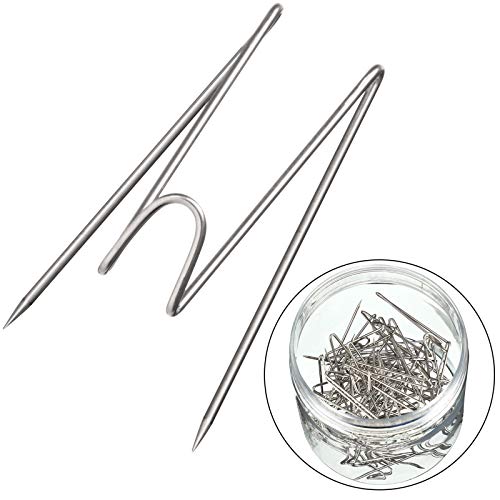
- Best Budget: 10 Pieces Cubicle Hooks Clips, 40 Lbs Picture Hangers
- Best Premium: Modtek High Strength Cubicle Wall Hook (2 Pack)
- Best for Coats: Officemate Cubicle Panel Coat Hooks, Adjustable Double Hook
- Best Bulk Value: SUMERSHA 50pcs Fabric Panel Wall Wire Hooks
- Best with Storage Box: Geyoga Fabric Panel Wall Wire Hooks with Clear Storage Box
- Best for Heavy Loads: CWH-02 3 Inch Wire Double Hook for Partition Wall
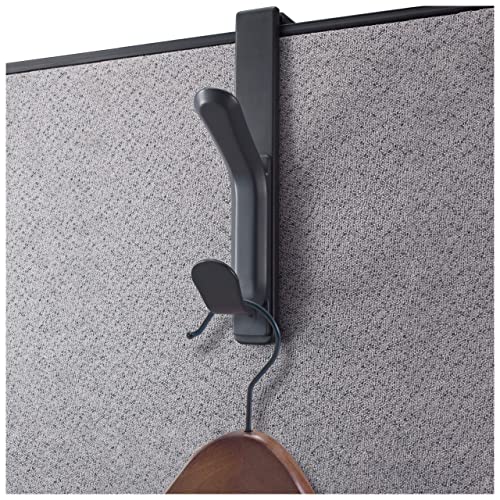
- Best Professional Look: Officemate Double Coat Hooks for Cubicle Panels, Charcoal
Pushpin vs. Clip-On Cubicle Hooks: Which Mounting Style Fits Your Panel
Every cubicle hook attaches to a fabric panel wall in one of two ways, and picking the wrong one is the single most common reason people end up disappointed. Pushpin-style hooks have small metal prongs that press directly into the fabric and the soft fiberboard layer underneath, similar to a thumbtack. They are simple to install, work on almost any fabric panel wall regardless of frame thickness, and are usually sold in large multi-packs since each pin covers a small, specific point.
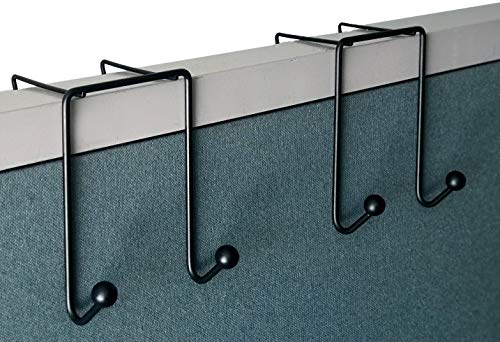
Clip-on, or over-the-panel, hooks work differently. Instead of piercing the fabric, a U-shaped bracket hooks over the top edge of the panel and grips the frame from both sides, so the hanging weight rests on the panel’s rigid top edge rather than on the fabric itself. This style tends to hold more weight and causes essentially no wear on the fabric, but it only works if the panel’s top edge is exposed and the clip range matches your panel’s thickness. If your cubicle walls run all the way to the ceiling or share a continuous top rail with a neighboring desk, this type of hook may not have anywhere to hook onto, making the pin style the more practical option.
How Much Weight Can a Cubicle Hook Actually Hold
Weight capacity varies more than most shoppers expect. Lightweight pin-style hooks meant for headphones, lanyards, or a small tote are often rated in the range of a few pounds up to around 10, which is plenty for accessories but not for a heavy winter coat. Reinforced pin hooks with a wider metal clip and a broader base can be rated closer to 30 to 40 pounds, which comfortably covers a stuffed bag, a coat, and a scarf on the same hook. Clip-on hardware that grips the panel’s frame generally holds more consistently, since the load is carried by rigid material instead of fabric and foam.
Whatever the label says, treat published weight capacity as a ceiling, not a target. A cubicle hook rated for 40 pounds will feel far more secure holding a 10-pound bag every day than it will holding 35 pounds consistently, and panels that have been reused for years tend to have looser fabric that reduces real-world holding power compared to a brand-new install.
Will Cubicle Hooks Damage Your Fabric Panel Wall
This is the question most people ask before they buy their first cubicle hook, and the honest answer depends on the mounting style. A pushpin-style hook does leave a small puncture mark, but a single pin is usually no more damaging than a thumbtack used for a memo, and the mark is barely visible once the hook is removed. The risk grows if you repeatedly insert and remove pins in the exact same spot, which can gradually widen the hole or fray the surrounding fabric over months of reuse.
A clip-on hook avoids this entirely, since it grips the panel’s frame rather than piercing the fabric, which makes it the safer pick in shared or leased office spaces where you need to leave the panel exactly as you found it. If you are not sure which your workplace allows, ask before you drill anything permanent, and default to the clip-on style if damage concerns are a factor at all, since it can be removed and reattached indefinitely without leaving a trace.
Matching a Cubicle Hook to Your Panel Thickness
Clip-on hooks are only as good as their fit, and fit depends on panel thickness. Most listings specify a compatible range, commonly somewhere between 1.25 and 3.5 inches, and it pays to measure your actual panel edge with a tape measure before ordering rather than guessing. A hook designed for a thin 1.5-inch panel will feel wobbly on a thick 3-inch partition, while one built for thicker panels may not close far enough to grip a slim one securely.
If your office uses several panel styles across different cubicles, or you are not confident about the exact thickness, a pin-style cubicle hook sidesteps the fit question entirely, since it does not depend on panel edge dimensions at all. That flexibility is one reason pushpin hooks remain popular even though clip-on designs typically hold more weight.
Single Hook vs. Double Hook — and Multi-Pack Value
A single cubicle hook is enough for one item, like a bag or a jacket, and takes up minimal panel space, which matters if your walls are already crowded with a calendar, photos, and a whiteboard. A double hook, or two single hooks mounted close together, lets you separate a coat from a bag or keep headphones apart from a tote so nothing gets tangled, at the cost of using more panel real estate.
Multi-packs, often bundling 10, 30, or even 50 pin-style hooks, deliver a noticeably lower price per unit than buying two or three individually, which makes sense if you want to outfit multiple points around your desk or share extras with coworkers. If you only need one or two mounting points, though, a smaller pack of premium double hooks may serve you better than a large bundle you will mostly never use. Matching the pack size to your actual number of hanging needs avoids paying for hardware that sits unused in a drawer.
Materials That Hold Up Under Daily Use
Metal cubicle hooks, typically stainless steel or a coated steel wire, resist bending and hold their shape far better than molded plastic under repeated daily loading. Plastic hooks are lighter and often cheaper, which is fine for occasional light use, but they are more prone to cracking at the base or losing their grip on the panel edge after months of the same weight being hung and removed. If a hook will carry a bag or coat every single workday, spending a bit more for a metal build tends to pay off in fewer replacements over time, while plastic hooks are perfectly reasonable for lighter, occasional items like a spare charging cable or a small ornament.
How We Evaluated These Picks
Every product in this guide was sourced from live Amazon listings and checked to confirm the title or description explicitly describes a cubicle hook designed for fabric panel walls, rather than a generic door or wall hook. We compared customer rating and review volume as a signal of real-world reliability, noted stated weight capacity and panel thickness compatibility where listed, and looked at mounting style, material, and pack size across the lineup. This roundup is built entirely from that Amazon product data, not hands-on testing, so use star ratings and review counts as a starting point for your own comparison rather than a final verdict.
Common Mistakes When Buying Cubicle Hooks
A handful of avoidable mistakes account for most of the negative feedback we see on listings for these hooks.
- Skipping the panel measurement. Ordering a clip-on hook without measuring panel thickness is the fastest way to end up with a loose, wobbly fit.
- Choosing plastic for heavy daily loads. A plastic hook can handle light accessories but tends to crack sooner under a coat or bag used every day.
- Reinserting pins in the same spot repeatedly. Moving a pin-style hook to a fresh nearby spot every so often reduces long-term wear on the fabric.
- Buying too small a pack. A single hook rarely covers every need; underestimating how many mounting points you want leads to a second order later.
- Ignoring the weight rating. Hanging a heavy coat on a cubicle hook rated for light accessories is the most common cause of it pulling loose.
Buying Checklist
Run through this list before adding a cubicle hook to your cart, especially if panel damage or weight capacity is a concern.
- Decide between pushpin-style and clip-on mounting based on how much fabric contact you are comfortable with.
- Measure your panel’s edge thickness before ordering a clip-on hook.
- Match the stated weight capacity to what you actually plan to hang.
- Choose metal construction for daily heavy use, plastic for light or occasional items.
- Pick single or double hooks based on how many items you need to separate.
- Buy a multi-pack only if you have enough mounting points to use it.
- Check reviews for comments about hooks loosening or panels showing wear over time.
- Confirm the listing is specifically designed for cubicle or fabric panel walls, not a general door hook.
FAQ
Do cubicle hooks damage fabric panel walls?
Pin-style hooks leave a small puncture that is barely noticeable once removed, though repeated use in the exact same spot can widen the hole over time. Clip-on hooks grip the panel’s frame instead of piercing the fabric, so they leave no lasting mark at all.
Pushpin-style or clip-on: which mounting is better for a cubicle wall?
Choose clip-on if your panel’s top edge is exposed and you want zero fabric damage, since it also tends to hold more weight. Choose pushpin-style if your panel has no accessible top edge, or if you want a flexible cubicle hook option that works regardless of panel thickness.
How much weight can these hooks hold?
It depends on the design, ranging from a few pounds on lightweight accessory hooks up to 30 or 40 pounds on reinforced metal hardware. Treat the published number as a ceiling rather than a daily target for the most reliable results.
Will cubicle hooks fit any office panel thickness?
Pin-style hooks fit essentially any panel since they attach through the fabric. Clip-on hooks only fit within a specified thickness range, commonly around 1.25 to 3.5 inches, so measuring your panel before ordering matters.
Should I buy single or double cubicle hooks?
A single hook is enough for one item and uses less panel space, while a double hook lets you separate two items, like a coat and a bag, on one mounting point. The right choice comes down to how many things you need to hang at that spot.
Is a multi-pack worth it over buying hooks individually?
Multi-packs usually cost less per hook and make sense if you plan to outfit several mounting points or share extras. If you only need one or two hooks, a smaller pack of higher-quality hardware may be the better value.
Once your cubicle hook setup is handling coats, bags, and headphones, it is worth looking at the rest of the panel too. Our guide to cubicle curtains covers adding privacy alongside your hanging storage, and the cubicle shelves guide is a natural next step for finishing your cubicle setup with extra flat storage above or beside your hooks.