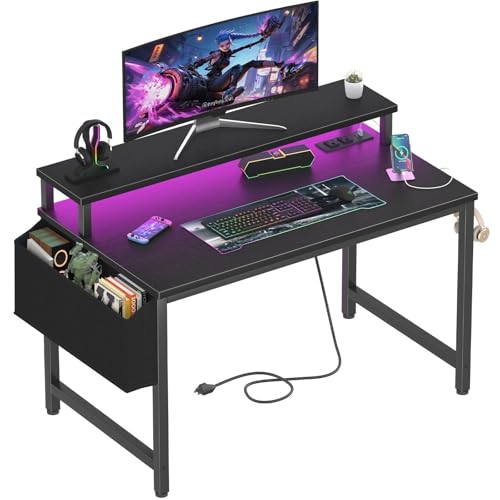
Shopping for desks for teenagers is a different job than shopping for a desk for a younger child. A teenager’s body is closer to adult-sized, their homework load is heavier, and their days often mix schoolwork with gaming, video calls, and hobby projects that all compete for the same surface. After comparing current Amazon listings across sizes, materials, and layouts, the Lufeiya Black Gaming Desk with LED Lights and Power Outlets stands out as the best all-around pick because it pairs a roomy 40-inch surface with the monitor stand, charging ports, and sturdy frame that a dual-purpose homework-and-gaming setup actually needs. Below you’ll find 8 desks for teenagers worth considering, plus a buying guide that covers sizing, durability, dual-purpose features, style, and budget so you can choose one that will hold up for years rather than months.




Top Picks at a Glance
- Best Overall: Lufeiya Black Gaming Desk with LED Lights and Power Outlets
- Best Budget: Huuger 55 Inch Computer Desk with Large Legroom
- Best for Homework and Gaming: Bestier 42-Inch L-Shaped Computer Desk with Charging & LED
- Best for Gaming Setups: AODK L Shaped Gaming Desk with LED Light & Power Outlet
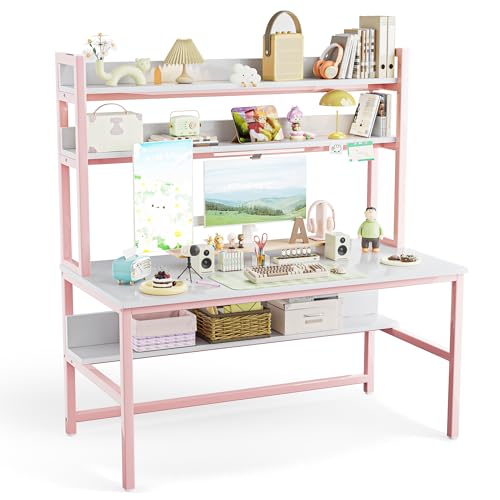
- Best Premium: Aquzee Pink Desk with Shelves and Hutch
- Best for Organization: White Gaming Desk with Hutch and Pegboard
- Best Grown-Up Style: Vabches Farmhouse Executive Desk with Storage
- Best for Small Bedrooms: Lufeiya Small Desk with Power Outlets and LED Lights
How Desks for Teenagers Differ From Kids Desks
It’s tempting to shop for a teen desk the same way you’d shop for any kids’ furniture, but teenagers use their desks very differently than younger children do. A ten-year-old’s desk mostly needs to hold a workbook and a pencil case; a fifteen-year-old’s desk needs to hold a laptop, a stack of textbooks, a phone charger, and sometimes a second monitor or a gaming setup, often for hours at a stretch. They also take rougher daily treatment — backpacks dropped on the corner, feet propped up on the frame, drinks set down without a coaster — so the materials and joinery need to hold up to more than light, supervised use.
Style matters more too. Younger kids are usually fine with playful colors and rounded, toy-like shapes, but teenagers want a room that looks like their own space rather than something left over from elementary school. That’s why so many of the best desks for teenagers on Amazon lean toward gaming-inspired black frames, clean minimalist lines, or more grown-up finishes like white oak and rustic brown, instead of cartoon themes. If you’re shopping for a younger child instead, our guide to the best kids desks covers the smaller, safety-rounded options that fit that age group better.
Sizing a Teen Desk: How Wide Is Wide Enough
Size is usually the first thing that trips people up when they’re comparing desks for teenagers. A 24 to 30-inch desk that felt generous for a young child quickly feels cramped once a teen needs to fit a laptop, a textbook, a notebook, and a phone on the surface at the same time. Most of the options worth buying today land in the 40 to 55-inch range, which gives enough width for a laptop and an open textbook side by side, or a monitor and keyboard setup if the desk doubles as a gaming station.
Depth matters almost as much as width. A desk that’s only 18 to 20 inches deep can feel unstable once a monitor arm or a stack of books is added, so look for at least 20 to 24 inches of depth on any desk that will see regular use with a monitor. Before buying, measure the wall space in the room, including a few extra inches on either side for a rolling chair and enough clearance behind it for the teen to get in and out without knocking into a bed or dresser. A desk for teenagers that’s sized correctly for the room usually gets used every day; one that’s too cramped tends to get abandoned in favor of doing homework on the bed.
Homework-and-Gaming Dual-Purpose Setups
Unlike a desk built purely for a young child’s coloring books, most teen desks now have to serve two jobs at once: schoolwork during the day and gaming or streaming in the evening. That dual purpose shows up in the features that separate a good desk for teenagers from a generic writing table. A built-in monitor stand keeps a screen at eye level and frees up desktop space underneath for notebooks and a keyboard. Integrated power outlets and USB ports mean a teen isn’t crawling under the desk to find an outlet for a laptop charger, a phone, and a set of headphones all at once. A headphone hook and a bit of cable management keep the desk looking usable instead of turning into a tangle of cords within a week.
These features aren’t just gaming extras — they genuinely help homework, too, since the same monitor stand and outlets that support a gaming setup also support video calls for group projects, a second screen for research while writing a paper, or simply keeping a phone charged during a long study session. The trade-off is price: a fully-loaded gaming-style desk with LED lighting, multiple outlets, and a monitor stand usually costs more than a bare writing table, so it’s worth deciding how much of that functionality your teen will actually use before paying extra for it.
L-Shaped and Corner Desks for Extra Workspace
When a single flat surface isn’t enough, an L-shaped desk is often the next step up for teenagers who need more room to spread out. An L-shaped or corner-style desk gives one side for schoolwork — books, a laptop, a lamp — and the other side for a monitor, keyboard, and gaming peripherals, without either setup crowding the other. That layout also tends to make better use of a bedroom’s corner space than a straight desk pushed against a single wall, since it wraps around instead of eating up one long stretch of wall.
The trade-off is footprint. An L-shaped desk needs meaningfully more floor space than a straight desk of similar width, so it’s a better fit for a teen with a larger bedroom or one where the desk is the main piece of furniture, rather than a small shared room. If your teen is more into gaming setups specifically and wants dedicated peripheral storage and cable routing built around a monitor and PC tower, it’s also worth browsing our roundup of the best gaming desks, which goes deeper into features like reinforced weight capacity and RGB lighting that some teen-focused L-shaped desks share.
Materials and Durability for Everyday Teen Use
Because teenagers tend to use their desks harder and longer than younger kids do, materials and construction quality matter more here than they might for a simple kids’ writing table. Most of these desks use an engineered wood or laminate top over a steel frame, and the quality of that laminate makes a real difference — a scratch-resistant, moisture-sealed surface holds up to spilled drinks, dropped pencils, and daily wear far better than a thin, unsealed finish that scuffs the first month. Metal frames, common on gaming-style desks, add stability and a higher weight capacity, which matters if the desk needs to support a monitor, a PC tower, textbooks, and a backpack all at once.
Stability under regular pressure is worth checking specifically, since teenagers lean on desks, prop their feet up, and sometimes push back hard in a rolling chair. A wobbly desk that seemed fine in a product photo can become an annoyance fast once it’s holding daily use. Look for listings that mention reinforced corner brackets, a sturdy metal frame, or a stated weight capacity, and check customer reviews and photos for any mention of wobbling after a few months of ownership rather than trusting marketing copy alone. Cable management features like a rear tray or grommet holes are a smaller detail, but they matter more for a desk for teenagers with a full gaming or study setup than for a bare desk with just a laptop.
Style and Storage That Actually Fit a Teen’s Taste
Storage needs shift as kids become teenagers, too. Instead of toy bins and picture books, a teen desk needs to hold textbooks, binders, chargers, and school supplies without turning into clutter. A hutch or open shelf keeps frequently used books within reach, while drawers are better for smaller items like pens, chargers, and notebooks that would otherwise slide around on an open shelf. A pegboard, like the one built into some of today’s more organized options, gives a teen a way to hang headphones, tools, or small accessories without eating into desktop space — a small feature, but one that keeps a busy desk from looking chaotic.
Style is where teen desks diverge most clearly from younger kids’ furniture. Some teens want the gaming aesthetic — black frames, RGB lighting, angular lines — while others prefer a softer look in pastel pink or white, and others are ready for something closer to adult furniture, like a farmhouse-style writing desk with a classic file drawer. None of these is objectively better; the right choice depends on what your teen actually wants to sit at every day, since a desk that doesn’t match their taste is a desk that gets used reluctantly, no matter how functional it is on paper.
Small Bedrooms and Shared Rooms
Not every teenager has a spacious bedroom to work with, and a full-size L-shaped desk simply won’t fit in every room. For smaller bedrooms or rooms shared with a sibling, a compact desk in the 30 to 34-inch range still offers enough surface for a laptop and a notebook without overwhelming the space. Look for a design with a slim profile and built-in storage rather than a wide hutch, since that keeps the desk from visually dominating a small room. If two teens are sharing a bedroom, positioning two smaller desks against separate walls, rather than a single large shared desk, usually cuts down on arguments over space and keeps each person’s supplies separate. Our guide to the best small desks is worth a look if the bedroom’s square footage is the main constraint you’re working around, since it covers footprint and stability trade-offs in more depth than we can here.
Budget Guidance for Furniture Teens Will Outgrow
It’s worth being realistic about how long a teen desk will actually stay in use before it’s replaced. Teenagers redecorate, move rooms, head off to a dorm, or simply change their taste within a few years, so pouring a large budget into the most premium desk for teenagers on the market isn’t always the best use of money. A mid-range desk with solid construction, useful storage, and the dual-purpose features your teen will actually use tends to be the better value than the most expensive option available. That said, if the desk is going into a long-term bedroom setup or your teen has very specific gaming or study needs, spending more for a sturdier build and larger surface can still be worth it — the key is matching the budget to how long and how heavily the desk will realistically be used.
How We Evaluated These Desks for Teenagers
Every option in this guide was selected from current Amazon listings for this keyword search, using publicly available listing data rather than in-person testing. We looked at customer ratings, review volume, listed dimensions, materials, and included features — such as monitor stands, power outlets, storage, and desk shape — to judge how well each option fits a teenager’s dual-purpose homework and gaming needs. We prioritized listings with clear size information, consistent naming, and enough reviews to reflect real-world use, so you can compare options accurately instead of relying on marketing language alone.
Common Mistakes When Buying a Desk for Teenagers
- Choosing a desk sized for a younger child’s needs instead of the wider surface a teen’s laptop, textbooks, and accessories require.
- Prioritizing the lowest price without checking material quality, which can lead to scratches, wobbling, or warping within months.
- Buying an L-shaped desk without measuring the room first, then finding it doesn’t leave enough clearance for the door or closet.
- Overlooking the number of power outlets and USB ports needed for a laptop, phone, and gaming accessories charging at once.
- Picking a desk with a childlike theme that a teenager won’t want to use, leading to homework happening anywhere but the desk.
- Spending the maximum budget on a premium desk without considering how soon the teen might redecorate or move rooms.
Desks for Teenagers Buying Checklist
- Confirm the desk’s width (ideally 40 inches or more) fits both schoolwork and any gaming setup you plan to use.
- Check the depth, aiming for at least 20 to 24 inches if a monitor will sit on the desk.
- Decide whether an L-shaped desk’s extra footprint fits the room, or if a straight desk makes more sense.
- Look for a scratch-resistant surface and a sturdy metal frame rated for daily, heavier use.
- Count how many outlets and USB ports you’ll need for chargers, a monitor, and gaming accessories.
- Match the storage style — hutch, drawers, or open shelving — to how your teen actually organizes their supplies.
- Choose a style your teen will actually want to sit at, rather than one chosen purely for practicality.
- Set a budget that reflects how long the desk will realistically stay in use before a room change.
FAQ
How wide should a desk for teenagers be?
Most desks for teenagers on the market range from about 40 to 55 inches wide, which gives enough room for a laptop, textbooks, and accessories, or a monitor and keyboard if the desk doubles as a gaming setup. Smaller 30 to 34-inch teen desks work for tighter bedrooms but leave less room for a dual-purpose homework-and-gaming setup.
Are gaming desks a good choice for teen homework too?
Yes, in most cases. A gaming-style desk with a monitor stand, built-in outlets, and cable management supports homework tasks like video calls and research just as well as it supports gaming, so the features aren’t wasted even on nights when the desk is only being used for schoolwork.
Is an L-shaped desk worth it for a teen’s room?
It depends on the room. An L-shaped desk gives a teenager separate zones for schoolwork and gaming or hobbies, which is genuinely useful if the bedroom has the floor space for it. In a smaller or shared room, the extra footprint often isn’t worth the trade-off compared with a compact straight desk.
What material holds up best to daily teen use?
A scratch-resistant, sealed laminate top over a sturdy metal frame tends to hold up best to the daily wear teenagers put on a desk, including spills, dropped items, and leaning or resting feet on the frame. Thinner, unsealed surfaces tend to scuff and wear noticeably faster.
How much storage does a teen desk really need?
That depends on how many textbooks, chargers, and supplies your teen keeps on hand. A desk with a couple of drawers and an open shelf or hutch is usually enough for most teenagers, while a pegboard or extra storage bag is a helpful add-on for smaller accessories like headphones and chargers.
What’s a reasonable budget for a teen desk that might get replaced in a few years?
A mid-range desk with solid construction and the dual-purpose features your teen will actually use is usually the better value, since most teenagers redecorate or change rooms within a few years. Save the premium spending for cases where the desk is part of a long-term room setup or has to meet very specific size or feature needs.