
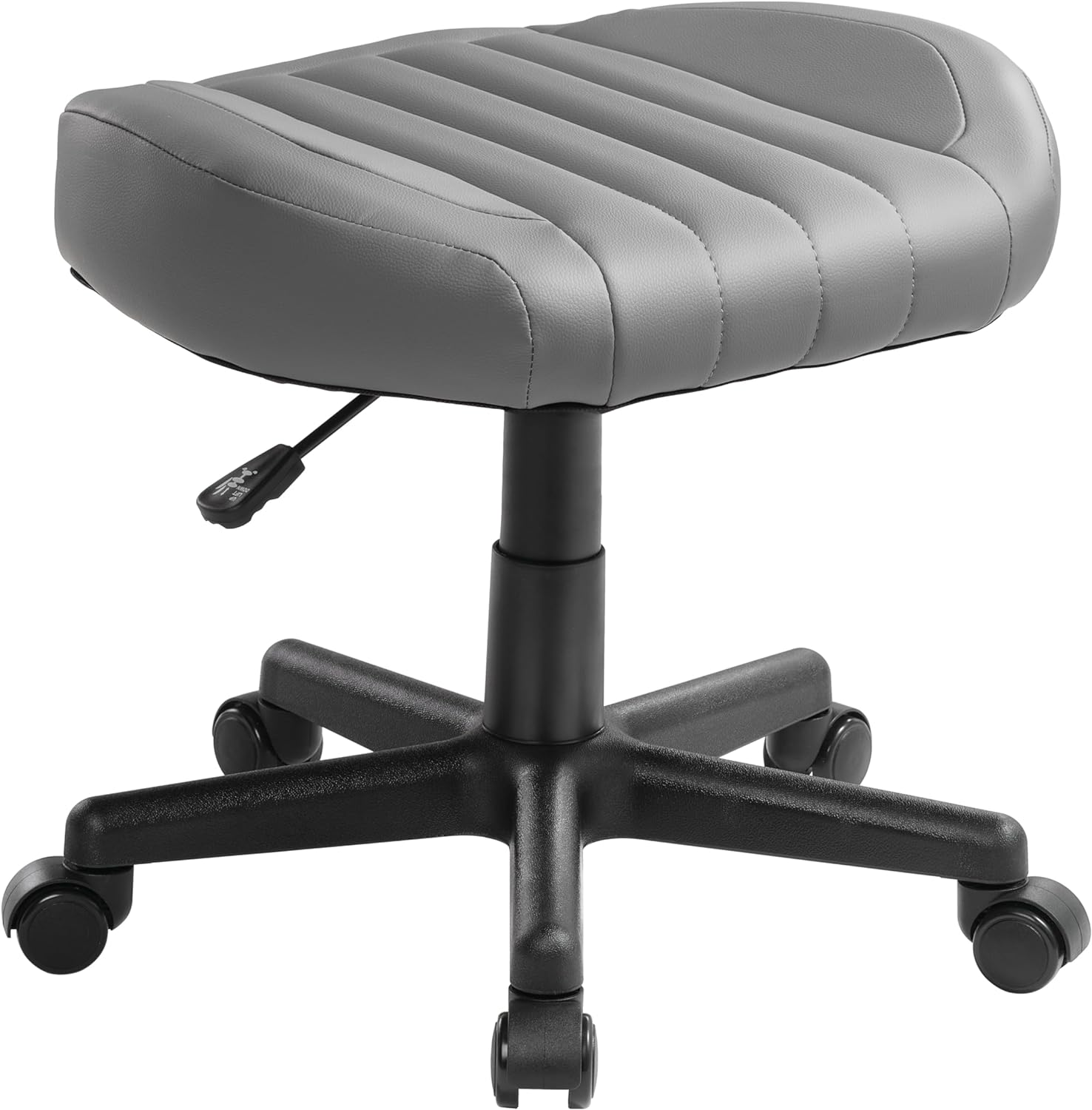
Most footrests on the market are built for one narrow job: sitting flat under a desk. An ergonomic footstool is a different kind of product. It’s a standalone piece of furniture with its own legs, a swivel base, rolling casters, or a rocking mechanism, and it’s meant to move with you between the office, the living room, and the bedroom rather than staying parked under one desk. Based on Amazon customer ratings, review volume, and how each design balances stability with genuine ergonomic movement, the EUREKA ERGONOMIC Height Adjustable Foot Stool stands out as the most well-rounded pick, pairing a wide swivel-rolling seat with sturdy casters and a strong 4.6-star rating across 380 reviews.


Top Picks at a Glance
Before getting into the buying criteria, here is a quick look at the 9 ergonomic footstools featured in this guide and where each one fits best.
- Best Overall: EUREKA ERGONOMIC Height Adjustable Foot Stool – a large swivel-rolling seat with sturdy wheels that works well as a footstool or a low meeting chair.
- Best Budget: TIOPGHAD Adjustable Ottoman Pouf Footrest – a 60-degree tilting pouf with four height settings at an accessible price.
- Best Premium: Humanscale FM 300 Foot Machine Footrest – a purpose-built ergonomic footrest from a specialty office-equipment brand.
- Best for Rocking Motion: Kensington SoleMassager Rocking Footrest – a curved-base rocker designed to keep your ankles moving through the day.
- Best for Multi-Room Use: VIVO Mobile Under Desk Leg Rest – a rolling ottoman with pneumatic height adjustment that’s easy to wheel between rooms.
- Best for Vanity and Bathroom Use: LUE BONA Adjustable Vanity Stool – a 360-degree swivel stool built with makeup rooms and bathrooms in mind as much as offices.
- Best Rolling Design: TASALON Adjustable Height Rolling Footrest Stool – lockable 360-degree wheels for a footstool that needs to move often.
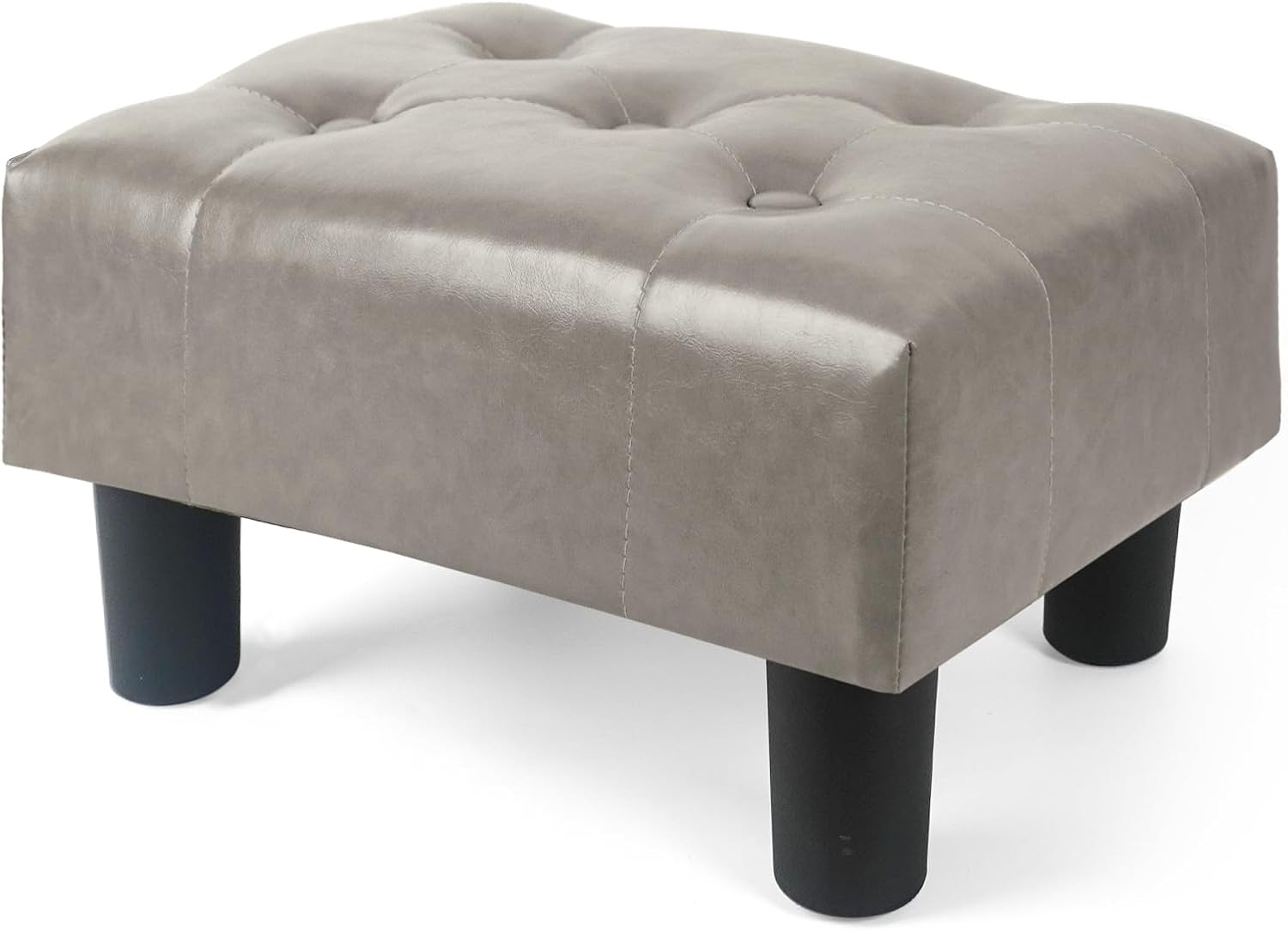
- Best Simple Standalone Design: SONGMICS Foot Stool with Legs – a classic upholstered footstool with no moving parts, built as furniture rather than an office accessory.
- Best for Small Spaces: BRIAN & DANY Small Foot Stool – a compact leather-look footstool that tucks easily beside a chair or sofa.
What Makes a Footstool “Ergonomic” (and How It Differs From a Desk Footrest)
Not every footstool qualifies as ergonomic just because a listing uses the word. In this guide, an ergonomic footstool is a standalone piece of furniture, meaning it has its own legs, base, or wheels and can stand on its own anywhere in a home, paired with some feature that actively supports posture or circulation, such as a rocking base, a swivel seat, rolling casters, or a pneumatic lift. That’s a meaningfully different product category from a desk footrest, which is a low, fixed platform designed to sit permanently under one desk and hold your feet in place while you work. If what you actually need is a compact platform that lives under your desk and nowhere else, our separate guide to desk footrests covers that narrower category in detail, while this guide focuses on standalone footstools built to move between rooms and adapt to more than one use.
The distinction matters because the two products solve different problems. A desk footrest is about keeping your feet supported in one fixed spot for hours at a time. It’s about giving you a piece of furniture that can follow you from your desk to your recliner to your vanity, often with a mechanism that keeps your ankles or hips moving rather than locking them into one static position. Shoppers who search for an ergonomic footstool but end up buying a basic desk platform are frequently disappointed that it can’t do double duty as a footrest next to their sofa.
Rocking, Swivel, or Pneumatic: Choosing the Right Mechanism
The mechanism built into an ergonomic footstool is the single biggest factor separating one option from another. Rocking designs, like the Kensington SoleMassager Rocking Footrest in this lineup, use a curved base that lets the whole footstool tilt forward and back as you shift your weight, encouraging small, continuous ankle movement instead of holding your feet flat and still for hours. Several ergonomics researchers and physical therapists point to this kind of gentle, repeated motion as genuinely helpful for circulation during long sitting stretches, though it’s worth noting that a rocking footstool takes a short adjustment period if you’re used to a completely static surface.
Swivel and rolling designs, including the EUREKA ERGONOMIC and TASALON picks here, take a different approach. Instead of tilting under your feet, the whole footstool rotates and rolls, so you can turn to face a different direction or reposition it without standing up and physically dragging it. This style tends to double as a low rolling seat as easily as a footrest, which is part of why it works well in a home office that also functions as a reading nook or a spot for video calls. Pneumatic height adjustment, seen on the VIVO model in this guide, swaps a fixed set of notches for a single lever that lets you raise or lower the seat instantly, similar to how an office chair‘s gas cylinder works. That’s a meaningful upgrade in convenience over footstools that require you to physically lift and reset a platform to change height. None of these mechanisms is objectively superior, and the right one depends more on how you plan to use it than on chasing the most complex hardware available.
Beyond the Desk: Using an Ergonomic Footstool in Multiple Rooms
Because an ergonomic footstool is a self-contained piece of furniture rather than something clamped or wedged under a desk, it’s built to travel. A rolling design can sit beside a recliner in the living room in the evening and get wheeled back to a home office desk the next morning. The LUE BONA Adjustable Vanity Stool in this guide is a good example of that flexibility taken further, marketed explicitly for bathrooms and makeup vanities as much as for offices, with a 360-degree swivel that makes it easy to turn toward a mirror or a desk without repositioning your whole body.
This cross-room usefulness is one of the clearest ways it earns its higher price over a basic desk footrest. If you split time between a desk, a recliner, and a bedside chair, buying one adaptable footstool that follows you is often more practical than buying several fixed platforms for each spot. For readers dealing with joint pain or reduced mobility who need supportive seating across more than one room, our guide to office chairs for arthritis covers chair-level adjustability that pairs naturally with adding a footstool to the setup.
Material, Size, and Weight Capacity
The seat material on an ergonomic footstool affects both comfort and how much upkeep it needs. PU leather, used on models like the TASALON and VIVO picks in this lineup, wipes clean easily and holds up well against spills, which matters if the footstool moves between a home office and a living room where drinks and snacks are more common. Fabric options, including the linen-look cover on the SONGMICS footstool, feel softer underfoot and blend more naturally into living-room furniture, though fabric is harder to spot-clean than a wipeable surface.
Size and weight capacity also deserve attention before buying one. A footstool meant to double as extra seating, not just a place to rest your feet, needs a wider, sturdier seat than one built purely for foot support, and that’s especially true for rolling or pneumatic designs where the weight capacity is tied directly to the casters and lift mechanism rather than a fixed frame. Most of the picks in this guide list a specific weight rating, and it’s worth checking that number against your own needs rather than assuming any footstool can handle full body weight the way a chair can.
Wheels and Stability: What to Check Before Standing Up
Rolling casters make an ergonomic footstool far easier to move between rooms, but they introduce a stability question that a fixed-leg design doesn’t have. If you plan to occasionally sit or stand on the footstool itself, rather than just resting your feet on it, look for a model with lockable wheels, like the TASALON design in this guide, so it won’t roll out from under you mid-motion. Even footstools without a locking mechanism generally perform fine for foot support alone, since the weight involved is much lower than standing on the seat.
Fixed-leg designs like the SONGMICS and BRIAN & DANY footstools sidestep the wheel-stability question entirely, trading mobility for a simpler, sturdier base that never needs to be locked or checked. If your priority is a footstool that stays exactly where you put it beside a couch or an armchair, a static leg design is often the more worry-free choice over a rolling one.
Specialty Ergonomic Brands vs. General Footstools: Is the Price Difference Worth It
A handful of brands, including Humanscale and Kensington, build ergonomic office equipment as their core business rather than as one product among many. The Humanscale FM 300 Foot Machine Footrest in this guide carries a noticeably higher price than most other picks here, and that premium generally reflects a company with a longer track record designing equipment specifically for prolonged sitting, rather than a general furniture brand adding “ergonomic” to a product title. For someone managing chronic discomfort, arthritis, or a job that involves sitting for most of the day, that kind of specialty design history can be worth the added cost.
That said, a specialty brand isn’t automatically the right choice for everyone. If you mainly want a footstool for occasional evening use in front of the television, a well-reviewed general-purpose option like the SONGMICS or BRIAN & DANY footstool can deliver most of the comfort at a fraction of the price. The honest answer is that the mechanism and your actual use case matter more than the brand name on the box, so it’s worth matching the footstool to how often and how seriously you’ll use it before paying extra for a specialty label.
How We Evaluated These Ergonomic Footstools
Every product featured in this guide was pulled from current Amazon listings and cross-checked against its published customer rating, review count, and price to confirm it’s a genuinely available, on-topic product. We deliberately excluded listings that are really just desk-mounted platforms without any independent base, mechanism, or multi-room use case, since those belong in the separate desk footrest category rather than this one. We prioritized a mix of mechanisms, rocking, swivel, rolling, and pneumatic, alongside simpler static designs, so shoppers can compare a genuine range of ergonomic footstools against their own habits rather than seeing a single style presented as the only option.
Common Mistakes to Avoid When Choosing an Ergonomic Footstool
- Confusing it with a basic desk footrest. A standalone ergonomic footstool and a fixed under-desk platform solve different problems; buying the wrong category leads to disappointment even with a well-made product.
- Ignoring weight capacity on rolling or pneumatic designs. The casters and lift mechanism bear more stress than a fixed-leg frame, so check the stated capacity before assuming it can handle everyday use.
- Skipping the wheel lock check. If you might sit or stand on the footstool, an unlockable rolling base can shift unexpectedly.
- Choosing fabric without considering cleaning needs. A linen or fabric cover feels nice but is harder to spot-clean than PU leather if the footstool moves between rooms with food or drinks nearby.
- Overpaying for a specialty brand you don’t need. A premium ergonomic brand makes sense for daily, prolonged use, but occasional use rarely justifies the added cost over a well-reviewed general option.
- Not measuring the space in every room you plan to use it. A footstool sized for a home office may feel oversized next to a smaller recliner or bedside chair.
Buying Checklist Before You Buy an Ergonomic Footstool
- Decide whether you want a rocking, swivel, rolling, or pneumatic mechanism based on how you plan to use the footstool.
- Confirm the footstool is a standalone piece of furniture if you need it to move between rooms, not just a fixed desk platform.
- Check the stated weight capacity, especially for rolling or pneumatic designs.
- Look for lockable wheels if you might sit or stand on the footstool itself.
- Compare PU leather and fabric covers based on how easy they are to clean in your household.
- Measure the space in every room where you plan to use it.
- Weigh whether a specialty ergonomic brand is worth the premium for your actual frequency of use.
- Read recent reviews for any specific model to confirm long-term durability and comfort.
Frequently Asked Questions
What’s the difference between an ergonomic footstool and a desk footrest?
It’s a standalone piece of furniture with its own base, often including a rocking, swivel, rolling, or pneumatic mechanism, built to move between rooms. A desk footrest is a low, fixed platform designed to stay permanently under one desk. They address similar needs but serve different setups.
Should I choose a rocking, swivel, or pneumatic footstool?
It depends on how you plan to use it. Rocking designs encourage continuous ankle movement, swivel and rolling designs make repositioning easy without standing up, and pneumatic models let you adjust height instantly with a lever. None is inherently better, so match the mechanism to your daily habits.
Can an ergonomic footstool be used outside a home office?
Yes. Because it’s a standalone piece of furniture rather than something clamped to a desk, it can sit beside a recliner, a sofa, a bed, or a vanity just as easily as a desk, which is one of its main advantages over a fixed desk footrest.
Are rolling ergonomic footstools safe to stand on?
Only if the wheels lock. If you plan to occasionally sit or stand on the footstool rather than just resting your feet on it, look for a model with lockable casters. For foot support alone, unlocked wheels are generally fine.
Can an ergonomic footstool help with arthritis or joint pain?
Many users with joint discomfort find that elevating and gently moving the feet reduces pressure on the knees and hips during long periods of sitting. It isn’t a medical treatment, so anyone with a diagnosed condition should treat it as a comfort accessory alongside guidance from a healthcare provider.
How do I clean an ergonomic footstool?
PU leather covers can typically be wiped down with a damp cloth, while fabric or linen covers usually need spot cleaning unless the listing specifically states the cover is removable and washable. Check the individual product page, since care instructions vary by material.
Choosing the right ergonomic footstool comes down to matching the mechanism, rocking, swivel, rolling, or pneumatic, to how and where you actually plan to use it, then confirming the material, size, and weight capacity fit your household. If what you really need is a compact platform that stays under one desk, our guide to desk footrests covers that narrower option in more detail, and if broader seated comfort for joint pain is part of the picture, our guides to office chairs for arthritis and office chairs for fibromyalgia cover chair-level adjustability that works well alongside a footstool. With those criteria in mind, comparing the 9 ergonomic footstools above should make it straightforward to find one that fits your rooms and your routine in 2026.