Choosing a reception desk is different from picking a regular office desk. It needs to greet visitors, give front-desk staff enough room to work, hide clutter and cables, and set the tone for a lobby, salon, or medical waiting room in the first ten seconds someone walks in. After comparing size, storage, counter height, and build quality across current Amazon listings, the pick below balances those needs for most small-to-midsize lobbies without pushing the budget too high.


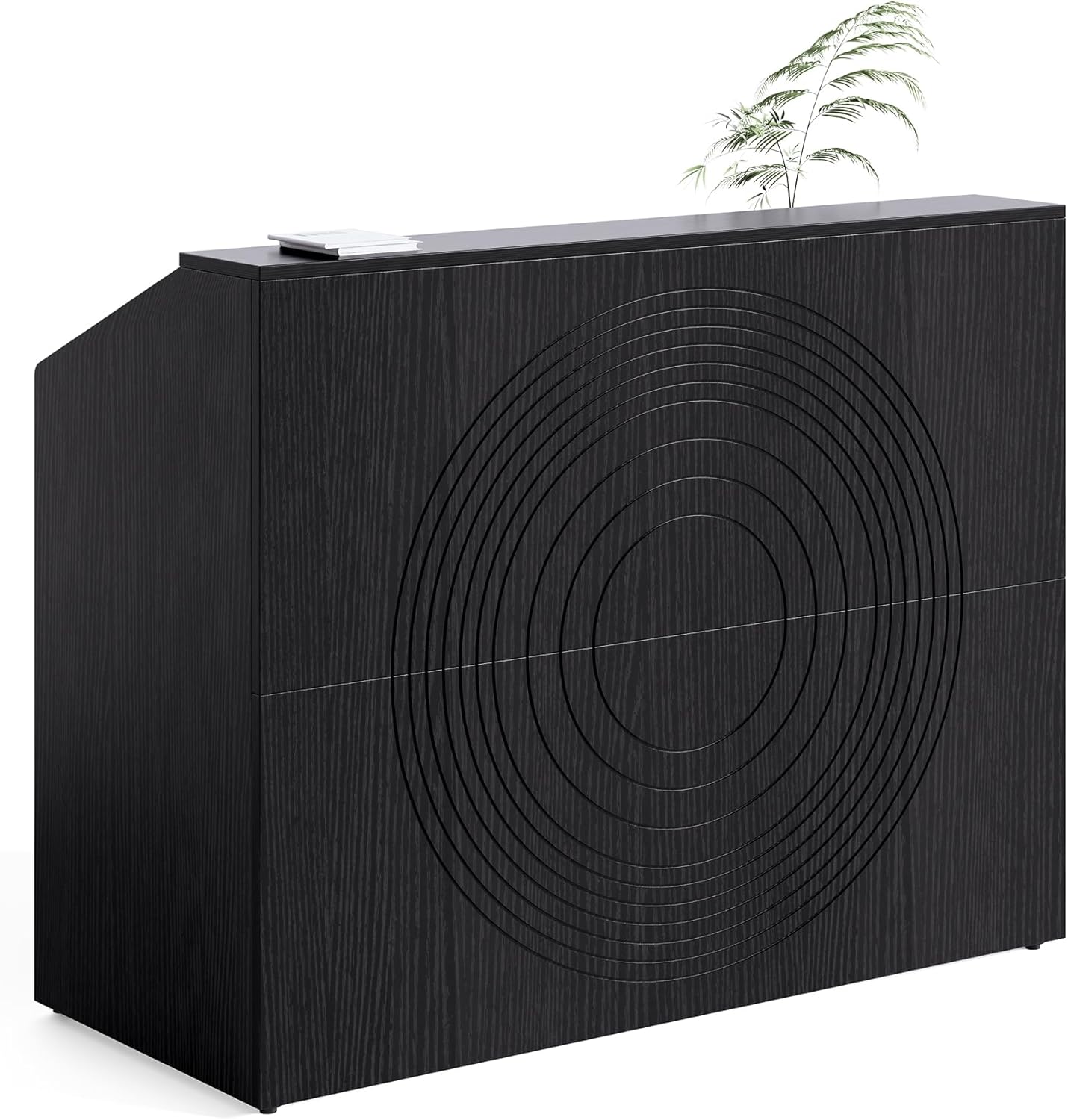


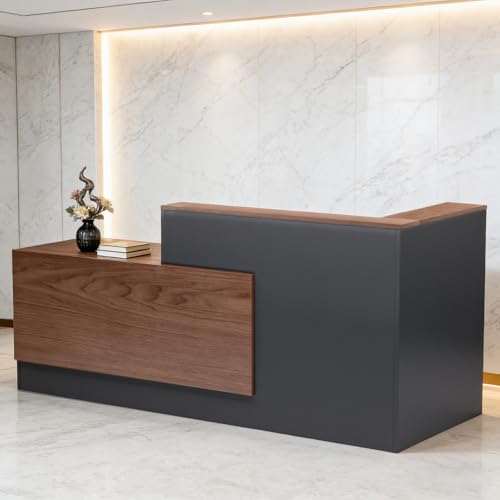

Top Picks at a Glance
- Best Overall: Tribesigns Reception Desk with Counter – a well-rounded option with built-in cable routing and a review history long enough to trust for daily front-desk use.
- Best Budget: GIANTEX Reception Desk with Lockable Drawer – a compact, low-cost pick for a startup lobby or a side entrance that just needs a check-in point.
- Best for Small Lobbies: LITTLE TREE 47-Inch Reception Desk with Counter – a narrower footprint that still keeps a proper visitor-facing counter.
- Best for Salons & Medical Offices: OmySalon Reception Desk with Counter – sized for check-in counters in salons, spas, and small clinics where floor space is limited.
- Best L-Shaped for Two-Person Front Desk: L-Shaped Reception Desk with Lockable Drawers & Keyboard Tray – extra return space for a second staff member or a printer station.
- Best for First Impressions: WOODTIME Reception Desk with LED Light & Glass Front – a lit, glass-front build made to stand out in a retail or boutique lobby.
- Best Premium / Best for Large Lobbies: L-Shaped Wooden Commercial Reception Desk with Shelves – a larger, commercial-grade build with open shelving for higher-traffic lobbies.
- Best Mid-Range Style: LITTLE TREE 57-Inch Reception Counter, Boho Style – a distinct finish for offices that want more personality than a standard laminate box.
Counter Height and Layout: Getting the First Impression Right
The single biggest difference between this kind of desk and a regular work desk is the two-tier layout. A visitor-facing counter typically sits around 42 to 45 inches high, tall enough to create a natural boundary and keep papers, screens, and personal items out of a guest’s line of sight. Behind that counter, the working surface where staff actually sit usually drops to a standard desk height of about 28 to 30 inches, so the person answering phones or checking people in isn’t reaching up all day. When you’re comparing options, check both measurements separately rather than assuming “desk height” applies to the whole unit.
Counter height also affects accessibility. A front counter that’s too tall can make eye contact awkward for visitors in wheelchairs or for children, which matters in medical offices, schools, and any lobby that serves the general public. If accessibility is a requirement for your space, look for a lower transaction section or confirm the height against local guidelines before you order.
Choosing the Right Size and Footprint for Your Lobby
Before shopping, measure the actual lobby space, including at least 36 inches of clear walking room in front of and around the unit. A straight layout is the easiest to fit into a narrow entryway or a tight salon check-in area, since it only needs wall space along one side. An L-shaped configuration gives staff more surface area and a second work zone, but it needs meaningfully more floor space and works best in a square or rectangular lobby rather than a narrow hallway-style entrance.
Match the size to the room, not the other way around. A large L-shaped unit can dominate a small waiting area and make it feel cramped, while an undersized desk in a spacious corporate lobby can look out of place and won’t give staff enough room for a computer, phone, sign-in tablet, and paperwork at the same time.
Storage and Organization for Front-Desk Staff
Front-desk staff need somewhere to keep sign-in sheets, ID badges, personal bags, and office supplies out of view, which is why storage is one of the most important features to compare across these desks. Lockable drawers are worth prioritizing if the desk will hold anything sensitive, like patient forms, payment slips, or spare keys. Open shelving underneath or to the side is useful for printers, scanners, or brochures, but it’s visible to anyone standing at the counter, so it works best for items that don’t need to be hidden.
A keyboard tray is a small feature that makes a real difference in daily comfort, since it frees up the counter surface for a monitor, phone, and paperwork instead of forcing everything onto one crowded plane. When you’re evaluating a busy front desk, prioritize drawer count and lock quality over cosmetic extras.
Cable Management and Power Access
A front desk usually runs a computer, monitor, phone, card reader, and sometimes a small printer, all at once, so cable management is a practical requirement rather than a nice-to-have. Look for a cable grommet, a routing channel, or a built-in power outlet, since these features keep cords from trailing across the floor where visitors and staff can trip on them. Some models now include LED strips or USB ports wired into the counter, which is convenient but does mean confirming there’s an outlet nearby before you commit to a spot in the lobby.
This is one of the clearest ways this kind of desk differs from a standard office desk: a personal desk rarely needs to route cables to a counter-height surface facing the public, while a front-of-house counter almost always does.
Materials, Finish, and Durability
Most models in this price range use engineered wood with a laminate or melamine finish, which resists scratches and daily wear reasonably well and is far lighter to ship and assemble than solid wood. Higher-end models add veneer finishes, tempered glass fronts, or metal frame accents, which look more polished but usually cost more and can be heavier to move into place. Since this furniture sits in a high-traffic area and gets touched, leaned on, and wiped down constantly, a durable, easy-to-clean surface matters more here than it might on a desk in a private office.
LED lighting and glossy or glass panels can make a front counter feel more upscale, which matters for salons, med-spas, and boutique offices where first impressions drive business. Just weigh that against maintenance: lit panels need a power source nearby and glass fronts show fingerprints more than a matte laminate finish.
Reception Desk vs. Standard Office Desk: What’s Different
It’s tempting to save money by placing a regular office desk at the front of a lobby, but a true reception desk is built for a different job. A standard desk is a single flat, private work surface meant for one person facing away from foot traffic. A dedicated front-desk unit adds a raised visitor-facing counter, often a modesty panel to block the view underneath, and a layout designed for someone to greet people while working. These pieces are also built to withstand more contact and wear since visitors lean on the counter, set down bags, and sign paperwork there daily.
If your space also needs supporting furniture, it’s worth planning the whole waiting area at once. A matching set of guest chairs for the waiting area and a front counter with complementary finishes will look more intentional than furniture bought piece by piece.
How We Evaluated These Reception Desks
This guide is based on a review of current listings on Amazon, comparing verified specifications, customer ratings, review counts, and pricing rather than in-person testing. Each option was assessed against the same criteria used throughout this guide: footprint relative to the stated dimensions, available storage and lock options, cable management features, material and finish quality, and how the pricing compares to similarly sized units. Products with very few reviews or unclear specifications were excluded so the picks above reflect models with a real track record of customer feedback.
Common Mistakes When Buying a Reception Desk
- Ordering one without measuring the lobby, including clearance for foot traffic and door swing.
- Ignoring cable management until after the unit arrives, resulting in visible cords across the counter.
- Choosing a counter height that’s uncomfortable for either standing visitors or seated staff.
- Skipping lockable storage on a desk that will hold sensitive paperwork or payments.
- Underestimating how many people are needed to move and assemble a large L-shaped unit.
- Picking a finish that doesn’t match the rest of the lobby, which undercuts the first impression a reception desk is supposed to create.
Reception Desk Buying Checklist
- Lobby dimensions measured, including walkway clearance around the desk.
- Counter height and working height both confirmed against your staff and visitor needs.
- Lockable drawer or cabinet included for sensitive items.
- Cable grommet, routing channel, or built-in outlet available for the chosen location.
- Finish and material appropriate for high-contact daily use.
- Assembly requirements reviewed, including how many people and how much time it will take.
- Style and color consistent with the rest of the lobby or waiting area.
- Budget confirmed against comparable options in the same size and feature range.
If storage is the priority rather than a visitor-facing counter, it’s also worth comparing dedicated desks with storage, which can work well as a secondary workstation behind the main reception desk. For larger offices that also host meetings near the lobby, pairing a front-desk setup with one of the conference tables in a nearby room keeps the overall look consistent.
Frequently Asked Questions
How tall should a reception desk be?
Most reception desks use a visitor-facing counter around 42 to 45 inches high and a working surface behind it around 28 to 30 inches high. This split lets guests stand comfortably at the counter while staff sit at a normal desk height.
What’s the difference between a reception desk and a regular office desk?
A reception desk has a raised counter section facing visitors, often with a modesty panel, and is built to handle daily contact from the public. A standard office desk is a single flat surface meant for private, individual work and isn’t designed for someone to greet visitors across it.
Is an L-shaped reception desk worth it over a straight one?
An L-shaped layout gives staff more surface area and can support a second person or extra equipment, which is useful for busier lobbies. A straight layout fits narrower spaces better and is usually easier to place against a single wall.
How do I manage cables at a reception desk?
Look for a cable grommet, a routing channel along the back, or a built-in power outlet. These features keep cords for the computer, phone, and card reader off the floor and out of view of visitors.
Does a reception desk need a lockable drawer?
If staff will store paperwork, payment items, or personal belongings at the front desk, a lockable drawer is worth prioritizing. It’s less important for a unit used only as a simple sign-in point.
What material holds up best on a daily-use reception desk?
Laminate or melamine-finished engineered wood is common and holds up well to daily wear at a reasonable price. Veneer, tempered glass, or metal-accented builds look more premium but typically cost more and need slightly more careful cleaning.