A wall mounted desk can turn an awkward corner, a narrow hallway, or a cramped bedroom into a functional workspace without eating up floor space. But not every folding or floating desk works for every room — the wrong model can wobble under a laptop, block a doorway when unfolded, or simply be too shallow to use comfortably. This guide walks you through exactly what to check before you buy, so the desk you choose actually solves your small-space problem instead of adding another one.
What You’ll Need Before You Start
Before comparing models, gather a few basics so you can evaluate options quickly and confidently:
- A tape measure for your wall space and clearance area
- A stud finder (essential for safe, secure mounting)
- A rough idea of what you’ll use the desk for (laptop work, drawing, crafting, a second monitor)
- A list of the wall type you’re working with — drywall, plaster, brick, or concrete
- A basic level, for checking the desk sits flush once installed
Having this information ready makes the rest of the selection process much faster, since it narrows down which desk styles and weight capacities are realistic for your space.
Step 1: Measure Your Available Wall Space
- Measure the total width of wall you can dedicate to the desk, including a few inches of buffer on each side for your elbows and any wall décor.
- Measure the depth available when the desk is fully extended — this includes the desk surface plus chair clearance behind it.
- Check the ceiling height if you’re considering a desk with shelving above it, since some units combine storage and worktop in one footprint.
- Note the location of outlets, light switches, and windows so the desk doesn’t block them once mounted.
Small spaces rarely have generous margin for error, so write these numbers down rather than estimating by eye. A desk that’s even two inches too deep can make a hallway impassable.
Step 2: Decide Between Folding and Fixed Wall Mounted Desks
Wall mounted desks generally fall into two categories, and picking the right one depends on how often you’ll actually use the workspace:
- Folding (drop-leaf) desks hinge down from the wall and fold flat when not in use. These are ideal for rooms that serve double duty, like a guest room or a kitchen nook, since the desk disappears when you need the floor space back.
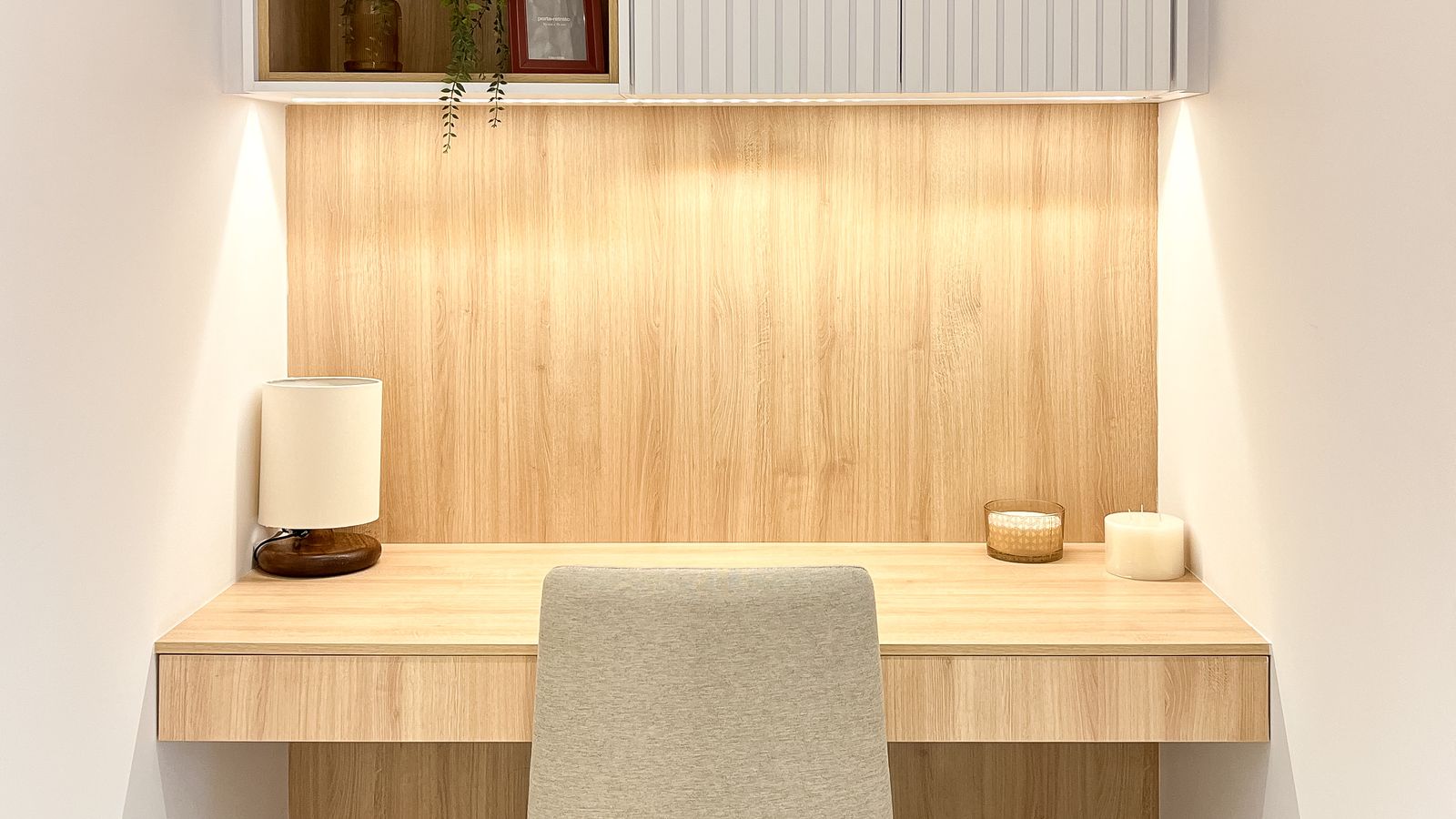
- Fixed floating desks stay permanently mounted and extended. They’re sturdier for daily use, better suited to holding a monitor or heavier equipment, and don’t require you to fold and unfold anything each session.
If you work from home full time, a fixed floating desk is usually the more comfortable long-term choice. If the space needs to flex between “office” and “everything else,” a folding model is worth the small trade-off in stability.
Step 3: Check Weight Capacity and Build Material
Wall mounted desks vary widely in how much weight they can hold, and this matters more than people expect. A basic laptop shelf might only support 20-30 pounds, while a reinforced desk built for a monitor, printer, and storage may hold 100 pounds or more. Before choosing:
- Add up the weight of everything you plan to keep on the desk daily — monitor, laptop, books, a desk lamp.
- Look for solid wood, plywood, or steel-bracket construction rather than thin particleboard if you’ll be using the desk daily.
- Check the manufacturer’s stated weight limit and choose a desk rated comfortably above your actual load, not right at the edge of it.
If your setup leans toward a dual-monitor arrangement or heavier peripherals, it’s worth browsing dedicated desks for programmers, many of which are built with reinforced surfaces suited to multiple screens even in a compact footprint.
Step 4: Match the Desk Height and Depth to How You’ll Sit or Stand
- Standard seated desk height is typically 28-30 inches — measure from the floor to where you plan to mount the desk surface.
- If you intend to use the desk standing, look for models designed at counter height (around 36-42 inches) or ones with adjustable brackets.
- Confirm the depth (front to back) supports your keyboard, mouse, and a small amount of writing space — 18-20 inches is a comfortable minimum for regular use.
- If you plan to share the desk with a partner or roommate at different times, check whether the width comfortably fits two people side by side, or consider browsing best desks for two people if the space genuinely needs to accommodate simultaneous use.
Step 5: Plan the Mounting Process
- Use a stud finder to locate at least two wall studs within the desk’s mounting bracket range — this is the single most important safety step.
- If studs don’t align with the bracket holes, plan to use heavy-duty drywall anchors rated for the desk’s weight capacity, not standard picture-hanging hardware.
- Mark your mounting height with a pencil and level before drilling, double-checking against your Step 4 measurements.
- Attach the wall bracket first, then the desk surface, following the manufacturer’s hardware sequence rather than improvising the order.
- Test the desk with light weight first, then gradually add your normal equipment over a day or two to confirm stability.
Safety Notes
- Never mount a wall desk using only drywall anchors if the desk is rated for 40 pounds or more — always anchor into at least one stud.
- Double-check brick or concrete walls require masonry anchors, which are different from standard drywall hardware.
- Leave the desk unloaded for the first few hours after installation to let any adhesive or anchor compound fully set, if your kit includes one.
- Avoid placing a folding desk directly above a walkway hinge point where someone could bump their head when it’s extended.
Common Mistakes to Avoid
- Skipping the stud finder. This is the most common cause of a wall desk failing — anchors alone often can’t support sustained daily weight.
- Choosing depth based on the desk alone, not the full workspace. Remember to account for chair clearance and your own seated posture, not just the desk’s physical footprint.
- Underestimating cable management. A wall mounted desk with no cable routing can look cluttered fast — look for models with a rear cutout or built-in grommet.
- Ignoring return policies. Because wall mounted desks are semi-permanent once installed, buying from a retailer with a reasonable return window protects you if the size doesn’t work as expected.
- Mounting too high or too low. Match the surface height to actual ergonomic seated or standing height, not just whatever looks proportional on the wall.
Where to Start Browsing
Once you know your ideal size, weight capacity, and folding vs. fixed preference, browsing curated picks makes the decision much faster than scrolling endless listings. A good starting point is our roundup of Wall Mounted Desks, which covers a range of styles suited to different room types and budgets, from simple laptop shelves to fully reinforced floating desks with storage.
FAQ
How much weight can a typical wall mounted desk hold?
It varies significantly by model and mounting method, ranging from around 20 pounds for basic laptop shelves up to 100+ pounds for reinforced, stud-mounted units. Always check the manufacturer’s rated capacity rather than assuming.
Do I need to mount into wall studs?
For any desk holding more than light decorative weight, yes. Studs provide the load-bearing strength that drywall alone cannot, especially for desks that will be used daily.
Are folding wall desks sturdy enough for daily work?
Many are, but sturdiness depends on the hinge and support-leg design. If you’ll be working at the desk every day, look for models with a fold-out leg or diagonal support bracket rather than hinges alone.
Can a wall mounted desk work in a rental apartment?
Yes, though you’ll want to check your lease terms first. Some renters use removable heavy-duty mounting strips for lighter desks, while others opt for freestanding desks with a wall-hugging profile as a non-permanent alternative.
What’s the ideal depth for a small-space desk?
Around 18-20 inches is typically enough for a laptop and keyboard with a bit of writing room, while 24 inches or more is more comfortable if you’re adding a monitor or working long hours.
Final Thoughts
The best wall mounted desk for a small space is the one that matches your real measurements, your actual weight needs, and how often you’ll use it. Take the extra ten minutes to measure carefully and check stud placement — it saves you from a wobbly desk or a return shipment later. With the right dimensions and mounting plan in hand, browsing dedicated options becomes a much quicker, more confident process.