If your home office still runs on a single fixed-height desk, upgrading it doesn’t have to mean tearing the whole room apart. A few smart swaps – a sit-stand desk with saved height settings, a folding option for flexible spaces, or a slimmer compact frame – can transform how comfortable and productive your workday feels. This guide walks you through how to plan the upgrade, what to look for in each desk type, and how to put the pieces together into a setup that actually works for your space and habits.

Why Upgrade Your Home Office Desk Setup
Most people who work from home inherited their desk rather than chose it. Over time, a mismatched desk height leads to hunched shoulders, wrist strain, and an afternoon slump that has nothing to do with how much sleep you got. Upgrading your desk setup addresses the root cause instead of masking it with a better chair or a wrist rest. A properly sized standing desk lets you alternate between sitting and standing throughout the day, which studies on prolonged sitting consistently link to better circulation, steadier energy, and reduced lower-back discomfort.
There’s also a practical space dimension. Not every home office has room for a full 60-inch desk, and not everyone needs one permanently – some people need a desk that folds away for guests, a hybrid schedule, or a studio apartment. Knowing which category of desk fits your actual routine, rather than buying whatever looks impressive online, is the real upgrade.
What You’ll Need Before You Start
- A tape measure to record your available floor space and doorway clearance for delivery.
- Your current chair height and elbow height while seated, to calculate the correct standing desk range.
- A power outlet within reach if you’re considering an electric standing desk with memory presets.
- A rough idea of your monitor setup (single, dual, or laptop-only) since this affects desktop depth needs.
- 15–30 minutes to test different desk heights once your new desk arrives, before finalizing your presets.
Step 1: Decide Which Desk Type Matches Your Space and Routine
Before comparing specific models, sort your needs into one of three broad categories. This keeps you from getting distracted by features you don’t actually need.
Standing Desks with Memory Presets
If you have a dedicated office corner and switch between sitting and standing multiple times a day, an electric standing desk with programmable height memory is the strongest long-term investment. Instead of eyeballing the height every time, you press a button and the desk moves to your exact saved position – typically two to four presets covering a seated height, a standing height, and sometimes a stretch or collaborative-height setting. This removes the friction that causes most people to abandon manual crank desks within a few weeks. If this sounds like your situation, the Standing Desks with Memory Presets roundup breaks down the best options by price and lifting capacity.
Folding Desks
For renters, small apartments, dual-purpose rooms, or anyone who needs to reclaim floor space at the end of the workday, a folding desk is the more practical choice. These fold flat or collapse against a wall, so the desk isn’t a permanent fixture even though it’s a genuinely usable work surface during the day. They’re also easier to move between rooms if your work location shifts seasonally. See the folding desks guide for models that balance sturdiness with a quick, tool-free fold.
Compact Standing Desks
If you like the health benefits of sitting-to-standing but don’t have room for a full-size electric frame, a compact standing desk fills the gap. These are narrower, sometimes tabletop risers or slim electric frames designed for small bedrooms, corner nooks, or shared spaces. They trade some surface area for a much smaller footprint. Browse the best compact standing desks to compare width and depth options against your available space.

Step 2: Measure Your Space and Set a Budget
Measure the width, depth, and ceiling clearance where the desk will live, plus the distance to the nearest outlet if you’re going electric. Add at least 30 inches of clearance behind the desk for a chair to slide out comfortably, and check the doorway width if the desk arrives partially assembled. On budget, expect entry-level manual or folding desks to start around $120–$200, mid-range electric standing desks with two or three memory presets to run $250–$450, and premium dual-motor frames with four presets and higher weight capacity to land above $500. Compact standing desks generally sit in the lower-to-mid range since they use less material and simpler motors.
Step 3: Choose the Right Height Range and Weight Capacity
Whichever desk type you land on, height range and weight capacity matter more than brand names. For sitting, your elbows should rest at a 90-degree angle with your desk surface; for standing, the same rule applies while upright. Most adjustable desks cover roughly 24 to 50 inches, which fits the majority of body types, but taller or shorter users should double-check the exact range before buying. On weight capacity, tally up your monitor arm, dual monitors, laptop, desk lamp, and any accessories – a light desktop setup needs 100–150 lbs of capacity, while dual monitors on arms plus a docking station can approach 200 lbs.
Step 4: Program Your Memory Presets Correctly
- Once the desk is assembled and powered on, sit in your usual chair and adjust the desk height until your elbows form a natural 90-degree angle over the keyboard. Save this as preset 1 (sitting).
- Stand up straight in your regular shoes and raise the desk until your elbows again sit at roughly 90 degrees. Save this as preset 2 (standing).
- If your desk supports a third or fourth preset, consider a mid-point “perch” height for quick stand-up calls, or a slightly higher setting for reviewing documents.
- Test each preset over a full workday and nudge the saved height by half an inch if your wrists or shoulders feel tense – small adjustments make a noticeable difference.
- Re-check your presets every few months, especially after switching chairs or footwear (like moving from flats to sneakers), since either can shift your ideal height by an inch or more.
Step 5: Assemble the Rest of Your Setup Around the Desk
The desk is the foundation, but a few companion pieces make the upgrade feel complete. Add a monitor arm to free up desktop depth, especially on compact or folding desks where surface space is limited. Route cables through a cable tray or clip system before you start using the desk daily – it’s much easier to manage cords when the desk is empty than after your monitor, laptop dock, and lamp are all connected. If you’re using a folding desk, choose lightweight accessories you can move with it, since a heavy monitor arm can make daily folding impractical.
Safety Notes and Anti-Tip Precautions
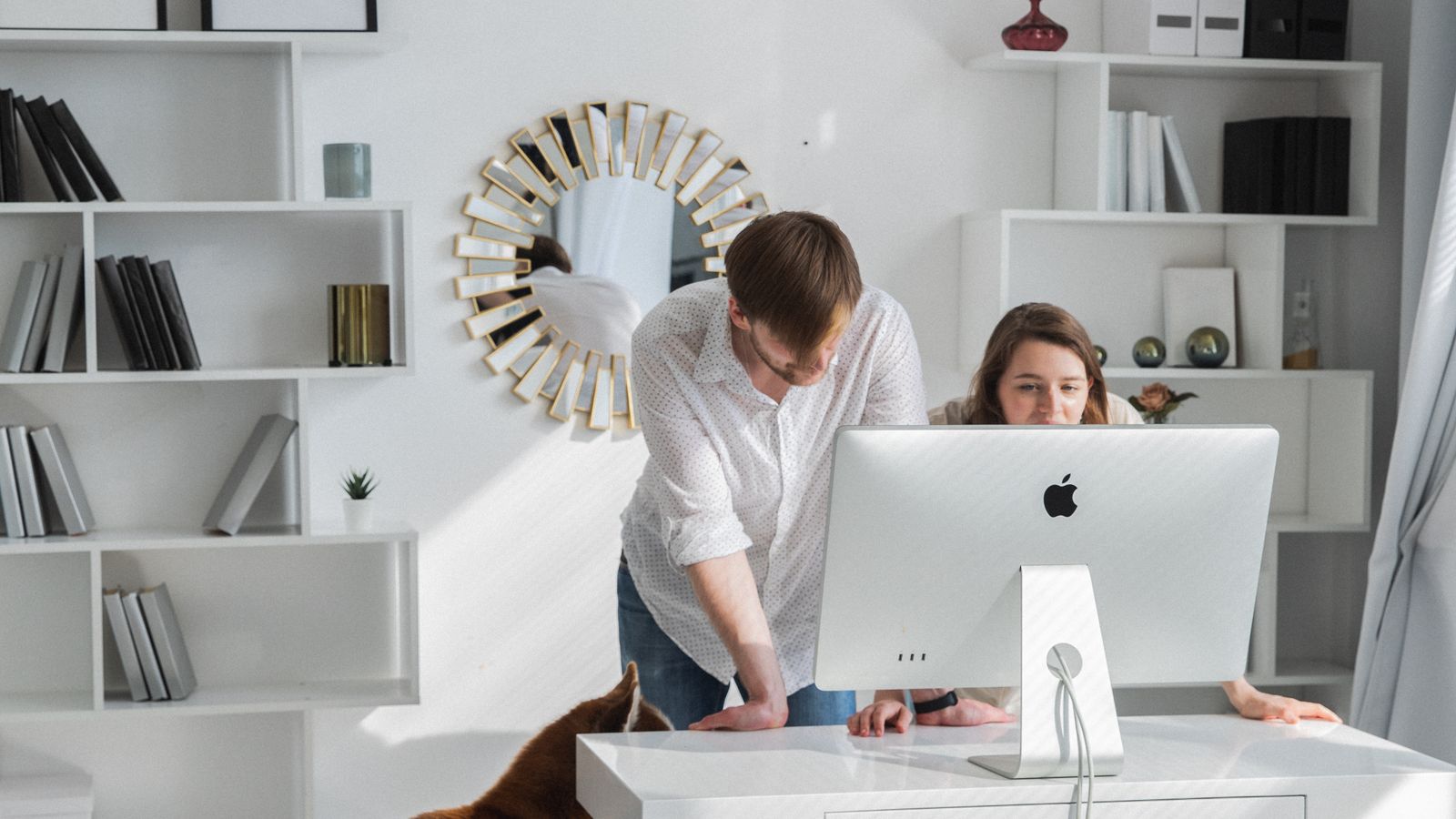
Electric standing desks carry real weight and motor force, so a few precautions matter. Never let children operate the height controls unsupervised, and check that your desk has anti-collision sensors if pets or kids are around the office. Keep power cables and cable trays clear of the desk’s moving mechanism to avoid pinching. If you’re placing a folding desk against a wall, confirm the folding hinge is fully locked before walking away, since an improperly latched hinge can cause the desk to drop unexpectedly.
Common Mistakes to Avoid
- Buying the desk before measuring the space. A desk that looks compact online can still be too deep for a narrow nook – always measure first.
- Ignoring weight capacity. Overloading a compact or folding desk’s frame can cause wobble or motor strain over time.
- Setting presets while wearing different shoes than usual. Height that feels right in slippers may feel off in sneakers with a thicker sole.
- Skipping cable management. Loose cords are the most common reason a sit-stand desk stops getting used daily – tangled cables make raising and lowering the desk annoying.
- Choosing a folding desk for a permanent heavy dual-monitor rig. Folding frames are built for convenience, not for carrying the heaviest setups long-term.
Frequently Asked Questions
How many memory presets do I actually need?
Two presets (sit and stand) cover most people’s needs. A third “perch” height is a nice bonus if you take a lot of video calls, but it’s not essential.
Can a folding desk handle a full standing desk motor?
Some folding desks include electric height adjustment, but most rely on manual crank or pneumatic lift mechanisms to keep the folding hinge simple and lightweight.
Is a compact standing desk sturdy enough for typing and writing?
Yes, as long as you stay within its stated weight capacity and avoid leaning heavily on one corner – narrower frames can wobble more than full-width desks under uneven pressure.
How long does it take to get used to a standing desk routine?
Most people adjust within one to two weeks. Start with 30–45 minutes of standing per hour and increase gradually rather than standing all day immediately.
Final Thoughts
Upgrading your home office desk setup is less about buying the most expensive frame and more about matching the desk type to how you actually work and how much space you actually have. A standing desk with memory presets rewards daily sit-stand switching, a folding desk suits flexible or shared rooms, and a compact standing desk bridges the gap for tight spaces. Take the time to measure your room, test your presets once the desk arrives, and build the rest of your setup – monitor arm, cable management, accessories – around that foundation. The result is a workspace that supports your body instead of working against it.