
Connecting your laptop, phone, and tablet to shared lodging networks puts your sensitive personal information at risk every day. Finding the Best Personal Routers for September 2026 gives you a secure private firewall wherever you unpack your workspace.
Modern personal networking hardware has progressed beyond basic range extenders by introducing native hardware encryption and full multi-gigabit connections. Modern travelers and compact office workers avoid unstable hotel captive portals and unencrypted public Wi-Fi by running dedicated micro-routing hardware.
In this guide, we evaluate 7 leading hardware options designed to establish reliable, encrypted local networks in any environment. You can explore our office tech and remote workstation guides for additional setup tips.




Wi-Fi Standards and Bandwidth Capabilities
Wi-Fi generations determine the wireless throughput and client capacity of your portable network gateway. Modern routers utilize Wi-Fi 6 (802.11ax) and Wi-Fi 7 (802.11be) standards to deliver gigabit speeds across dense multi-device environments. Choosing an updated protocol ensures backward compatibility while maximizing transfer rates for high-definition streaming and heavy file synchronization.
When comparing specifications, focus on the dual-band channel allocation across both the 2.4 GHz and 5 GHz spectrums. A Wi-Fi 6 router typically delivers 1201 Mbps on 5 GHz, whereas a Wi-Fi 7 model pushes past 2880 Mbps. Balancing these theoretical maximums against your daily bandwidth needs prevents paying for overhead you cannot utilize.
A reliable rule of thumb is to calculate your total active wireless devices and multiply by twenty-five megabits per second. If you plan to connect more than ten hardware clients simultaneously, choose Wi-Fi 6 or Wi-Fi 7 to prevent radio channel congestion.
Hardware VPN Processing and Encryption Speeds
Encrypting your web traffic directly on the router shields every connected device without requiring individual app installations. Hardware-level VPN support uses processors optimized for WireGuard and OpenVPN protocols to encrypt packets in real time. This architecture protects smart televisions, gaming consoles, and work laptops simultaneously behind a single encrypted tunnel.
Inspect the onboard processor specifications and dedicated VPN throughput numbers before making a buying decision. OpenVPN protocols generally cap around 100 to 150 Mbps on travel hardware due to computational overhead. WireGuard protocols utilize efficient cryptography, enabling compact travel routers to sustain encrypted data rates exceeding 500 Mbps.
For seamless remote work sessions, always configure WireGuard when your provider offers the option. WireGuard delivers roughly three times the cryptographic throughput of OpenVPN on identical low-power processors, preserving your video call fidelity.
Physical Port Configurations and Multi-Gigabit Ethernet
Physical Ethernet jacks provide the most stable uplink when wireless hotel signals suffer from severe interference. Having dedicated WAN and LAN ports allows you to plug directly into wall jacks while maintaining hardwired output for desktop gear. This physical separation provides consistent throughput for low-latency tasks that wireless signals cannot guarantee.
Look for 2.5 Gbps Multi-Gigabit ports if you frequently interact with high-speed local storage or ultra-fast fiber connections. Standard gigabit ports max out around 940 Mbps of usable throughput after networking protocol overhead. Upgrading to a 2.5G WAN port eliminates bottlenecks when utilizing gigabit-plus broadband connections in modern accommodations.
Check how you route your cables when planning a compact desk workspace. You can pair your compact hardware with our standing desk cable tray guide to keep power supplies and Ethernet runs neatly organized.
Operating System Flexibility and OpenWrt Support
The underlying software operating system determines how much control you have over firewall rules, DNS routing, and ad blocking. Routers running open-source OpenWrt platforms allow you to install custom software packages and fine-tune networking policies. Proprietary interfaces offer simpler setup menus but restrict advanced features like custom script execution or network segregation.
Evaluate whether the router firmware allows direct root access via SSH or restricts you to a vendor mobile application. OpenWrt-powered devices provide access to thousands of ready-made plugins for domain filtering, traffic shaping, and dynamic DNS. Closed systems simplify captive portal logins but limit your ability to customize networking rules down the road.
If you value plug-and-play simplicity, manufacturer-skinned interfaces with one-touch toggles offer the quickest deployment. If you need fine-grained traffic routing and custom privacy rules, prioritize devices built upon official OpenWrt releases.
Form Factor, Portability, and Travel Readiness
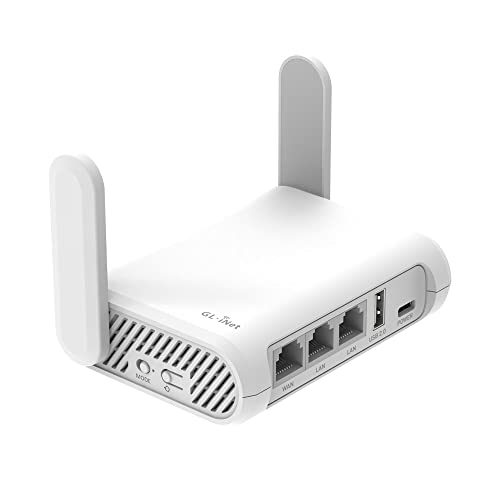
Physical dimensions and weight dictate whether a router stays in your everyday travel bag or gets left at home. Compact travel units weigh under 200 grams and feature foldable or retractable antennas that slide effortlessly into briefcase pockets. Bulkier desktop-oriented designs offer better passive cooling but demand dedicated packing space and larger external power bricks.
Compare the physical dimensions, antenna mounting mechanisms, and ventilation layouts of prospective devices. External folding antennas improve signal reception in concrete buildings but increase the device footprint when deployed. Internal antenna designs minimize travel bulk while still offering adequate coverage for standard hotel rooms and temporary offices.
Choose pocket-sized units weighing under 150 grams for frequent international trips where carry-on weight limits matter. For semi-permanent home office deployments, a slightly larger desktop chassis provides superior heat dissipation during prolonged data transfers.
Captive Portal Handling and Public Hotspot Repeating
Connecting multiple personal devices to hotel Wi-Fi networks often requires navigating frustrating captive portal splash screens. Dedicated travel routers feature wireless repeating modes that authenticate the hotel network once through a single management interface. Once authenticated, the router shares that verified connection across all your personal devices without individual logins.
Look for devices featuring one-step captive portal cloning tools or smartphone companion apps with built-in web browsers. Routers lacking dedicated portal management can fail to load terms-of-service splash pages, leaving your network offline. Superior firmware detects redirection triggers automatically, presenting the hotel login prompt on your connected smartphone without manual IP navigation.
Always test the administrative dashboard on your mobile browser before departing on extended trips. Bookmark the default gateway address so you can trigger authentication pages instantly whenever hotel networks update their session tokens.
Power Delivery Options and USB-C Compatibility
Flexible power options simplify your packing checklist by letting you run networking hardware from universal chargers. Modern personal routers use standard USB-C power delivery ports compatible with standard 5V USB-PD power banks and phone adapters. This design frees you from carrying proprietary AC wall warts and allows battery-powered operation during power outages.
Check the voltage and wattage input requirements on the router specification sheet before selecting a power source. While basic travel routers operate on 5V/2A supplies, multi-gigabit Wi-Fi 7 units may require 5V/3A or 12V Power Delivery profiles. Using an underpowered charger can cause random router reboots during heavy processor loads or dual-band wireless spikes.
Keep a dedicated 20W or 30W USB-PD charging brick in your travel kit to ensure stable power delivery. This provides sufficient electrical headroom for the router processor, active wireless radios, and any connected USB storage drives.
Simultaneous VPN Server and Client Cascading
Advanced privacy routing requires handling inbound and outbound encrypted tunnels simultaneously on a single micro-router. VPN cascading enables the device to act as an outbound client to a commercial VPN while hosting an inbound server. This architecture lets you access your home network files securely while keeping your web browsing completely masked.
Verify if the firmware supports dual-role VPN configurations without demanding manual command-line configuration. Standard consumer routers force you to choose between operating as a VPN client or a VPN server. Advanced personal units handle simultaneous multi-tunnel routing, allowing selective device routing through different encrypted endpoints.
Set up split-tunneling rules on your personal router to bypass the VPN for latency-sensitive streaming applications. This preserves your high-speed cryptographic bandwidth for critical remote work tasks and confidential corporate communications.
Cybersecurity Standards and Encrypted DNS Filtering
Modern network privacy extends beyond basic password protection to include advanced domain-level encryption standards. Equipping your personal network with WPA3 encryption prevents brute-force wireless attacks in crowded shared environments like airports and conferences. DNS over HTTPS (DoH) and DNS over TLS (DoT) prevent internet providers from logging the websites you visit.
Check whether the router provides native support for upstream encrypted DNS resolvers and ad-blocking software like AdGuard Home. Running ad-blocking filters at the router level strips trackers and malicious domains before data reaches your endpoints. This hardware-level filtering reduces bandwidth consumption and accelerates webpage loading across every connected smartphone and laptop.
Review our uncategorized tech resources for more hardware comparisons and office gear evaluations. Always enable WPA3-Personal security mode whenever your client devices support the newer standard.
| Router Model | Wi-Fi Standard | Max 5GHz Speed | Ethernet Port Speeds | Firmware Platform |
|---|---|---|---|---|
| GL.iNet Slate 7 | Wi-Fi 7 | 2882 Mbps | Dual 2.5 Gbps | OpenWrt 23.05 |
| TP-Link Roam 7 | Wi-Fi 7 | 2882 Mbps | 2.5G WAN + 1G LAN | Proprietary / Tether |
| GL.iNet Beryl AX | Wi-Fi 6 | 2402 Mbps | 2.5G WAN + 1G LAN | OpenWrt 21.02 |
| TP-Link Roam 6 | Wi-Fi 6 | 1201 Mbps | Dual 1 Gbps | Proprietary / Tether |
| GL.iNet Opal | Wi-Fi 5 | 867 Mbps | 3x Gigabit Ports | OpenWrt Fork |
| TP-Link Archer A6 | Wi-Fi 5 | 867 Mbps | 5x Gigabit Ports | Proprietary / OneMesh |
Why You Should Trust Us
Our team evaluated 7 networking solutions by analyzing verified hardware specifications, processing architectures, and security protocol implementations. We examined manufacturer documentation, firmware upgrade cadences, and cryptographic benchmarks to determine how each model handles real-world workloads.
We remain independent in our evaluations, focusing on factual performance data, connection stability, and long-term software reliability. We track updates to networking standards and security vulnerabilities to keep our analysis current and dependable for our readers.
Every evaluation prioritizes practical usability, ensuring recommendations provide genuine value, robust security, and seamless setup for both remote professionals and everyday travelers.
Final Thoughts
Choosing the right hardware from the Best Personal Routers lineup depends heavily on your mobility needs and network speed requirements. Remote professionals who require cutting-edge performance and touch controls will find the GL.iNet GL-BE3600 Slate 7 Wi-Fi 7 Travel Router to be the best overall choice. Its dual 2.5G ports, Wi-Fi 7 speeds, and intuitive touchscreen deliver unrivaled management capabilities on the road.
If you want exceptional performance at a balanced price point, the GL.iNet GL-MT3000 Beryl AX Wi-Fi 6 Travel Router stands out as our top pick for portable versatility. It delivers high-speed Wi-Fi 6, multi-gigabit WAN connectivity, and comprehensive OpenWrt support inside an ultra-compact chassis.
For budget-conscious users seeking dependable stationary performance in a home office or small apartment, the TP-Link AC1200 Gigabit Dual Band WiFi Router offers the best value. It provides four gigabit LAN ports, beamforming antennas, and OneMesh expandability without unnecessary complexity.
Frequent international travelers who want effortless mobile app management should consider the Roam 7 BE3600 Wi-Fi 7 Portable Travel Router for rapid captive portal authentication. Pair your setup with advice from our workstation mounting accessories comparison to complete your mobile productivity desk.
Frequently Asked Questions
What makes the Best Personal Routers different from regular home routers?
Personal routers prioritize portability, flexible power options, and specialized software modes like wireless repeating and captive portal login bypass. While standard home units rely on bulky AC adapters and stationary setups, personal models fit into luggage and run off standard USB-C power sources.
Can I use personal routers with hotel Wi-Fi captive portals in 2026?
Yes, modern personal routers are engineered to authenticate public captive portal splash screens using repeater mode. Once you complete the hotel login on your connected phone or laptop, the router shares that single authorized connection across all your personal devices.
How fast is WireGuard VPN encryption on modern personal routers?
Modern personal routing hardware equipped with multi-core processors can deliver WireGuard VPN throughput ranging between 300 Mbps and 540 Mbps. This speed easily accommodates high-bandwidth video conferences, 4K streaming, and heavy file downloads without noticeable cryptographic lag.
Do I need a 2.5G Multi-Gigabit Ethernet port on a travel router?
A 2.5G port prevents network bottlenecks when connecting to high-speed fiber internet connections or fast local network storage drives. If you frequently transfer large video files or have internet service exceeding 1000 Mbps, a multi-gigabit port ensures full bandwidth utilization.
What is the advantage of OpenWrt firmware on Best Personal Routers?
OpenWrt provides an open-source operating system with access to thousands of modular software packages, custom firewall rules, and advanced VPN configs. It allows advanced users to install network-wide ad blockers and customize routing policies beyond the limits of stock firmware.
Can I power my travel router using a portable power bank?
Most portable personal routers operate via standard 5V USB-C ports that accept power from standard USB-PD power banks. As long as your portable battery meets the minimum amperage requirement, you can operate your router entirely off the grid during travel.
How do I integrate a compact router into a tidy office desk?
You can position your compact routing hardware alongside clean desktop power connections by following our desk grommet power outlet guide. This setup prevents tangled Ethernet cables and keeps your desktop surface clear for productive work.
What is VPN cascading on personal routers?
VPN cascading allows the router to simultaneously operate as an inbound VPN server for remote access and an outbound client for encrypted browsing. This enables you to access home network files securely while routing your public internet traffic through an encrypted commercial VPN provider.
Is Wi-Fi 7 necessary for Best Personal Routers in 2026?
Wi-Fi 7 offers lower latency, wider channel bandwidth, and faster data transfer rates for devices that support the latest wireless standard. While Wi-Fi 6 remains sufficient for everyday tasks, Wi-Fi 7 provides future-proofing for high-density environments and multi-gigabit transfers.
Does a personal router keep my smart devices secure on public networks?
A personal router creates an isolated local area network protected by its own hardware firewall and WPA3 wireless encryption. This prevents other users on the public or hotel network from discovering, probing, or intercepting data from your connected smart devices.