If your home office has room for only one movement accessory, choosing between a walking pad and a standing desk balance board can feel harder than it should. Both promise to keep you moving during long work sessions, but they solve very different problems. A walking pad is built for continuous, low-impact cardio under a desk, while a balance board is built for micro-movements that keep your legs and core engaged while you stay in place. This guide walks you through exactly how to compare the two so you buy the right one the first time.
What You’ll Need Before You Start Comparing
Before you open a single product page, gather a few pieces of information about your own workspace. Comparing specs without this context is how people end up with a treadmill that doesn’t fit under their desk or a balance board that’s too aggressive for a full day of use.
- Exact desk height and the clearance underneath it (measure floor to the underside of the desktop).
- Available floor footprint in front of your desk, including room to step off safely.
- Your daily work pattern — do you take calls standing still, or do you move around while typing?
- Flooring type (carpet, hardwood, tile) since it affects noise and stability for both devices.
- Budget range and whether you already own a standing desk.
Step 1: Define What “Movement” Actually Means for You
Walking pads and balance boards both fight sedentary time, but they do it through completely different motions. A walking pad gives you continuous, low-intensity walking — think 1,500 to 3,000 extra steps during a workday, at speeds usually between 0.5 and 4 mph. A balance board instead asks your body to make constant tiny stabilizing adjustments while you stand relatively still, which builds ankle, knee, and core strength rather than cardio volume.
If your goal is closer to “I want to hit a step count while I work,” lean toward a walking pad. If your goal is “I want to stop feeling stiff and disengaged while standing at my desk,” a balance board is the more natural fit. Browsing a curated list of Walking Pads can help you see the range of speeds and sizes available before you commit to either category.
Step 2: Measure Your Space Realistically
This is the step people skip and regret. Walking pads typically measure between 40 and 60 inches long and 15 to 22 inches wide, and you need at least 6 to 12 inches of clearance in front and behind for safe stepping on and off. Under-desk clearance also matters — most compact walking pads are 4 to 6 inches tall, so make sure your desk’s lowest standing height still leaves comfortable arm position.
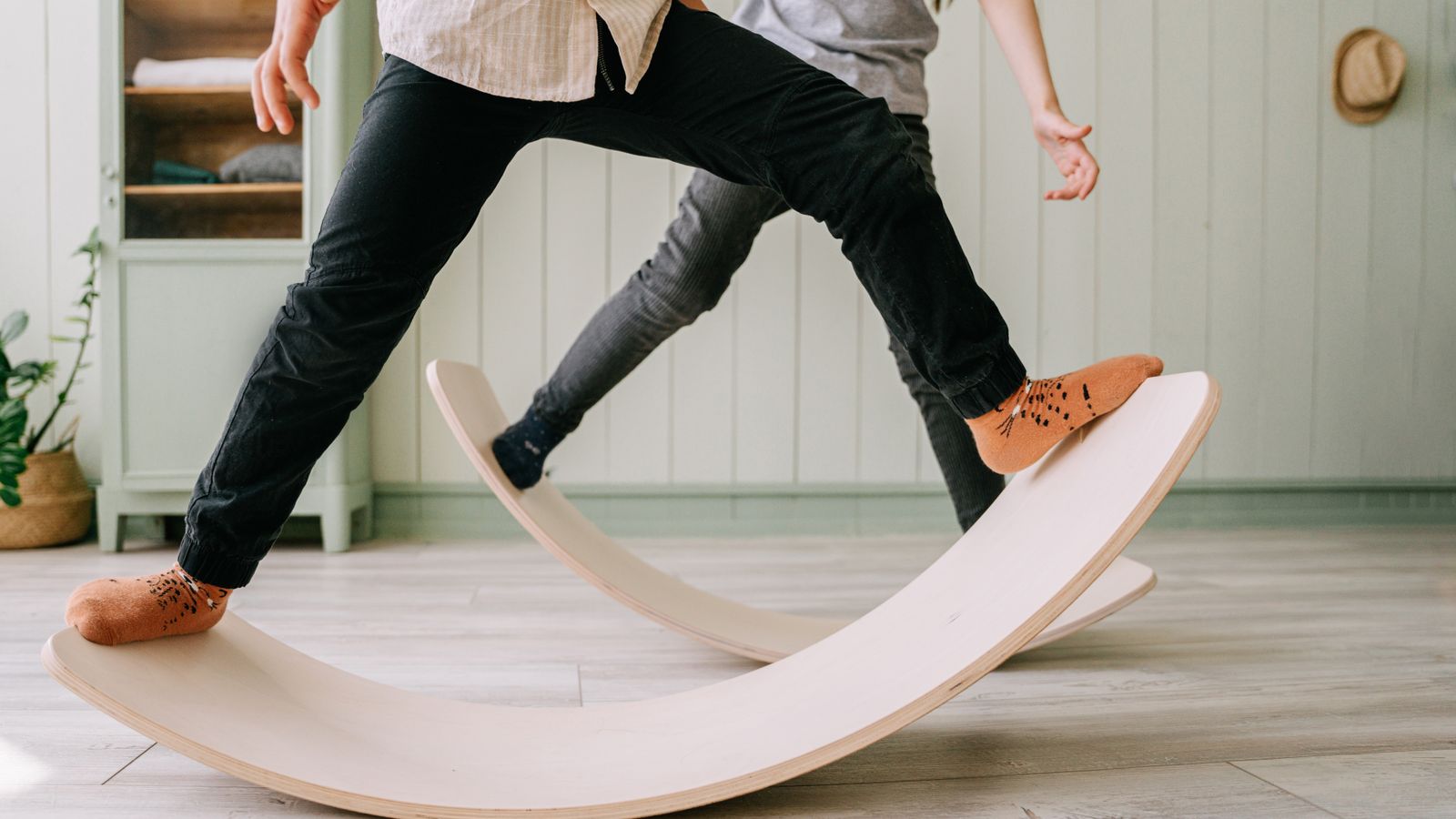
Balance boards, by contrast, need almost no dedicated floor space beyond where you’d normally stand. A typical board footprint is roughly 24 by 16 inches, and it stores upright against a wall or under a desk in seconds. If your office is tight on square footage, this alone can settle the decision.
Step 3: Compare Noise, Stability, and Focus Impact
Walking pads have a motor, belt, and rollers, which means some level of hum even on “quiet” models. If you’re on video calls often, test whether the pad has a noise rating under roughly 45 to 50 decibels, or plan to only use it between meetings. Balance boards are silent by design since there’s no motor — but the trade-off is that they demand more conscious balance, which can pull focus away from deep, detail-heavy tasks like writing or coding.
A useful rule of thumb: walking pads suit tasks where your hands are mostly idle or your attention is on a screen you’re not typing into constantly (reading, watching training videos, phone calls with a headset). Balance boards suit tasks where you’re already standing anyway and want passive engagement without breaking concentration too much.
Step 4: Check Weight Capacity and Build Quality
Weight capacity varies more than people expect. Entry-level walking pads often cap around 220 to 265 lbs, while sturdier models rated for daily commercial-style use go higher. Balance boards range widely too, from lightweight wobble boards rated near 220 lbs to reinforced platforms built for well over 300 lbs. Always check the manufacturer’s stated capacity rather than assuming — a board or pad running near its limit wears out faster and feels less stable.
Also look at deck material. Walking pad belts should be listed as slip-resistant with a stated thickness; thin belts wear through faster under daily use. Balance boards should have a textured, grippy top surface, since sock-footed use on a smooth board is a common cause of slips.
Step 5: Weigh Price Against Long-Term Use
Walking pads generally cost more upfront because of the motor, belt, and electronics — expect a wider price spread depending on speed range, folding mechanism, and app connectivity. Balance boards are mechanically simpler and usually sit at a lower price point, with cost differences mostly driven by material quality and stability range (some boards allow more tilt than others).
Factor in maintenance too. Walking pads need occasional belt lubrication and motor upkeep, while balance boards need essentially none beyond wiping down the surface. If you want a “buy once, forget about it” accessory, that tips slightly toward the balance board.
Step 6: Try Combining Both (or a Compact Alternative)
You don’t have to pick strictly one. Many home offices rotate: a walking pad for calls and reading blocks, a balance board for focused typing sessions. If floor space is the limiting factor, a smaller footprint device that still adds movement — like a compact under-desk exerciser — can bridge the gap. Reviewing options among best desk exercisers is worth doing if neither a full walking pad nor a balance board fits your space or budget cleanly.

Safety Notes Before You Buy
- Never use a walking pad in socks or slippers — wear supportive, closed-toe shoes with grip.
- Start balance boards on carpet or a mat until you’re confident with your balance range.
- Keep a phone or safety rail nearby if you’re new to either device, especially in the first week.
- Check your desk’s stability rating — an unbraced desk can wobble under either accessory’s motion.
- Unplug and store walking pads when not supervised, especially in households with kids or pets.
Common Mistakes to Avoid
- Buying based on price alone. A cheap walking pad with a weak motor or thin belt often fails within months of daily use.
- Ignoring desk clearance. Measure before buying — returns on bulky fitness equipment are often costly or restricted.
- Assuming a balance board replaces cardio. It builds stability and light muscle engagement, not step count or heart-rate benefits.
- Skipping the noise test. If you’re on calls all day, an unreviewed “quiet” claim can turn into a daily distraction.
- Not checking flooring compatibility. Some walking pad wheels/feet can mark hardwood without a protective mat underneath.
Quick Decision Checklist
- Do I have at least 4 to 5 feet of clear floor space in front of my desk? If yes, a walking pad is viable.
- Am I on calls or video meetings most of the day? If yes, weigh noise levels carefully or lean toward a balance board.
- Do I want cardio volume (steps) or passive stability training? Match the answer to the device type above.
- Is my budget tighter than $150? A balance board is generally the more affordable entry point.
- Do I already own a stable, height-adjustable standing desk? Confirm it before adding either accessory.
FAQ
Can I use a walking pad and balance board on the same day?
Yes. Many people alternate — walking pad during lower-focus tasks, balance board during deep-focus typing — as long as you have enough floor space to switch between them safely.
Which one is quieter for open-plan offices?
A balance board is silent since it has no motor. A walking pad will always produce some mechanical hum, so check the decibel rating if noise is a concern.
Do I need a standing desk to use either one?
A balance board works with any standing surface, including a standing desk converter. A walking pad technically works with a fixed-height desk too, but a height-adjustable desk makes the ergonomics far more comfortable.
How much floor space do I actually need for a walking pad?
Plan for the pad’s footprint plus roughly 6 to 12 inches of clearance on the entry and exit sides for safe stepping.
Is a balance board safe for beginners?
Yes, as long as you start with boards offering limited tilt range and use them near a wall or desk for support until your balance improves.
Final Thoughts
The right choice comes down to your space, your work style, and what kind of movement you’re actually trying to add to your day. If you want continuous walking and don’t mind a larger footprint, start by browsing Walking Pads built for under-desk use. If you want silent, space-saving engagement that keeps your legs active while standing still, look at standing desk balance boards instead. Either way, measuring your space and being honest about your daily routine before you buy will save you a return shipment and get you moving the same week your accessory arrives.