

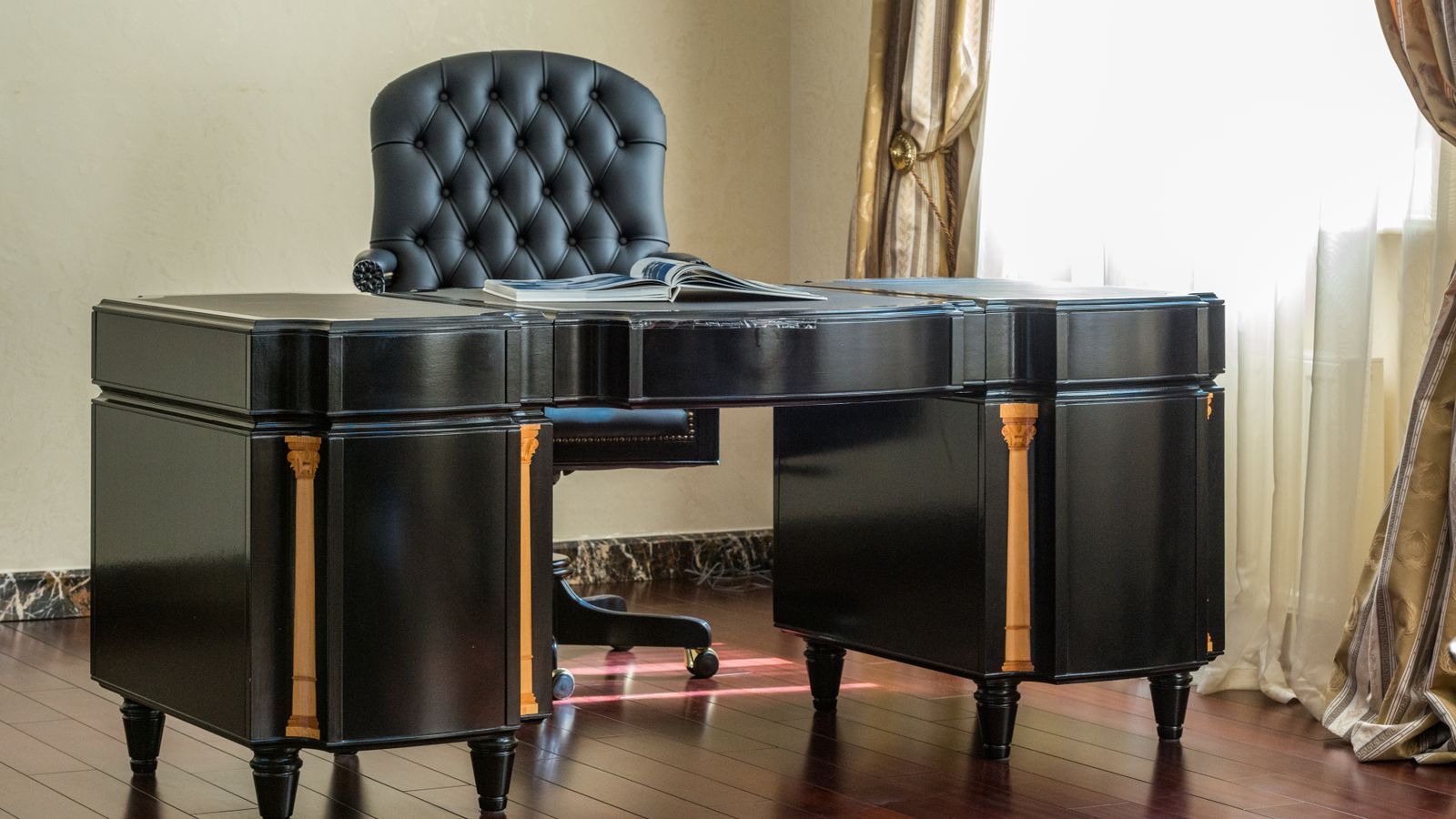
An executive desk is often the most expensive single piece of furniture in a home office, and it usually sits front and center in every video call and client meeting. Whether yours is finished in solid wood, walnut veneer, glass, or a leather-topped hybrid, keeping it clean isn’t just about looks — it protects the finish, prevents warping and staining, and extends the life of an investment that’s meant to last for decades. This guide walks through exactly what you need, how to clean an executive desk safely by material type, and the daily and weekly habits that keep it looking new for years.
What You’ll Need
Before you start, gather a small kit so you’re not scrambling mid-clean. Most of these items are already in your home.
- Two microfiber cloths (one damp, one dry)
- A soft-bristle brush or a dry paintbrush for crevices and keyboard trays
- Mild dish soap or a pH-neutral wood cleaner
- Distilled water (tap water can leave mineral spots on dark finishes)
- Wood polish or furniture wax (for wood and veneer desks only)
- Isopropyl alcohol wipes or glass cleaner (for glass-top desks)
- Leather conditioner (only if your desk has a leather insert or top)
- A handheld vacuum with a brush attachment for drawers and cable channels
Avoid ammonia-based cleaners, bleach, and abrasive scouring pads on any executive desk finish — they strip lacquer, dull veneer, and can permanently discolor leather.
How to Clean and Care for Your Executive Desk: Step-by-Step
- Clear the surface completely. Remove your monitor, keyboard, papers, and accessories. This is also a good moment to sort through clutter and toss anything you no longer need on the desktop.
- Dust first, always. Use a dry microfiber cloth to wipe away loose dust and debris before introducing any liquid. Wiping a dusty surface with a wet cloth just grinds grit into the finish and can create fine scratches.
- Vacuum the crevices. Run a brush attachment along drawer seams, cable grommets, and the underside lip of the desktop where dust tends to collect unnoticed.
- Spot-test your cleaner. Dab a small amount of your chosen cleaning solution on an inconspicuous corner or the underside of the desk. Wait a few minutes to confirm it doesn’t discolor or soften the finish.
- Wipe with a damp, not wet, cloth. Mix a few drops of mild dish soap with distilled water, wring the cloth out well, and wipe in the direction of the wood grain (or in straight lines on glass and laminate). Excess moisture is the number one cause of warping and clouding on desk finishes.
- Dry immediately. Follow up with a dry microfiber cloth right away. Never let water or cleaning solution air-dry on a wood or veneer surface.
- Treat the finish. On solid wood or veneer desks, apply a small amount of furniture polish or wax with a soft cloth every one to two months to keep the finish hydrated and to build a light protective layer. On glass tops, finish with a streak-free glass cleaner. On leather inserts, apply a leather conditioner every three to six months to prevent cracking.
- Clean the hardware. Wipe down drawer pulls, hinges, and any metal accents with a barely damp cloth, then dry. Metal polish can be used sparingly on brass or chrome hardware if it has dulled.
- Address cable management. Unclip and detangle cables running through grommets, wipe down the cable tray, and re-route anything that has slipped loose. Tangled cables trap dust and make future cleaning harder.
- Reassemble and inspect. Once everything is dry, put your monitor and accessories back and do a final visual pass under good lighting to catch any streaks or missed spots.
Cleaning by Desk Material
Solid Wood and Veneer
These finishes are the most sensitive to moisture and direct sunlight. Stick to slightly damp cloths, dry immediately, and reapply wood polish every four to eight weeks. Keep the desk out of direct sun exposure where possible, since UV rays gradually fade and dry out wood finishes.
Glass-Top Desks
Glass shows fingerprints and dust more visibly, but it’s also the easiest surface to keep spotless. A microfiber cloth with a streak-free glass cleaner, wiped in one direction, gives the cleanest result. Avoid paper towels, which can leave fine lint and micro-scratches over time.
Laminate and Metal-Framed Desks
Laminate tolerates mild soap and water well and doesn’t need waxing. Metal legs and frames just need an occasional wipe-down with a barely damp cloth to prevent dust buildup at the joints.
Leather-Topped Executive Desks
Leather inserts need the gentlest care of all. Dust regularly, blot spills immediately rather than rubbing, and condition every few months with a leather-specific product to prevent the surface from drying out and cracking.
Signs Your Desk Needs More Than a Wipe-Down
- Dull or hazy finish — usually means it’s time for a fresh coat of polish or wax rather than more cleaning.
- Water rings or white spots — often lift with a mixture of baking soda and a small amount of olive oil, gently rubbed along the grain.
- Sticky residue from old spills or tape — dissolve with a small amount of isopropyl alcohol on a cloth, then wipe with clean water and dry.
- Loose hardware or wobbly legs — tighten screws with the appropriate driver; this is a maintenance task, not a cleaning one, but it’s worth checking during your monthly deep clean.
- Deep scratches or gouges — a matching wood touch-up marker or a professional refinisher may be needed if surface polish alone doesn’t hide them.
Common Mistakes to Avoid
- Using all-purpose household cleaners with ammonia or bleach, which strip finishes and can discolor wood and leather.
- Letting spills sit — even a coffee ring left overnight can etch into an unsealed wood finish.
- Skipping the dusting step and going straight to a wet cloth, which grinds dust into micro-scratches.
- Placing hot mugs, laptops, or electronics directly on the surface without a coaster or mat, which can leave heat marks over time.
- Over-waxing — applying polish too frequently can build up a cloudy film instead of a clean shine.
Building a Simple Maintenance Routine
Consistency matters more than intensity when it comes to desk care. A quick daily dust, a weekly wipe-down, and a monthly deeper clean with polish or conditioner will keep almost any executive desk looking sharp for years. If you’re setting up a workstation from scratch or refreshing an existing one, pairing your desk with the right chair and accessories also reduces daily wear — browsing a lineup of Executive Desks is a good way to compare finishes and see which materials hold up best to your particular routine before you buy or replace one.

Protecting Your Desk Day to Day
Beyond cleaning, a few habits go a long way toward preserving the finish long-term:
- Use a desk mat or blotter under your keyboard and mouse to reduce direct contact wear.
- Add felt pads under monitor stands, lamps, and decor to prevent scuff marks.
- Keep the desk away from vents and radiators, since fluctuating heat and humidity cause wood to expand, contract, and eventually crack.
- If you also work remotely or from a laptop away from your main setup, a lightweight option like the ones featured among travel laptop desks keeps your primary executive desk from taking on extra daily wear.
- For smaller home offices where an executive desk isn’t practical, comparing space-saving alternatives such as the best standing desks for small rooms can help you decide what setup actually fits your space and habits.
Frequently Asked Questions
How often should I clean my executive desk?
Dust it daily with a dry cloth, do a full wipe-down weekly, and apply polish or conditioner monthly to every-other-month depending on the material.
Can I use furniture polish on every type of executive desk?
No. Polish and wax are meant for solid wood and veneer. Glass, laminate, and leather each need their own specific products, so always match the cleaner to the material.
What’s the safest way to remove a stubborn stain?
Start with the gentlest option — a damp cloth and mild soap — before moving to baking soda paste or alcohol-based spot treatment. Always test in a hidden area first.
How do I stop my desk from developing water rings?
Use coasters for drinks, wipe up spills immediately, and consider a clear desk mat if the desk sees heavy daily use.
Is it worth refinishing an older executive desk instead of replacing it?
Often yes. A professional refinish costs a fraction of a new desk and can restore a quality wood desk to near-original condition, especially if the structure itself is still solid.
Seasonal Care Checklist
A few extra checks each season help catch small issues before they turn into bigger repairs. In warmer, humid months, wipe down the desk more frequently since humidity encourages wood to swell slightly at the joints and drawer edges. In drier winter months, especially with indoor heating running, condition wood and leather more often since low humidity accelerates cracking and shrinkage. If your office has a humidifier or dehumidifier, keeping relative humidity in the 40-50% range is ideal for protecting most wood furniture, including executive desks.
It also helps to rotate accessories occasionally — a lamp or monitor stand left in the exact same spot for years can leave a faint outline in the finish that’s more noticeable once you move it. Periodically shifting items a few inches keeps wear even across the surface.
Final Thoughts
Caring for an executive desk doesn’t require a complicated routine — it just requires consistency and using the right products for your specific finish. A few minutes of dusting each day, a proper wipe-down each week, and periodic conditioning will keep your desk looking professional and protect the investment for years of daily use.