
Precision snipping is essential for clean electrical repairs, DIY crafting, and circuit board assembly. Choosing dull or misaligned snips often leads to crushed wire strands and rough edges that snag on components. Investing in a dedicated pair of cutters ensures clean results and protects surrounding materials from accidental damage.
In this detailed overview of the Best Sharp Wire Cutters for September 2026, we analyze 7 top options across leading manufacturers like BOENFU, IGAN, WORKPRO and more. Whether you manage office wiring alongside standing desk cable trays or craft delicate jewelry, reliable blades make all the difference. We evaluate blade geometry, steel durability, and ergonomic handles to help you choose the right tool.
Modern wire snips offer specialized edge profiles and heat-treated steel alloys designed to maintain razor sharpness through repeated use. Many models incorporate spring-loaded hinges and angled jaws to reduce hand fatigue during long assembly sessions. This guide examines cutting capacities and structural designs so you make an informed decision for your workshop.


Blade Edge Profile: Flush Cut vs. Semi-Flush
The cutting edge profile determines the exact shape of the finished wire tip after snipping. True flush cutters feature flat outer blade faces that produce a completely smooth, square cut without leaving sharp peaks. This clean finish is essential when trimming zip ties flush against bundles or trimming electronic component leads on printed circuit boards.
Semi-flush and beveled cutters utilize slight external bevels that strengthen the cutting edge against premature dulling. While beveled jaws handle thicker copper gauges and light steel wire, they produce a slight pinch or apex at the cut point. Choosing the right profile depends entirely on whether your project requires absolute flatness or enhanced edge durability.
A practical rule of thumb is to reserve micro flush cutters exclusively for soft copper, aluminum, and plastic zip ties. Using flush blades on hardened steel wire quickly creates microscopic notches along the cutting edge. Matching your blade profile to your specific material prevents blade misalignment and extends the working lifespan of the tool.
Steel Alloy Composition and Hardness Ratings
Tool steel formulation directly governs how well a cutting edge retains sharpness under repetitive stress. Premium cutters frequently utilize Chrome Vanadium (CR-V), 50CrV alloy, or high-carbon 65 manganese steel. These alloys undergo specialized induction hardening to achieve exceptional edge rigidity while keeping the tool body ductile enough to resist snapping.
Hardness is measured using the Rockwell C scale (HRC), with high-performance cutters typically ranging from 58 to 65 HRC at the cutting blade. Higher HRC ratings provide remarkable wear resistance against abrasive copper strands and tough plastics. However, extremely hard edges become brittle if twisted, so proper straight-on cutting technique remains vital.
When comparing specifications, look for tools featuring high-frequency induction heat treatment along the jaw bevels. This process provides hardened cutting edges up to 65 HRC while maintaining a softer 48 HRC core for shock absorption. This metallurgical balance prevents catastrophic chipping when slicing through dense cable bundles.
| Steel Alloy | Typical Blade Hardness | Primary Benefit | Ideal Application |
|---|---|---|---|
| Chrome Vanadium (CR-V) | 58 – 62 HRC | High tensile strength and wear resistance | General electronics, floral wire, zip ties |
| High-Carbon Steel (65 Mn) | 58 – 60 HRC | Precision sharpness retention | Jewelry crafting, micro electronics |
| 50CrV Structural Alloy | 60 – 65 HRC | Extreme edge toughness under heavy load | Heavy-duty cables, wire ropes, fencing |
| High-Carbon Tool Steel | 54 – 58 HRC | Ductile core with induction edges | Everyday household repairs, hobby kits |
Cutting Capacity and Wire Gauge Limitations
Every wire cutter is engineered around strict maximum gauge ratings measured in American Wire Gauge (AWG) or millimeters. Standard compact flush snips typically accommodate soft copper and aluminum wire up to 12 AWG or roughly 4 mm in diameter. Attempting to cut heavy-gauge solid core conductors beyond manufacturer limits permanently distorts the jaw alignment.
Heavy-duty cable snips utilize reinforced bypass jaws capable of severing up to 3/16 inch multi-strand wire rope and aircraft cables. These robust tools use mechanical shearing action rather than precision pinching to slice through dense bundles without fraying individual strands. Always inspect the stated material restrictions before cutting stainless steel or hard fence wire.
To preserve your tools, establish a simple workshop rule: dedicated micro cutters for 10-24 AWG delicate electronics, and heavy-duty bypass cutters for larger structural wires. Sticking within rated limits guarantees consistent shearing performance across thousands of cycles without edge deformation.
Jaw Angle and Accessibility in Confined Spaces
The orientation of the cutting head relative to the handle determines how easily you can access tight spaces. Many precision flush cutters incorporate a 21 to 22.5 degree angled jaw head. This deliberate angle keeps your knuckles clear of circuit boards, electrical chassis, and dense harness assemblies while snipping leads.
Straight diagonal cutters offer maximum direct force transfer along the center line of the tool, making them ideal for open benchwork. Conversely, angled heads permit flat cuts against flat surfaces without tilting the entire tool body awkwardly. This specialized geometry is invaluable when trimming zip ties inside compact server racks or computer cases.
A slim, tapered nose profile further enhances visibility in densely packed work areas. When shopping for precision work, ensure the outer jaw tips are ground narrow enough to isolate individual component pins without nicking adjacent electrical traces.
Spring-Loaded Mechanisms and Repetitive Fatigue
Repetitive cutting tasks during wire harness manufacturing or jewelry assembly can quickly lead to wrist strain and hand fatigue. Spring-loaded handles automatically return the jaws to an open position after each snip. This automatic rebound eliminates the need to manually open the tool with your fingers during fast, continuous operations.
Manufacturers generally employ either internal coil springs, external return springs, or flexible leaf springs between the handles. Internal and captured springs are preferable because they cannot catch on nearby wires or pop out during storage. Smooth spring resistance ensures effortless one-handed operation throughout lengthy assembly sessions.
Test the return action to ensure the spring tension feels balanced rather than excessively stiff. A well-tuned spring provides gentle opening force that speeds up workflow without requiring excessive grip strength to close the handles.
Handle Ergonomics, Lever Ratios, and Grip Materials
Handle design directly impacts leverage and user comfort during demanding cutting sessions. High-quality cutters feature bi-material or thermoplastic rubber (TPR) grips with contoured finger rests. These textured, non-slip surfaces provide a secure hold even when working with oily hands or wearing protective gloves.
The mechanical advantage of a wire cutter is determined by the ratio between the handle length and the pivot-to-blade distance. Longer 6-inch handles generate substantially higher cutting force with minimal hand effort compared to compact 4-inch snips. When routing cables through desk grommet outlets, extended leverage allows clean, effortless cuts on heavy multi-conductor cords.
Ensure the handle materials comply with modern safety standards regarding non-toxic chemical formulations. Ergonomic handles with broad contact areas distribute pressure evenly across your palm, preventing sore pressure points during extended crafting or repair sessions.
Multi-Function Features: Stripping Notches and Safety Locks
Many modern cutters incorporate secondary features that streamline everyday electrical tasks. Combination tools often feature precision-milled stripping notches along the inner jaw base for standard wire gauges from 10 to 20 AWG. This integrated functionality lets you trim and strip conductors using a single hand tool.
For heavy-duty cable cutters with strong internal springs, a built-in safety lock is an indispensable safety feature. A sliding or flip-style mechanical latch keeps the hardened blades securely closed when stored inside your tool pouch or drawer. This mechanism prevents accidental cuts and protects the sharp blade edges from contacting other metal tools.
Consider whether your workflow benefits from a multi-purpose tool or if dedicated precision snips are more appropriate. For general electrical repairs, combination cutter-strippers save space in your tool kit while handling standard residential wiring tasks efficiently.
Corrosion Resistance and Surface Finishes
High-carbon steel cutters are vulnerable to oxidation when exposed to humidity or workshop moisture. To prevent rust, manufacturers apply protective surface treatments such as black oxide coatings, transparent electrophoretic films, or chrome plating. These specialized coatings seal the metal substrate without compromising the tight tolerances of the cutting edge.
Polished steel tools with protective oil coatings require basic maintenance to preserve their factory finish over time. Wiping the cutting edges with a light machine oil after use forms a microscopic barrier that repels atmospheric moisture. Storing your tools in dry storage compartments ensures they remain rust-free and ready for action.
If you frequently work in damp environments or outdoor settings, prioritize models with electrophoretic or blackening surface treatments. These durable finishes resist chipping and scratching far better than standard bare steel finishes.
Pivot Tolerances and Blade Overlap Alignment
The precision of a wire cutter is defined by the tight tolerances of its central pivot rivet. If the pivot joint develops play or lateral wobble, the cutting edges will deflect rather than cleanly shear through fine strands. Premium cutters use precision-machined heavy-duty rivets that maintain perfect edge alignment throughout years of service.
Inspect the tool against a bright light source to evaluate blade closure and edge consistency. A quality flush cutter should close evenly along the entire cutting length without visible gaps or excessive blade crossover. Seamless blade alignment ensures that even microscopic filaments are snipped crisply on the first attempt.
Reputable tool manufacturers back their precision machining with comprehensive replacement warranties. Choosing brands with proven quality control ensures you receive a tool with tight pivot tolerances and reliably aligned jaws right out of the box.
Why You Should Trust Us
Our workshop tool evaluations rely on rigorous specification analysis, metallurgical data reviews, and verified mechanical design criteria. We examine edge hardness ratings, handle lever ratios, pivot joint tolerances, and user feedback across diverse crafting and electrical applications. This data-driven approach removes marketing hype to highlight truly dependable hand tools.
We continuously monitor manufacturing updates, warranty terms, and material improvements across the entire hand tool sector. By comparing structural alloys like 50CrV, Chrome Vanadium, and high-carbon steel, we identify tools that maintain sharpness over extensive duty cycles. Our goal is to provide transparent, practical guidance that helps you select tools tailored to your exact workshop requirements.
To keep our guides fresh, our catalog updates in real time to reflect current market availability and technical specifications. You can explore our extensive collection of workspace optimization resources across our comprehensive buying guides to equip your workshop with high-performing tools.
Final Thoughts
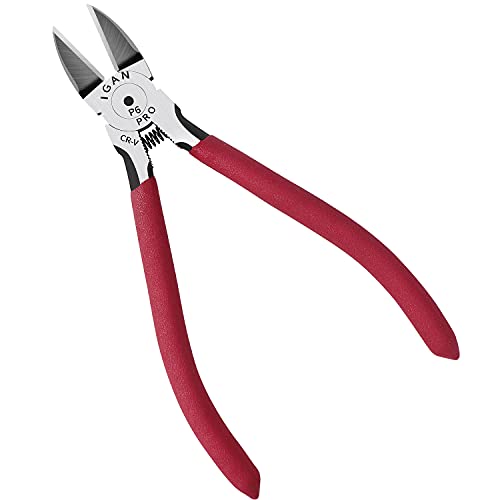
Selecting the right wire cutter transforms tedious trimming jobs into quick, satisfying tasks while protecting delicate components from damage. For general electronics, crafting, and flush zip-tie trimming, the IGAN-P6 6-inch Ultra Sharp & Powerful Side Cutter serves as an exceptional overall choice with its extended flush cutting edge and resilient Chrome Vanadium construction.
If you frequently handle electrical wiring and require dual trimming and stripping capabilities, the WGGE Precision Flush Wire Cutter and Stripper delivers outstanding value with its 22.5 degree angled head and dedicated 10-20 AWG stripping notches. For heavy workshop duties involving wire rope, fencing, or thick aircraft cables, the DISEN Wire Cutters Heavy Duty Cutting Up to 3/16″ provides the raw mechanical power and safety locking mechanism needed for thick materials.
Hobbyists and jewelry makers working with miniature components will appreciate the compact maneuverability of the Micro Wire Cutters, 5.4 Inch Flush Cutters. Pairing the right tool with your specific material gauge ensures clean cuts and preserves your blade sharpness for years. Explore our general tool archives for more workshop equipment comparisons and practical buying advice.
Frequently Asked Questions
What makes the Best Sharp Wire Cutters different from standard diagonal pliers?
Precision flush wire cutters feature flat outer blade faces that produce a completely smooth, flat cut without leaving sharp burrs on wire ends. Standard diagonal pliers utilize heavy beveled edges designed for general demolition and rough electrical work, leaving a distinct ridge that requires secondary filing.
Can you cut hard steel wire with precision flush cutters?
No, precision flush cutters should never be used on hardened steel wire, nails, or stainless steel cable. Cutting hard materials with micro flush blades will instantly notch, chip, or misalign the razor-thin cutting edges. Use dedicated heavy-duty cable cutters or high-leverage lineman pliers for steel wire.
How do you maintain razor sharpness on precision wire clippers?
Maintain your cutters by strictly respecting manufacturer gauge ratings and cutting only soft metals like copper, aluminum, and brass. Regularly wipe the blades clean of debris and apply a drop of light machine oil to the central pivot and blade faces to prevent corrosion and reduce friction.
What wire gauge is standard for electronic flush cutters?
Most 5-inch to 6-inch electronic flush cutters are optimized for soft copper wires ranging from 12 AWG down to 24 AWG. This versatile range easily accommodates component leads, circuit board wiring, telephone cables, and 3D printer filament trimming.
Why are angled jaws beneficial on wire cutting tools?
A 21 to 22.5 degree jaw angle positions the cutting blades flat against circuit boards and flat panels while keeping your hand elevated. This offset improves cutting visibility, prevents your knuckles from scraping against surrounding surfaces, and reduces wrist fatigue.
What is the difference between carbon steel and chrome vanadium cutters?
Chrome Vanadium (CR-V) steel offers enhanced toughness and superior resistance to corrosion and wear under repetitive stress. High-carbon steel can achieve exceptionally keen initial sharpness at a lower cost, though it requires routine oiling to prevent surface oxidation.
How does a spring-loaded handle improve cutting workflow?
A built-in spring automatically reopens the handles after every cut, eliminating the need to manually open the tool with your fingers. This mechanism speeds up repetitive snipping tasks significantly and minimizes muscle fatigue during long assembly projects.
Can flush cutters trim cable ties without leaving dangerous sharp points?
Yes, flush cutters are the premier tool for trimming nylon zip ties because the flat outer face shears the tail perfectly level with the locking head. This clean cut eliminates jagged plastic edges that frequently cause scratches during maintenance inside desk cable trays or vehicle engine bays.
What should you do if your wire cutter blades become misaligned?
If pivot play allows the blades to overlap improperly or pinch wire without cutting, the central rivet may need gentle repinning, or the tool should be replaced. Precision flush cutters rely on microscopic tolerances, so heavy twisting or dropping usually causes permanent misalignment.
Are heavy-duty cable cutters suitable for delicate jewelry work?
Heavy-duty cable cutters are generally too bulky and lack the fine blade profiles necessary for delicate jewelry crafting. Compact 5-inch micro flush cutters offer the fine control and clean shearing action required to trim delicate beading wire and soft precious metals neatly.