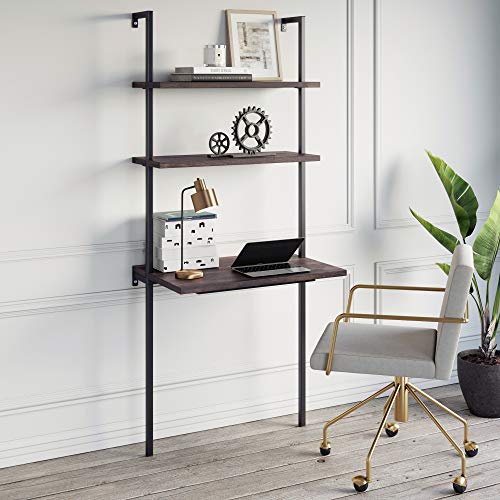
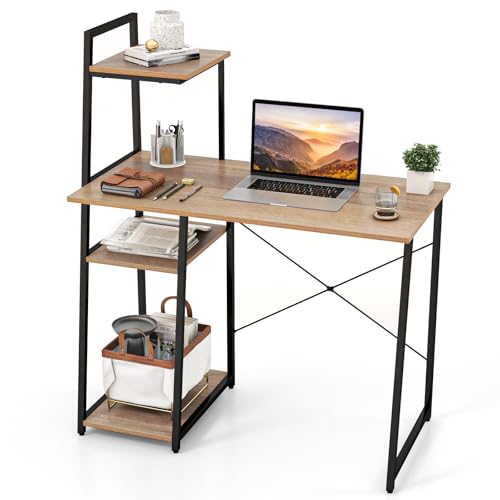
Quick Answer: If you want a single ladder desk that balances a stable footprint, genuinely useful shelf depth, and a finished look that doesn’t scream “flat-pack,” the Nathan James Theo 2-Shelf Industrial Wall Mount Ladder Table is the safest all-around pick — it pairs a solid metal frame with two open shelves sized for books, files, or a small printer, and it has one of the largest verified review histories among comparable listings on Amazon. If your priority is fitting the most storage into the smallest footprint on a tighter budget, the Tangkula Space Saving Home Office Desk with 3-Tier Ladder Shaped Storage covers similar ground for noticeably less money.




Search “ladder desk” on Amazon and the results range from slim wall-leaning units with a single narrow shelf to freestanding pieces with a drawer, three full-depth shelves, and a built-in power outlet. That range makes it easy to end up with the wrong pick for your space — one that looks great in photos but wobbles under a laptop or can’t actually hold the books you meant to store on it. The 8 options below were shortlisted from live Amazon listings based on verified customer ratings, review volume, and how clearly each one states its shelf depth and weight capacity, so you can compare real trade-offs instead of guessing from a product photo.
Top Picks at a Glance
- Best Overall: Nathan James Theo 2-Shelf Industrial Wall Mount Ladder Table — a compact, sturdy pick with a metal frame and two open shelves, backed by one of the largest review counts in this category.
- Best Budget: Tangkula Space Saving Home Office Desk with 3-Tier Ladder Shaped Storage — an affordable option that still offers three tiers of shelving above the work surface.
- Best Premium: American Trails Freestanding Ladder Desk with Drawer — a higher-end freestanding piece with a built-in drawer and a more furniture-grade finish.
- Best for Small Spaces: Haotian Ladder Desk with Shelves — a narrow-footprint design built specifically for tight corners and small apartments.
- Best for Wall Mounting: ZIOTHUM Industrial Ladder Style Floating Desk — an industrial-style option designed to mount to the wall for an even smaller floor footprint.
- Best for Storage: DESIGNA 48-Inch Ladder Desk with Storage Shelves — a wider work surface paired with two deep storage shelves for students or home offices.
- Best for Bookshelf Combo: Monarch Specialties Tryy Ladder Desk Bookcase — leans more toward a wall bookshelf with an integrated work surface, ideal if shelving is your main priority.
- Best for Home Office: Tangkula 3-Tier Ladder Computer Desk — a 71-inch-tall pick with three storage tiers suited to a dedicated home office corner.
What Makes a Ladder Desk Different From a Regular Desk or Floating Desk
A ladder desk gets its name from the visual shape it creates when placed against a wall: a work surface at desk height with a series of open shelves stacked above or behind it, leaning back slightly like the rungs of a ladder. That’s different from a standard desk, which has no built-in vertical storage, and different from a floating desk, which is bolted directly to the wall with no legs touching the floor at all. This style typically has its own legs or a base frame, so it stands on the floor like a bookcase while still functioning as a workstation.
The appeal is straightforward: it gives you a work surface and several tiers of shelving in roughly the same floor footprint as a small side table. For anyone who needs somewhere to put books, a printer, or decorative items but doesn’t have room for a desk and a separate bookshelf, this combination solves both problems in one purchase rather than two pieces of furniture pushed into a corner.
Stability and Wall-Anchoring — What You Need to Know Before You Buy
Because this style is taller and narrower than a traditional four-legged desk, stability deserves more attention than it would with a standard rectangular desk. Most ladder desks are designed to lean gently against a wall for extra support, and many manufacturers include a wall-anchor strap or anti-tip bracket in the box specifically for this reason. If a listing doesn’t mention this hardware, it’s worth checking the product images or Q&A section before assuming the piece is freestanding enough to skip anchoring altogether.
Anchoring matters most in homes with young children or pets who might climb the lower shelves, since an unanchored unit carries more tip-over risk than a squat, wide desk with four legs spread evenly under the surface. Even in a household without kids or pets, securing it to a wall stud is a low-effort step that meaningfully reduces the chance of shifting when you lean on the work surface or reach for something on an upper shelf.
How Many Shelves (and How Deep) Do You Actually Need
These desks generally come with two to four shelves above or behind the work surface, and the right number depends less on preference and more on what you actually plan to store. Two shelves is often plenty for a small stack of books, a desk lamp, and a plant, while three or four shelves suit anyone consolidating a bookshelf’s worth of items into the same footprint as a desk. What matters just as much as shelf count is shelf depth — a shallow 6- to 8-inch shelf will hold paperbacks and small decor but not a printer or a stack of binders, while deeper shelves in the 10- to 12-inch range can handle bulkier items.
It’s also worth checking the vertical clearance between shelves before buying one. Some models space shelves close together to maximize the number of tiers, which looks tidy in photos but can make it awkward to fit anything taller than a paperback. If you plan to display binders, a small printer, or decorative boxes, look for listings that specify the gap between shelves rather than just the total shelf count.
Weight Capacity — Desktop vs. Shelf Limits
One detail that’s easy to overlook when comparing options is that the desktop surface and the shelves above it usually have very different weight limits. The desk surface is typically rated to hold a laptop, monitor, or even a desktop computer tower, often in the range of 100 to 150 pounds depending on the model. The shelves, by contrast, are usually rated for much lighter loads — often 10 to 30 pounds per shelf — since they’re braced differently than the main work surface.
This distinction matters if you’re planning to store anything heavier than books or small decor, such as a laser printer or a stack of hardcover reference materials. Overloading an upper shelf is one of the more common ways these pieces become unstable over time, even when the base was anchored correctly. Before buying, check the listed weight capacity for both the desktop and the shelves individually, not just a single combined number.
Footprint and Room Fit — Small Spaces, Studio Apartments, and Corners
The main reason people search for this style in the first place is floor space. A typical footprint runs somewhere between 20 and 36 inches wide and 16 to 24 inches deep, which is noticeably smaller than a traditional desk with a matching bookshelf placed beside it. That makes this style a natural fit for studio apartments, dorm rooms, or an unused corner of a living room where a full home office setup wouldn’t otherwise fit.
What’s easy to miss is the vertical dimension. Because a ladder desk stacks shelves upward rather than spreading out horizontally, total height often reaches 60 to 72 inches — tall enough to interact with a ceiling fan, sloped ceiling, or low-hanging light fixture in some rooms. Before ordering one, it’s worth measuring not just the floor space but the full height of the wall you’re planning to use, especially in older homes or apartments with lower ceilings.
Materials and Style — Choosing a Ladder Desk That Matches Your Room
Most options in this price range use engineered wood panels — MDF or particleboard finished with a melamine or laminate surface — paired with a metal or solid-wood frame for the legs and shelf supports. This combination keeps the price accessible while still holding up to daily use, though it’s generally less durable over many years than a piece built from solid wood throughout. Metal-framed models tend to lean toward an industrial aesthetic, while wood-toned finishes fit more naturally into Scandinavian or minimalist rooms.
Color and finish are worth considering alongside material, since this style is visually prominent by design — the open shelving means it reads more like a piece of statement furniture than a desk tucked against a wall. Neutral finishes like white, natural wood, or black tend to blend into more room styles, while patterned or two-tone versions work best when the rest of the room is kept relatively simple.
How We Evaluated These Ladder Desks
Every option on this list was cross-checked against live Amazon listing data, including verified customer star ratings, review volume, listed shelf and desktop dimensions, and manufacturer-stated weight capacities where available. We prioritized listings with a meaningful number of verified reviews rather than newly listed products with little review history, then sorted each pick into a use-case category based on price, shelf depth, and standout features like drawers, wall-mount hardware, or power outlets. This evaluation is based on listing data and verified review patterns rather than in-person testing.
Common Mistakes to Avoid When Buying a Ladder Desk
- Skipping the wall-anchor hardware, even when the unit ships with an anti-tip bracket included in the box.
- Loading a shelf beyond its rated weight capacity, which is usually much lower than the desktop’s weight limit.
- Not measuring total wall height before buying, which can lead to a piece that’s taller than expected for the room.
- Choosing one based on shelf count alone rather than checking shelf depth and spacing.
- Assuming every model is freestanding when some listings are designed specifically for wall mounting.
- Overlooking cable management when a laptop or monitor will sit on the work surface daily.
Ladder Desk Buying Checklist
- Confirm the desktop weight capacity supports your setup, whether that’s a laptop or a full desktop computer.
- Check the weight capacity of each shelf separately before planning to store anything heavier than books.
- Look for included wall-anchor or anti-tip hardware, especially in homes with kids or pets.
- Measure both the floor footprint and the total height of the wall you’re planning to use.
- Compare shelf depth and spacing against what you actually plan to store, not just the number of shelves.
- Decide whether you need a freestanding model or a wall-mounted version before ordering.
Other Space-Saving Desk Options Worth Considering
A ladder desk isn’t the only way to combine a work surface with storage in a small footprint, and it’s worth comparing a few other space-saving desk options before deciding. If floor space is your biggest constraint, our guide to the best desks for small spaces covers compact desk styles beyond the leaning-shelf format. If shelving is the main draw for you but you’d rather keep the desk and storage separate, the best desk shelves roundup looks at add-on shelving units that pair with an existing desk. And if you like the idea of a wall-anchored setup but want the floor completely clear, the best floating desks guide is a close alternative to a wall-mounted unit.
FAQ
Does a ladder desk need to be anchored to the wall?
Most manufacturers recommend it, and many models include a wall-anchor strap or anti-tip bracket in the box. Anchoring reduces tip-over risk, especially in homes with children or pets who might climb the lower shelves.
How much weight can a ladder desk hold?
It depends on the model, but the desktop surface is usually rated higher than the shelves above it — often around 100 to 150 pounds for the work surface versus 10 to 30 pounds per shelf. Always check the listed capacity for both separately before loading heavy items.
How many shelves does a ladder desk need?
Two shelves is usually enough for a small stack of books and decor, while three or four shelves suit anyone replacing a full bookshelf. Shelf depth and spacing matter as much as the total count, so check those dimensions against what you plan to store.
Can a ladder desk hold two monitors or a desktop computer?
Many models can support a desktop tower and a single monitor within their rated desktop weight capacity, but the work surface is often narrower than a standard desk, so a dual-monitor setup may feel tight. Check the desktop width and weight rating before assuming it fits.
What’s the difference between a ladder desk and a floating desk?
This style typically stands on its own legs or base frame and simply leans against a wall for extra stability, while a floating desk is mounted directly to the wall with no legs touching the floor. Both save floor space, but a leaning design usually adds shelving in the same piece, while a floating desk is often sold separately from wall shelving.
Is a ladder desk difficult to assemble?
Assembly difficulty varies by model, but most ship flat-packed with the hardware included and take roughly one to two hours to put together. Models with more shelves or a drawer generally take longer than a simple two-shelf design.