

Preparing for a multisport race requires tracking distinct athletic demands across swimming, cycling, and running. A standard fitness tracker often stumbles when shifting disciplines or navigating open water. Investing in the right wrist device ensures accurate splits and reliable pacing during grueling race conditions.
Our comparison of 5 models highlights the leading hardware options currently available from Garmin, Amazfit, KOSPET. Whether you are targeting your first sprint distance or training for a full Ironman, modern sensors offer vital training load feedback. Explore our in-depth fitness gear guides to discover how targeted equipment transforms performance.
Many athletes struggle with premature battery depletion or erratic GPS signals around transition zones. Modern wearables solve these issues with dedicated multisport software profiles and dual-frequency satellite chips. Understanding these technical nuances will help you select a dependable training partner for September 2026.




Multisport Transition Modes and Activity Profiles
Dedicated multisport profiles allow athletes to record swimming, cycling, and running within a single continuous activity. Standard running watches require saving an event and starting another, which disrupts race data. A true triathlon watch lets you tap a single button to log transition times between sports seamlessly.
When comparing watches, inspect the activity profile menu to verify custom multisport support. Entry-level models may offer separate swim, bike, and run modes without a unified triathlon mode. Advanced devices allow you to reorder legs for brick workouts, aquathlons, or duathlons.
As a practical rule, ensure the watch allows manual transition button presses rather than relying solely on auto-detection. Auto-transition algorithms can miscalculate your exact timing when you pause to strip a wetsuit or put on cycling shoes. A physical lap button provides absolute control over your official split times.
Open Water and Pool Swimming Accuracy
Swimming presents unique tracking challenges because water completely blocks satellite radio signals whenever the watch is submerged. In pool swim mode, the watch relies on internal accelerometers to count strokes and detect wall push-offs. In open water mode, specialized algorithms reconstruct your course trajectory each time your hand breaks the surface.
Evaluate whether a watch provides open-water specific metrics such as stroke rate, distance per stroke, and SWOLF efficiency scores. Standard pool modes let you input custom pool lengths down to single meters. Dedicated open water modes utilize high-speed GPS polling to prevent erratic distance spikes during outdoor swims.
Before buying, confirm if the optical sensor can read heart rate accurately while submerged. Many athletes prefer pairing their watch with a specialized chest strap for underwater telemetry. If you swim in lakes or oceans frequently, verified open-water GPS filtering is an absolute necessity.
Dual-Band Satellite Positioning and GNSS Reliability
Satellite accuracy determines whether your pacing data is actionable or misleading on race day. Modern triathlon watches feature multi-band GNSS, which processes L1 and L5 frequency signals simultaneously. This dual-frequency capability drastically reduces signal distortion caused by tall buildings, dense forests, or heavy cloud cover.
Check the spec sheet for support across all major satellite constellations, including GPS, GLONASS, Galileo, BeiDou, and QZSS. A watch with broader constellation access locks onto satellites faster at the start line. Faster satellite acquisition prevents the frustration of waiting around before an early morning workout.
For races staged in urban centers or hilly terrain, dual-band reception eliminates track drifting. You can expect pacing readouts that update within seconds of changing your stride. Single-band watches remain functional, but dual-band positioning offers superior precision during competitive segments.
GPS Battery Endurance for Long-Course Racing
Battery life is a critical safety and data preservation factor for endurance competitors. Sprint triathlons take around an hour, whereas full-distance events require up to seventeen hours of continuous tracking. Your device must deliver sufficient operational life with GPS active to cover your longest projected finish time.
Examine the manufacturer ratings for continuous GPS tracking versus standard smartwatch standby mode. Look for watches offering at least twenty hours of full GPS recording on a single charge. High-end models offer specialized battery saver modes that adjust satellite ping frequency to stretch runtimes further.
A helpful guideline is to choose a watch with a battery capacity that exceeds your goal race time by at least fifty percent. Cold water, screen backlight usage, and connected sensors drain power faster than lab tests suggest. Ample battery reserve ensures your tracking never shuts down mid-marathon.
Display Visibility in Bright Outdoor Sunlight
Reading performance numbers during an intense bike split requires high screen clarity under bright sunlight. Athletes typically choose between colorful AMOLED screens and sunlight-readable transflective memory-in-pixel displays. Transflective screens become clearer as ambient light increases, while AMOLED offers rich color and dark environment contrast.
Consider the peak brightness output, which is measured in nits, if you opt for an AMOLED smartwatch. Displays reaching one thousand nits or higher remain legible during midday cycling and running. In addition, check if the watch includes an ambient light sensor that adjusts brightness automatically to preserve battery.
Physical button controls are essential because sweat and water render touchscreens unresponsive. Ensure your chosen model features physical pushers that allow full menu navigation without touching the glass. Many advanced watches automatically lock the touchscreen whenever a multisport workout begins.
Physiological Load, Recovery Scores, and HRV Status
Training across three disciplines simultaneously places heavy physical stress on your cardiovascular and muscular systems. Modern athletic watches analyze heart rate variability, sleep stages, and past training volume to calculate recovery. These daily readiness scores tell you whether to attempt a hard tempo session or take an easy rest day.
Compare the depth of the onboard recovery algorithms across different operating systems. Features like training readiness, acute-to-chronic workload ratios, and sleep coaching synthesize complex biometrics into simple guidance. Maintaining balanced recovery is essential for long-term progress, as highlighted in our health and family training routines.
Use recovery metrics as a supplementary check against your subjective physical sensations. If your watch reports low HRV status after heavy swim sessions, adjusting your running intensity prevents overtraining. Consistency over months of training depends on respecting these restorative cues.
External Sensor Support and Cycling Power Meters
Serious triathletes rely on external sensors to collect precise biometric and mechanical power data. While wrist-based optical sensors are convenient, chest straps provide superior responsiveness during rapid sprint intervals. On the bike, measuring power in watts is the gold standard for executing a disciplined pacing strategy.
Verify that the watch supports both ANT+ and Bluetooth Smart wireless sensor connectivity. This dual protocol allows you to sync with cycling cadence sensors, smart indoor trainers, radar tail lights, and pedal power meters. Seamless connectivity ensures all your training metrics consolidate into a single training diary.
If you use a dedicated handlebar bike computer, check if the watch can broadcast your heart rate data over ANT+. This feature turns your wrist wearable into a wireless heart rate transmitter for your cycling display. It eliminates the need to look down at your wrist while tucked into an aerodynamic position.
Waterproofing Standards and Chassis Durability
Triathlon gear faces constant exposure to chlorinated pools, salty oceans, road grit, and direct impacts. A basic water-resistant watch is inadequate for regular open-water training or competitive diving entries. Look for a depth rating of at least 5 ATM or 50 meters to withstand dynamic water pressures.
Rugged outdoor models often feature MIL-STD-810H military certifications and reinforced polymer or titanium bezels. Scratch-resistant Corning Gorilla Glass or sapphire crystal lenses protect the display against accidental scrapes in transition racks. Durable button seals prevent moisture ingress during deep swimming strokes.
Always rinse your watch with fresh tap water after swimming in saltwater or heavily chlorinated pools. Salt crystallization can clog barometer ports and degrade silicone straps over time. A quick rinse preserves sensor accuracy and extends the physical lifespan of your device.
Onboard Mapping and Route Breadcrumb Navigation
Exploring unfamiliar cycling roads or trail running loops requires dependable navigation tools. Some triathlon watches offer full topographic color maps, while others provide lightweight breadcrumb turn-by-turn routing. Both systems help you navigate complex intersections without pulling out a smartphone.
Examine how the watch handles GPX file imports and course creation through companion mobile apps. Top-tier watches allow you to zoom, pan, and search points of interest directly on your wrist. Breadcrumb models alert you with haptic vibrations whenever you deviate from your preloaded route.
If your goal is remote gravel riding or mountain trail training, offline topographic mapping is worth the investment. For standard paved race courses, basic directional arrows and distance-to-next-turn alerts are entirely sufficient. Choose the navigation complexity that matches your training environment.
| Feature Category | Entry-Level Standard | Premium Triathlon Standard | Racer Advantage |
|---|---|---|---|
| Satellite Positioning | Single-Band GPS / GLONASS | Dual-Band L1+L5 Multi-GNSS | Precise pace data in cities and trees |
| Multisport Transition | Manual sport-to-sport switching | One-touch transition logging | Zero lost time recording T1 and T2 |
| Battery in GPS Mode | 12 to 15 hours | 20 to 30+ hours | Reliable power for full Ironman events |
| Sensor Connectivity | Bluetooth heart rate only | Dual ANT+ and Bluetooth power meters | Accurate cycling wattage and cadence |
| Water Resistance | 3 ATM splash resistance | 5 ATM to IP69 rugged certification | Full protection during deep ocean swims |
Why You Should Trust Us
Our review process relies on rigorous technical analysis, manufacturer hardware documentation, and verified athletic software standards. We analyze satellite reception architecture, battery discharge curves, optical sensor configurations, and third-party sensor compatibility. This data-driven approach removes marketing bias and highlights hardware that delivers consistent race-day performance.
We continuously monitor firmware releases and ecosystem updates across Garmin, Amazfit, KOSPET to ensure our rankings reflect current software stability. Our editorial independence ensures that our recommendations prioritize athlete utility, build durability, and tracking accuracy. For broader recommendations on workspace setup and athletic recovery, see our ergonomic recovery and comfort gear recommendations.
Final Thoughts
Selecting the ideal multisport watch requires balancing your racing ambitions against specific hardware requirements. If you want a premier training companion with a vivid screen and full race planning tools, the Garmin Forerunner® 265, Running Smartwatch, 46mm is our top overall recommendation. Its training readiness metrics, native triathlon profile, and crisp AMOLED display make it an outstanding tool for serious competitors.
Athletes seeking remarkable ruggedness and exceptional value will appreciate the KOSPET ORB 2 Smart Watch Rugged, Dual-Band GPS. It provides dual-band satellite tracking and high-grade waterproofing at an accessible entry point. It is well-suited for athletes who train in harsh outdoor conditions and demand extreme chassis durability.
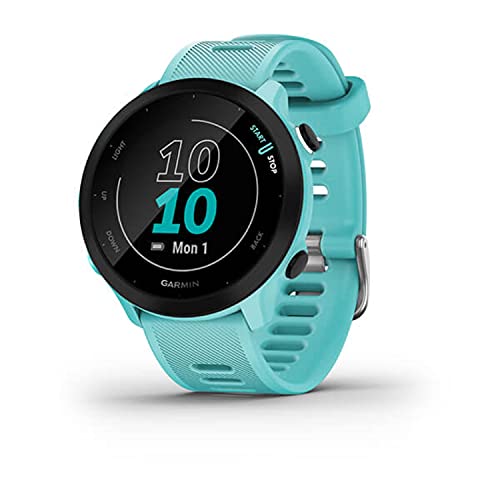
For those prioritizing extended endurance and bright navigation, the Amazfit Active Max Smart Watch delivers an impressive battery life and downloadable offline maps. Entry-level runners starting their multisport journey can also look at the Garmin Forerunner 55, GPS Running Watch with Daily for dependable pacing guidance. Choosing a watch that aligns with your race distances ensures you stay focused on reaching the finish line.
Frequently Asked Questions
How does a dedicated triathlon watch handle transition zones?
A dedicated multisport watch records your swim, bike, and run as a single continuous workout file. Pressing the lap button marks the start and end of transition periods, logging T1 and T2 split times separately. This keeps your pacing averages accurate for each individual sport without splitting your race data.
What makes open water swimming tracking different from pool swimming?
Pool swimming modes calculate distance by using internal motion sensors to count turns and push-offs off the wall. Open water modes use specialized GPS algorithms to capture satellite signals during the brief fraction of a second your arm is above water. This calculates your total outdoor swim distance without relying on a fixed pool length.
Can Best GPS Watches for Triathletes connect to cycling power meters?
Most advanced multisport watches include ANT+ and Bluetooth connectivity to pair with pedal and crank-based power meters. These connections allow you to monitor real-time wattage, normalized power, and cadence on your wrist. Entry-level fitness watches often lack power meter support, so checking compatibility is essential.
How much battery life do I need for a full-distance triathlon in 2026?
Athletes tackling a full-distance race should look for a device offering at least twenty hours of continuous GPS recording. This buffer ensures your watch continues tracking even if your race takes longer than anticipated. It also prevents premature shutdown caused by screen brightness or cold weather battery drain.
What is the advantage of dual-frequency GNSS on race day?
Dual-frequency GNSS tracks both L1 and L5 satellite signals to eliminate positioning errors caused by environmental interference. It provides accurate real-time pace numbers when running through downtown race courses or tree-lined bike paths. This prevents inaccurate pace spikes that could lead you to surge prematurely.
Is a touchscreen or physical button layout better for multisport athletes?
Physical button layouts are far more dependable for multisport events because wet fingers and water render touchscreens difficult to operate. Buttons allow you to lap transitions, pause workouts, and switch data screens without looking down. Premium models often feature both, locking the touchscreen during recorded workouts for security.
How do heart rate variability and training readiness metrics aid race prep?
Heart rate variability tracks fluctuations between heartbeats during sleep to assess how well your nervous system is recovering. Combined with recent training volume, it generates a readiness score that indicates if your body is primed for hard effort. This helps triathletes avoid overtraining injuries during intense multi-session training weeks.
Are Best GPS Watches for Triathletes suitable for daily lifestyle tracking?
Modern multisport watches double as everyday smartwatches with all-day health metrics, sleep staging, and smartphone notifications. Lightweight designs and customizable watch faces make them comfortable for continuous 24/7 wear. Continuous wear also improves the accuracy of baseline recovery and resting heart rate trends.
How does water resistance rating protect against chlorine and saltwater?
A water rating of 5 ATM or higher ensures the watch casing and acoustic ports can withstand high-pressure water movement. However, chemical additives and salt can corrode seals over time if left unwashed. Rinsing your watch in clean tap water after every swim session prevents premature gasket wear.
Can I navigate imported race courses directly from my wrist?
Most advanced watches allow you to import GPX course files directly into the companion app and sync them to your device. The watch provides turn-by-turn prompts, elevation profiles, and off-course alerts during your ride or run. This feature is particularly valuable for previewing official race courses before competition day.


