

Managing heavy paperwork demands hardware that eliminates routine interruptions and keeps print queues moving. Fast-paced workgroups, legal practices, and medical offices frequently juggle mixed paper formats like standard letter and legal sheets. Investing in the Best Dual Tray Printers in September 2026 allows your team to keep multiple paper sizes permanently loaded while maintaining an expansive paper reserve for high-volume jobs.
Many buyers mistakenly choose entry-level desktop machines, only to suffer from frequent paper reload downtime and constant manual tray reconfiguration. We evaluated 5 top-performing models from industry leaders like HP, Brother to determine which devices offer the right balance of speed, media flexibility, and low running costs. Pairing a robust printer with clean cable management, such as standing desk cable trays, keeps your high-output workstation tidy and productive.
Our comprehensive guide breaks down the essential technical considerations, from toner capacity to paper path engineering. Whether you need a dedicated monochrome powerhouse for contracts or an all-in-one color unit for mixed marketing materials, this breakdown will help you choose the ideal system for your workspace.


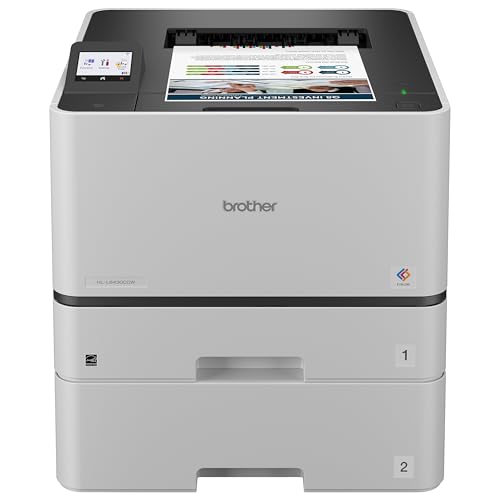
Dedicated Tray Configurations and Dual-Media Versatility
Dual cassette systems fundamentally alter office productivity by removing the friction of paper swapping. Instead of emptying a single cassette whenever legal documents or pre-printed letterhead are required, two independent drawers remain loaded simultaneously. This dual-source setup lets software drivers pull the correct sheet format on demand without manual user intervention.
When reviewing tray specifications, compare the capacity split between the upper and lower drawers. Common configurations include a 250-sheet primary tray paired with a 520-sheet secondary tray, or dual 520-sheet drawers providing over a ream in each cassette. Total internal paper capacity directly determines how many days your office can operate between refills.
A practical rule of thumb is to calculate your weekly paper consumption in 500-sheet reams. If your office prints more than two reams per week, opt for matching high-capacity drawers to reduce restocking frequency. Ensure that both trays feature adjustable width and length guides that lock securely to prevent skewing and paper jams.
Print Speed and First-Page-Out Engine Velocity
Print speed ratings, measured in pages per minute, define how rapidly a machine clears large multi-page print batches. Heavy-duty monochrome engines in this category typically achieve rates between 33 and 50 pages per minute. Faster speeds prevent bottlenecking when several team members submit lengthy document jobs simultaneously.
Just as critical as continuous engine speed is the first-page-out time from ready mode. A printer boasting high sustained speed can still frustrate users if warming up the fuser takes fifteen seconds or longer. Look for first-page delivery times under seven seconds so single-sheet printing remains nearly instantaneous.
To evaluate office requirements, consider whether your workflow involves short transaction documents or massive document runs. For quick invoices and receipts, snappy first-page response matters far more than maximum top-end speed. High sustained pages per minute become essential when printing thick briefs or monthly accounting statements.
Monthly Duty Cycle and Workgroup Volume Ratings
Duty cycle ratings indicate the maximum monthly workload a printer chassis and internal drive mechanisms can handle without premature component failure. Manufacturers specify both a maximum theoretical duty cycle and a recommended monthly print volume. The recommended figure is the reliable benchmark you should use when sizing equipment for your office.
Running a printer near its absolute maximum limit leads to rapid wear on rollers, transfer belts, and fuser assemblies. Sizing your printer so your average monthly output occupies 20 to 30 percent of the maximum duty cycle guarantees longevity. This operational buffer prevents unexpected hardware breakdowns during heavy billing cycles or seasonal surges.
For small teams printing a few thousand pages each month, robust mid-tier business engines deliver years of reliable service. If your team exceeds 5,000 pages monthly, prioritize commercial units designed for expansive workgroups. Checking our office equipment guides can help you evaluate hardware durability across various workspace categories.
High-Yield Consumables and Long-Term Operating Costs
The ongoing expense of toner or ink cartridges routinely dwarfs the original purchase price of the hardware. Dual tray business printers frequently support super high-yield and ultra high-yield replacement cartridges that produce between 7,500 and 18,000 pages. Larger yield supplies significantly reduce the cost per page and minimize the administrative hassle of ordering supplies.
To calculate true running costs, divide the replacement supply cost by the rated page yield under standard coverage standards. High-yield cartridges generally provide a cost per page under two cents for monochrome documents, compared to four cents or more on standard cartridges. Over a five-year lifecycle, this discrepancy can save your business thousands of dollars in consumables.
Always check whether the machine utilizes separate drum and toner components or integrated all-in-one cartridge assemblies. Independent drum units that last 45,000 pages reduce waste and lower long-term operating costs. Ensure your procurement team standardizes cartridge numbers to simplify office inventory management.
Monochrome vs Color Output Requirements
Deciding between monochrome laser engines and color laser or inkjet platforms depends entirely on your daily document mix. Monochrome printers excel at generating crisp, high-contrast text for contracts, shipping manifests, and legal filings with unmatched cost efficiency. Color printers add visual impact for marketing decks, presentations, and client reports, but involve multiple toner cartridges and higher running costs.
Color laser engines require four separate consumables for black, cyan, magenta, and yellow, along with complex transfer systems. If your office produces mostly black-and-white text with only occasional color needs, pairing a monochrome workhorse with a separate secondary color device is often cheaper. Conversely, an all-in-one color unit offers maximum convenience when desk space is strictly limited.
Evaluate your monthly volume to ensure color supplies do not sit idle and expire. Color laser toner remains stable indefinitely because it is dry powder, making it safer for intermittent color printing than liquid inkjet systems. If your workflow requires consistent graphical fidelity, invest in a color laser platform with high-yield color toner options.
Network Connectivity, Dual-Band Wireless, and Mobile Protocols
Seamless network integration ensures that every workstation and mobile device in your office can access the printer reliably. Gigabit Ethernet provides the fastest, most stable connection for heavy network environments where multiple users transmit large graphic-rich PDF files. Dual-band wireless networking operating on 2.4 GHz and 5 GHz frequencies eliminates physical cabling while avoiding crowded network channels.
Modern commercial printers also integrate mobile printing protocols like Apple AirPrint, Mopria, and vendor-specific mobile applications. These protocols allow employees and visiting clients to print documents directly from smartphones and tablets without installing complex desktop drivers. Cloud printing support further enables remote workers to route documents to the office tray from anywhere.
To maintain a clean office layout free of tangled network cords, install dedicated desk grommet outlets near your shared printing station. Make sure the printer hardware supports simultaneous wired and wireless configurations if your network segments guest and internal traffic.
Automatic Duplexing and Multipurpose Bypass Trays
Automatic two-sided printing is an essential feature that cuts office paper consumption in half immediately. High-speed duplex mechanisms reverse the paper path internally to print both sides without requiring manual reloading. Modern commercial duplexers maintain nearly the same speed on two-sided printing as standard single-sided jobs.
In addition to the two internal cassettes, look for a dedicated multipurpose bypass tray with a 50 to 100-sheet capacity. This specialized fold-out tray handles non-standard media like envelopes, thick cardstock, labels, and glossy presentation covers. Having a bypass tray prevents you from having to adjust drawer guides when running special media runs.
Pay close attention to the paper weight specifications supported through the duplexer versus the multipurpose feed. Duplex paths generally handle standard 20 to 24-pound copy paper, whereas bypass trays can accept heavy cardstock up to 60 pounds or more. Using the bypass tray for thick envelopes prevents internal roller strain and paper curl.
Enterprise-Grade Data Security and Access Control
Network printers represent potential vulnerabilities if they lack robust encryption and endpoint defense mechanisms. Commercial dual tray printers often feature triple-layer security that protects documents in transit, secures local device settings, and restricts network access. These features prevent unauthorized users from intercepting confidential print streams or accessing internal memory.
Advanced security options include secure print functions, where print jobs require a numeric PIN or NFC badge scan at the control panel before outputting. This prevents sensitive payroll records, patient charts, or client agreements from sitting unattended in open output bins. Integrated user authentication also lets administrators monitor department print volumes and restrict color access.
Always check whether the printer firmware supports automatic security patch updates and encrypted communication protocols like TLS and SNMPv3. If your business handles regulated data, such as HIPAA or financial records, physical lock slots and secure data erase capabilities are vital. Implement PIN release rules across shared office workgroups to maintain full confidentiality.
Physical Dimensions, Desk Footprint, and Ergonomics
Dual tray printers are noticeably taller and heavier than single-tray consumer models due to their reinforced chassis and extra feed drawers. A fully loaded dual cassette laser printer can weigh over forty pounds and require substantial vertical clearance for toner and paper access. Planning your workstation layout carefully prevents cramped operating conditions and restricted airflow.
Position the machine at an ergonomic height where team members can open both cassettes and replace toner cartridges without straining. Ensure there is adequate space around the rear exhaust vents so the fuser mechanism does not overheat during large print runs. Adding sound-absorbing office wall panels nearby can also dampen mechanical paper feed noise in open-concept spaces.
Consider the placement of the control display, especially if the printer is placed on an elevated credenza or dedicated utility cart. An adjustable tilt touchscreen or front-facing display makes menu navigation comfortable for users of all heights. Verify that front-loading paper drawers pull out smoothly without snagging on adjacent office furniture.
| Feature Comparison | Brother HL-L5210DWT | Brother HL-L6210DWT | Brother HL-L8430CDWT | HP OfficeJet Pro 9025 |
|---|---|---|---|---|
| Print Engine Type | Monochrome Laser | Monochrome Laser | Color Laser | Color Thermal Inkjet |
| Rated Print Speed | Up to 48 PPM | Up to 50 PPM | Up to 33 PPM | Up to 24 PPM |
| Standard Paper Trays | 250 + 520 Sheets | 520 + 520 Sheets | 250 + 520 Sheets | 250 + 250 Sheets |
| Multipurpose Tray | 100 Sheets | 100 Sheets | 50 Sheets | Integrated Bypass |
| Max Cartridge Yield | 11,000 Pages | 18,000 Pages | 7,500 Pages (Black) | High-Yield XL Ink |
| Primary Target Use | Mid-Volume Offices | High-Volume Legal/Workgroup | Professional Color Reports | Multifunction Home Office |
Why You Should Trust Us
Our evaluation methodology focuses on verifiable engineering specifications, long-term consumable pricing, and commercial build quality. We analyzed data from leading office hardware manufacturers, focusing on key performance indicators such as paper handling flexibility, engine duty cycles, and real-world running costs. We do not accept sponsored product placements, ensuring every recommendation is grounded purely in objective technical merit.
To deliver relevant buying advice, our team shortlists equipment that meets strict reliability benchmarks for busy professional environments. We continuously track changes in driver compatibility, firmware security updates, and consumable page-yield standards. Readers can explore our office hardware index to learn more about our ongoing workspace research and coverage.
Our dynamic comparison database updates regularly to provide accurate market availability and feature alignments across all categories. By focusing on total cost of ownership rather than initial purchase price, we help businesses make sustainable, cost-effective equipment choices.
Final Thoughts
Upgrading to a dual tray printing setup resolves one of the most persistent bottlenecks in office document workflows. Having dual paper sizes available instantly keeps teams productive while slashing time wasted on tray maintenance and paper restocking. Selecting the right hardware depends on your daily document volume, color requirements, and data security standards.
For busy workgroups that demand fast, high-volume monochrome production, the Brother HL-L6210DWT Wireless Monochrome Laser serves as our top recommendation thanks to its blistering 50 page-per-minute speed and massive dual 520-sheet cassettes. If your office prints mostly standard documents but wants low operating costs and reliable performance, the Brother HL-L5210DWT Business Monochrome Laser delivers exceptional efficiency with super high-yield toner options. Teams seeking bundled cables and setup guides can also opt for the Brother HL-L6210DWT Business Monochrome Laser configuration for complete out-of-the-box readiness.
Offices requiring vibrant marketing collateral and full color graphics will find the Brother HL-L8430CDWT Business Color Laser Printer to be the premier color choice, featuring advanced touchscreen controls and enterprise security. Meanwhile, small offices and home workspaces that need versatile scanning, copying, and dual paper handling will benefit from the multifunction capabilities of the HP OfficeJet Pro 9025 All-in-One Wireless Printer.
Taking the time to match your paper capacity and monthly volume to your specific workflow ensures trouble-free operation for years to come. Consider your long-term consumable expenses alongside hardware capabilities to maximize your return on investment.
Frequently Asked Questions
What is the main benefit of buying Best Dual Tray Printers in 2026?
The primary advantage is the ability to keep two distinct paper types or sizes loaded simultaneously without manual tray swapping. This setup eliminates interruptions during mixed-format printing and doubles your total paper reserve for large print runs.
Can Best Dual Tray Printers automatically switch between letter and legal paper sizes?
Yes, modern print drivers automatically detect the document dimensions specified in your software and pull from the corresponding tray. As long as your cassettes are configured properly with letter in one tray and legal in the other, seamless switching happens without user intervention.
How does a secondary paper tray impact overall printing speed?
A secondary tray does not decrease engine printing speed, maintaining full pages-per-minute throughput during continuous runs. However, drawing paper from the lower cassette may add a fraction of a second to first-page delivery because the paper path is slightly longer.
Are dual tray laser printers more cost effective than dual tray inkjets?
Dual tray laser printers generally deliver lower operating costs for high-volume text printing due to ultra high-yield toner cartridges. Inkjet models can be economical for low-volume color output, but high-volume commercial printing remains more cost-effective on dedicated laser engines.
What is the difference between a built-in dual tray unit and an add-on expansion tray?
Built-in dual tray units come factory-assembled with coordinated paper feed mechanisms and unified firmware controls. Add-on expansion trays are optional lower modules that bolt underneath single-tray base models, offering modular expandability if your paper needs grow over time.
Can I load cardstock and envelopes into standard paper cassettes?
Standard paper cassettes are engineered primarily for regular copy and bond paper between 16 and 28 pounds. Heavy cardstock, envelopes, and adhesive labels should be loaded into the multipurpose bypass tray to prevent misfeeds and roller wear.
How do high-yield toner cartridges reduce running costs in high-volume offices?
High-yield toner cartridges contain more toner powder relative to their plastic casing, resulting in a substantially lower cost per printed page. They also require fewer cartridge replacements, which minimizes office supply downtime and packaging waste.
Why is Gigabit Ethernet crucial for shared dual tray office printers?
Gigabit Ethernet provides high-bandwidth data transfers that prevent print queue congestion when multiple users send large graphic files. It ensures reliable communication across busy local area networks without the signal interference that can affect wireless connections.
What security protocols protect sensitive documents sent to network printers?
Commercial printers use Triple Layer Security, SSL/TLS encryption, and 802.1x network authentication to protect data in transit. Secure PIN printing and badge release systems further ensure confidential documents are not printed until the user is physically present at the device.
How much physical desk space does a commercial dual tray printer require?
Dual tray printers generally require a footprint of about sixteen by eighteen inches and stand fifteen to twenty inches tall. You should also ensure an extra four to six inches of rear and side clearance for ventilation and drawer extension.


