Facility cleanliness defines the safety, hygiene, and professional image of any commercial property. Traditional mop and bucket methods often spread dirty water across surfaces rather than extracting grime, which creates serious slip hazards and increases labor costs. Investing in modern commercial equipment transforms daily maintenance routines into streamlined, high-efficiency operations.
Our comprehensive analysis for September 2026 evaluates 10 standout options across multiple design formats, including walk-behind auto scrubbers, compact orbital buffers, and high-capacity ride-on units. Whether you oversee an industrial warehouse, a busy medical clinic, a school cafeteria, or an office workspace, selecting the right machine protects your flooring investment. You can also explore our related facility maintenance guides to optimize your workplace sanitation schedule.
Common purchasing mistakes include underestimating tank volume requirements or selecting an oversized scrubber that cannot navigate narrow doorways. This guide examines scrub path widths, downforce ratings, fluid recovery rates, and noise levels so you can invest with total confidence.




Selecting commercial cleaning machinery requires matching technical hardware capabilities directly with your floor plan dimensions and surface chemistry. A mismatched machine can cause severe operational bottlenecks, incomplete water recovery, or accidental surface etching. Evaluating the following core criteria will ensure your facility selects the most effective cleaning setup.
1. Cleaning Path Width and Hourly Coverage Capacity
Cleaning path width determines the physical surface area a machine scrubs in a single forward pass. Compact scrubbers feature paths between 13 and 15 inches, whereas heavy-duty industrial units span 20 to 24 inches or wider. A wider path dramatically cuts down overall cleaning time across open corridors and wide warehouse aisles.
Hourly coverage capacity measures square footage cleaned per hour, factoring in brush width, travel speed, and turning arcs. Compact orbital models clean roughly 3,000 to 5,000 square feet per hour, while self-propelled walk-behinds reach 24,000 square feet per hour. High-output ride-on machines can exceed 48,000 square feet per hour in large distribution centers.
Always balance high coverage metrics against structural navigation limits within your facility. Measure your narrowest doorways, checkout lanes, elevator entrances, and storage closets before buying. An oversized scrubber with an ultra-wide squeegee will struggle to clean tight spaces and require secondary manual mopping.
2. Power Source: Corded Electric vs. Battery-Powered Systems
Power delivery systems dictate runtime limits, machine mobility, and cord management safety during operating hours. Corded electric machines provide uninterrupted power for unlimited cleaning cycles without waiting for batteries to recharge. However, the power cord limits operational range to roughly 25 to 50 feet and poses a trip hazard in public spaces.
Battery-powered systems utilize sealed lead-acid, AGM, or lithium battery packs that eliminate tripping risks and allow unrestricted mobility. Modern commercial battery scrubbers deliver between 3 and 5 hours of continuous scrubbing per charge cycle. Recharging typically requires 7 to 8 hours, making overnight charging standard practice for commercial cleaning crews.
For multi-room facilities or open commercial footprints, battery power provides unmatched convenience and operational speed. Corded machines remain the budget-friendly choice for smaller retail boutiques, dental offices, and compact kitchens where electrical outlets are always within close reach.
3. Solution and Recovery Tank Capacity Management
Automatic scrubbers utilize two isolated tanks: a solution tank for clean water and detergent, and a recovery tank for dirty wastewater. Tank capacity directly dictates how frequently operators must pause cleaning to drain wastewater and refill clean solution. Frequent refill stops reduce productivity across large commercial properties.
Compact commercial floor machines feature 3 to 6-gallon tanks, which suit spaces under 10,000 square feet. Mid-sized walk-behinds typically carry 10 to 14-gallon reservoirs, while industrial ride-on units house massive 18 to 20-gallon tanks. A well-designed machine maintains a slightly larger recovery tank to prevent dirty foam overflows.
Always inspect drain hose design, tank clean-out access, and debris basket filters during selection. Wide-mouth recovery tanks with smooth interior walls prevent sludge accumulation and eliminate unpleasant odors in storage closets. Facilities focused on comprehensive floor care can also review our guide on office area rugs to protect high-traffic transition zones.
4. Motor Power, Brush Speed, and Scrub Downforce
Motor strength dictates how effectively a machine removes embedded grease, scuff marks, and sticky residues from porous surfaces. Commercial scrubbers use dedicated brush motors ranging from 500 watts to 1.5 horsepower (1100 watts). Brush rotational speeds generally range from 175 to 200 RPM for rotary disc scrubbers, while high-speed buffers reach up to 1950 RPM.
Brush downforce represents the physical downward pressure applied by the cleaning head onto the floor. Heavy downforce breaks down compacted industrial grime without requiring harsh chemical concentrations. Lightweight buffers may spin rapidly, but without sufficient head weight, they glide over stubborn dirt without scrubbing deeply.
Modern brushless ECM motors provide high torque output while consuming less electrical power and producing minimal heat. These motors eliminate carbon brush replacements, doubling operating lifespan and cutting long-term maintenance overhead for busy janitorial departments.
5. Water Recovery, Suction Motors, and Squeegee Assembly
Effective water extraction is essential for workplace safety and immediate foot traffic resumption. High-performance auto scrubbers combine powerful vacuum suction motors with curved, parabolic squeegee assemblies. The squeegee gathers water into the center suction channel, drying the floor in a single continuous pass.
Squeegee width must always exceed the brush scrubbing width by several inches to catch side splashes during tight turns. For example, an 18-inch brush path pairs effectively with a 24-inch squeegee, while a 22-inch scrubbing deck requires a 31-inch squeegee. Dual-blade squeegee systems use front grooved blades for water channeling and solid rear blades for wiping.
Inspect squeegee blade materials based on floor chemical exposure. Standard gum rubber blades deliver superior suction on smooth ceramic tile and polished concrete. For oily machine shops or automotive garages, oil-resistant polyurethane blades prevent swelling and premature tearing.
6. Surface Compatibility and Pad Versatility
Commercial facilities feature diverse floor materials, including vinyl composition tile (VCT), epoxy coatings, sealed hardwood, polished concrete, terrazzo, and commercial carpeting. A versatile cleaning machine must accommodate diverse brush stiffness levels and standard color-coded scrubbing pads. Using the wrong pad stiffness can strip protective floor wax or scratch delicate surfaces.
Soft nylon brushes work best for routine washing on sensitive epoxy, marble, and sealed hardwood. Medium polypropylene bristles clean textured ceramic tile and grout lines thoroughly. Heavy abrasive grit brushes strip warehouse concrete and outdoor walkways, while orbital machines use microfiber bonnets for dry carpet cleaning.
Ensure the machine you select uses standardized pad holders compatible with industry-standard replacement pads. Quick-release brush mechanisms save substantial labor time when transitioning between different commercial floor finishes throughout your facility.
7. Noise Level and Daytime Facility Operations
Operating noise levels dictate whether cleaning crews can operate during standard business hours or must wait for night shifts. High-volume industrial scrubbers produce noticeable vacuum motor whine and brush friction sounds. Loud equipment disrupts office workers, hospital patients, hotel guests, and school classrooms.
Modern commercial scrubbers equipped with sound-dampened brushless vacuum motors operate at ultra-quiet noise levels between 58 and 62 decibels. A machine running under 60 decibels is quieter than normal conversational speech. This low sound profile permits daytime cleaning routines without causing workplace distractions.
For open corporate environments where acoustics are critical, you can also consider sound-dampening accessories like office acoustic wall panels. Choosing quiet floor maintenance equipment maintains a peaceful, professional atmosphere across customer-facing areas.
8. Propulsion: Push vs. Traction Drive vs. Ride-On
Propulsion mechanisms directly influence operator fatigue and total square footage cleaned per shift. Pad-assist walk-behind models rely on the forward rotation of the brush to pull the machine forward while the operator guides it. These units are lightweight and affordable, making them suitable for flat, small-to-medium floor plans.
Traction-driven scrubbers feature dedicated electric drive transaxles that propel the wheels forward and backward under motorized control. Operators simply adjust speed dials on the handle, reducing physical fatigue during long shifts. Traction drive is essential when navigating floor ramps, inclines, or heavily textured surfaces.
Ride-on scrubbers provide complete operator seating, steering wheels, and foot pedal accelerators for massive facilities. These units handle up to 20-degree grade ramps and clean large open spaces up to four times faster than walk-behind alternatives. Evaluate your staffing levels and square footage to determine if motorized propulsion is warranted.
9. Digital Diagnostics and Tool-Free Maintenance
Commercial cleaning machinery undergoes heavy daily wear and tear from moisture exposure and chemical detergents. Machines with digital LCD diagnostic screens display operational status, battery percentages, and specific error codes. Digital feedback speeds up troubleshooting and minimizes machine downtime.
Tool-free maintenance features allow operators to replace squeegee blades, disconnect brush assemblies, and rinse filters without requiring hand tools. Squeegee blades that flip to utilize all four wear edges cut consumable costs by half. Quick-access battery compartments also simplify monthly terminal inspections and watering routines.
Investing in machines with accessible replacement parts and solid warranty coverage protects your capital budget. Facility teams managing multi-use workstations can also reference our guide on cable management systems to keep floors clear of power cords during routine scrubbing runs.
Commercial Floor Cleaning Machine Comparison
The table below compares the four major machine categories to help you select the ideal format for your square footage and floor surfaces.
| Machine Category | Ideal Floor Area | Typical Cleaning Path | Power Source | Primary Strength |
|---|---|---|---|---|
| Orbital Buffer / Polisher | 1,000 to 10,000 sq ft | 13 to 15 inches | Corded Electric | Deep grout cleaning and multi-floor stripping |
| Compact Walk-Behind | 5,000 to 25,000 sq ft | 14 to 16 inches | Corded or Battery | Tight aisle agility and single-pass drying |
| Traction Walk-Behind | 20,000 to 60,000 sq ft | 18 to 22 inches | Dual AGM Battery | Fatigue-free propulsion and large tank capacity |
| Ride-On Auto Scrubber | 50,000+ sq ft | 22 to 32+ inches | High-Capacity Battery | Maximum hourly acreage and ramp gradeability |
Why You Should Trust Us
Our review methodology relies on deep technical analysis, manufacturer engineering specifications, and verified commercial facility operational data. We evaluate equipment across objective performance metrics, including scrubbing downforce, squeegee water pickup efficiency, motor duty cycles, and battery discharge rates. By removing marketing hyperbole, we provide transparent assessments tailored to commercial buyers.
We continuously track updates across commercial floor care brands, monitoring hardware revisions, warranty terms, and parts availability across North America. Our editorial team structures comparisons around practical workplace challenges, ensuring our recommendations withstand heavy daily janitorial demands. We remain completely independent, providing data-backed guidance to optimize your equipment budget.
Final Thoughts
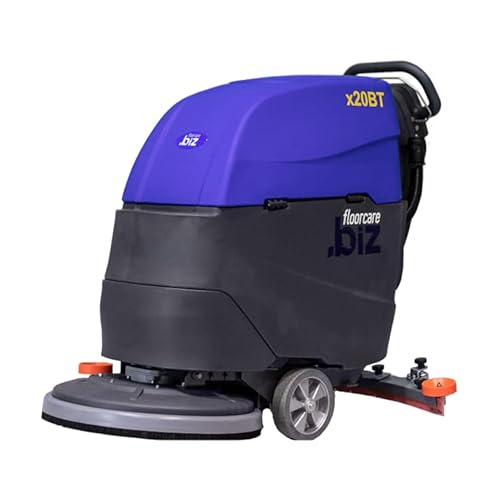
Selecting among the Best Commercial Floor Cleaning Machines depends on your facility square footage, doorway constraints, and daily floor traffic levels. For medium to large commercial spaces requiring high-output reliability, the USA-CLEAN X20BT Traction Driven Auto Scrubber represents our top overall recommendation. Its 20-inch scrub path, motorized traction drive, dual AGM batteries, and tool-free squeegee adjustments deliver outstanding productivity across healthcare, educational, and retail environments.
For industrial warehouses, distribution facilities, and shopping complexes with vast open corridors, the Battery Powered Ride-On Commercial Floor Scrubber provides unmatched coverage. Operating at up to 48,400 square feet per hour with a 22-inch scrubbing deck and dual 19-gallon tanks, it drastically reduces cleaning shift hours while mastering 20-degree ramps effortlessly.
Facilities prioritizing versatility, tile grout restoration, and budget flexibility should consider the HHQ Commercial Floor Scrubber Machine. Its heavy-duty orbital motion and complete pad kit make it an exceptional value for stripping, buffing, and deep-cleaning diverse hard surfaces. For carpet-heavy properties requiring deep fiber restoration, the Bissell Commercial Bissell BigGreen Commercial excels with its dual-motor extraction system.
If you manage busy administrative spaces, pair your floor maintenance equipment with organized breakroom amenities by reviewing our guide on breakroom organization setups. Investing in reliable commercial cleaning equipment ensures safer walkways, lower labor overhead, and an immaculate facility appearance year-round.
Frequently Asked Questions
What is the top-rated option among Best Commercial Floor Cleaning Machines in 2026 for large facilities?
The USA-CLEAN X20BT Traction Driven Auto Scrubber stands out as the premier walk-behind choice due to its rugged 20-inch cleaning deck and integrated traction drive system. For expansive warehouse spaces over 50,000 square feet, the Battery Powered Ride-On Commercial Floor Scrubber delivers optimal efficiency with its 48,400 square foot hourly coverage rate.
How do auto scrubbers dry commercial floors so quickly compared to traditional mops?
Auto scrubbers combine high-downforce scrubbing brushes with heavy-duty vacuum suction motors and rear rubber squeegees. As the machine moves forward, clean solution is applied, agitated against the floor, and immediately vacuumed into a sealed recovery tank. This single-pass extraction leaves floors virtually dry and safe for immediate foot traffic.
Can commercial floor scrubbers safely clean epoxy and polished concrete surfaces?
Yes, commercial scrubbers are engineered to safely clean delicate finishes when paired with non-abrasive soft nylon brushes or white polishing pads. Regulated pad downforce cleans grime without scratching protective sealants. Always verify that your cleaning chemical is pH-neutral to preserve the gloss of epoxy and concrete coatings.
What kind of detergent should be used inside automatic floor scrubber solution tanks?
Automatic floor scrubbers require specialized low-foaming commercial detergents formulated specifically for machine use. Standard dish soaps and high-foaming cleaners generate excess foam that enters vacuum motors, causing premature motor burnout. Defoamer additives can also be introduced directly into recovery tanks to protect vacuum components.
How long do battery-powered commercial scrubbers run on a single charge?
Most commercial battery scrubbers provide between 3 and 5 hours of continuous runtime per charge. High-capacity dual AGM battery setups allow maintenance crews to complete full daily cleaning shifts without interruption. Recharging typically takes 7 to 8 hours using standard 110V wall outlets.
What is the difference between an orbital buffer and a rotary disc auto scrubber?
Rotary disc scrubbers spin a single disc at 175 to 200 RPM while continuously applying water and vacuuming recovery fluid in one pass. Orbital buffers oscillate at high frequencies (up to 1950 RPM) in random eccentric orbits, delivering exceptional deep-cleaning agitation for tile grout, floor stripping, and dry carpet cleaning without torque pull.
How often should squeegee blades and scrub brushes be replaced?
Squeegee blades should be inspected weekly and rotated when edges become rounded or leave water streaks. Most blades have four usable edges before needing full replacement. Scrub brushes typically last 6 to 12 months depending on floor roughness and daily operating hours.
Are corded floor scrubbers practical for multi-room commercial buildings?
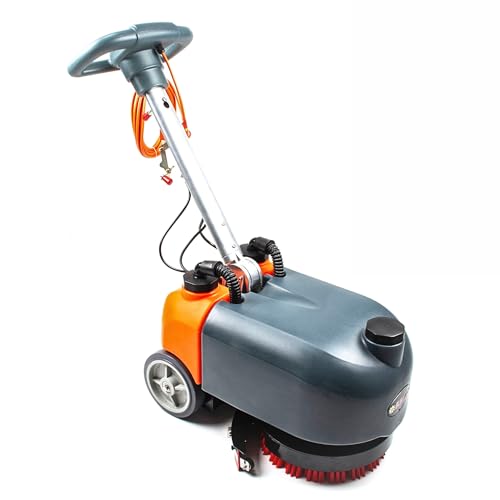
Corded scrubbers like the SUNMAX 14″ Corded Floor Scrubber Dryer Machine offer continuous power without battery maintenance, making them ideal for single-level clinics, salons, and cafés. However, navigating across multiple rooms requires unplugging and managing extension cords, which reduces efficiency in multi-room buildings compared to cordless models.
What daily maintenance is required after each cleaning shift?
Operators must drain and rinse the dirty water recovery tank thoroughly to prevent bacterial growth and odor buildup. The squeegee assembly should be wiped down, the vacuum intake filter cleaned, and the battery pack plugged into its charging station. These quick steps extend machine lifespan significantly.
Why are quiet decibel ratings crucial for commercial cleaning equipment?
Scrubbers operating below 60 decibels allow facilities to execute daytime cleaning shifts in hospitals, schools, and offices without disturbing occupants. Quiet machinery eliminates the need for expensive late-night janitorial shifts. Facilities seeking peaceful work environments can also install office lighting solutions alongside quiet cleaning routines.