A chair mat is one of the most affordable ways to keep a rolling office chair from slowly wrecking whatever is underneath it, but the right choice depends entirely on what kind of floor you’re protecting. Carpet needs a gripping underside so nothing slides around; hardwood, tile, and concrete need a flat, scratch-resistant surface instead. After comparing 8 options currently listed on Amazon across floor types, materials, and shapes, the HON Office Chair Mat for Carpet stands out as the safest overall pick for most home offices — it’s a clear, heavy-duty design with an extended lip rated for low-pile carpet, backed by a well-known office furniture brand. This guide walks through the three decisions that actually matter when shopping for one: which floor type you have, which material fits your budget and durability needs, and which shape suits your desk setup, so you land on the right pick instead of guessing.

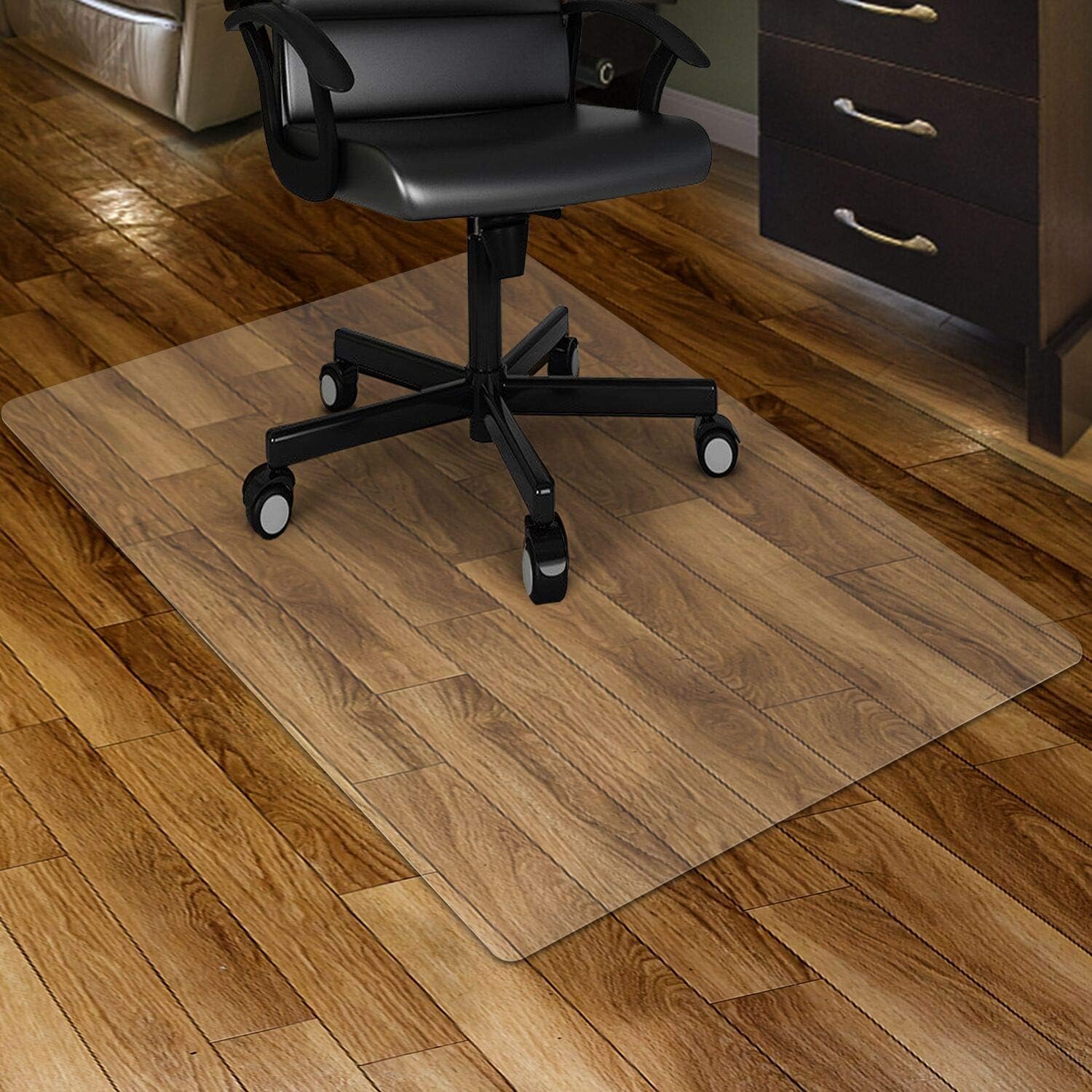


![[Tempered Glass] 46" x 55" Glass Office Chair Mat for Carpet | 1/5" Thick Crystal Clear Heavy Duty Hard Floor Mat with Round Corner and Polished Edge, Resist Scratching Cracking Curling](https://m.media-amazon.com/images/I/71wEDbs7lmL._AC_SL1200_.jpg "[Tempered Glass] 46\" x 55\" Glass Office Chair Mat for Carpet | 1/5\" Thick Crystal Clear Heavy Duty Hard Floor Mat with Round Corner and Polished Edge, Resist Scratching Cracking Curling")

Top Picks at a Glance
- Best Overall: HON Office Chair Mat for Carpet – a heavy-duty, clear design with an extended lip and ramped edges, built specifically for low-pile carpet from a well-established office brand.
- Best for Hardwood Floors: Kuyal Clear Chair Mat for Hardwood Floor – a transparent PVC mat sized for wood and tile floors, letting your flooring show through while adding a protective layer.
- Best for Carpet: GORILLA GRIP Office Chair Mat for Carpet Floors – a heavy-duty clear option designed for slip-resistant rolling on carpeted floors, sized generously at 29×47 inches.
- Best Premium (All-Floor Polycarbonate): Marvelux Extra Thick Heavy Duty Polycarbonate Office Chair Mat – a thick polycarbonate build rated for plush, high-pile carpet as well as hardwood flooring.
- Best Glass Option: Tempered Glass Office Chair Mat for Carpet – a crystal-clear tempered glass design with polished, rounded edges built to resist scratching, cracking, and curling.
- Best Budget: Sycoodeal Office Chair Mat for Hardwood Floor – an affordable, anti-slip floor protector rug sized for hardwood and tile floors.
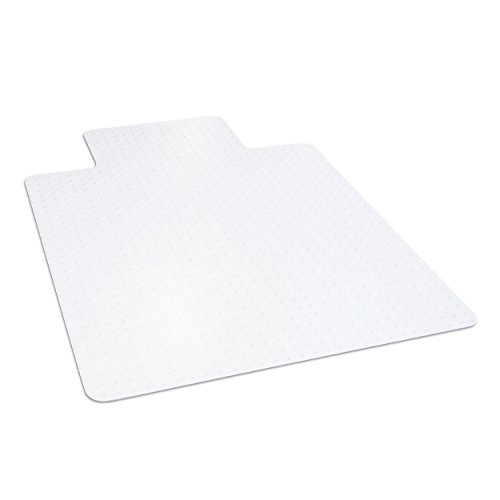
- Best with Lip Design: Staples Office Chair Mat, Clear, Flat-Pile Carpet, with Lip – an office-supply-brand option with extended under-desk coverage for smooth gliding on flat-pile carpet.
- Best for Low-Pile Carpet: Dimex Office Chair Mat for Low Pile Carpet with Lip – a clear, lip-style pick purpose-built for low-pile carpet installations.
Do You Actually Need a Chair Mat?
If you’ve ever pulled an office chair back after a few months and noticed a dull, worn track in the carpet or a set of faint scuff marks on hardwood, that’s exactly what this kind of floor protection is meant to prevent. The casters on a rolling chair concentrate a surprising amount of weight and friction into a small contact patch, and every roll, pivot, and scoot-in wears down whatever’s underneath a little more. On carpet, that shows up as matted, flattened fibers that never quite bounce back. On hardwood, tile, or laminate, it shows up as fine scratches, dulled finish, and sometimes small dents where a caster sat in one spot too long.
Not everyone needs one immediately — if you rarely move your chair, or you’re on a very durable commercial-grade floor, the wear happens more slowly. But if you sit at a desk most workdays and roll, swivel, or scoot your chair even occasionally, a chair mat pays for itself by protecting flooring or carpet that’s far more expensive to repair than the mat itself.
The First Decision: What Kind of Floor Do You Have?
Before comparing materials or shapes, the single most important thing to get right is matching the mat to your actual floor, because a design built for one surface can work against another. A version made for carpet has a textured or lightly studded underside meant to grip fibers and stay put as you roll over it; put that same product on hardwood or tile, and the gripping texture can scuff or scratch the finish instead of protecting it. Go the other way — a smooth-backed mat made for hard flooring — and lay it on carpet, and it tends to slide, bunch up, or shift out of place every time you push off with your feet.
If your workspace has wall-to-wall carpet, especially a low-pile commercial-style carpet common in home offices, you’ll want a mat built specifically for that surface, with enough grip to stay flat and enough thickness to keep casters from sinking in and dragging. Our chair mats for carpet guide goes deeper into pile height, cleated backing, and sizing for carpeted rooms specifically. If instead you’re rolling over hardwood, engineered wood, laminate, tile, or polished concrete, you need a smooth, flat underside and a surface tough enough to resist scratches without any grip that could catch and mar the finish — our chair mats for hardwood floors guide covers that category in detail. This guide stays broad on purpose, comparing options across every common floor type so you can see the full picture before narrowing in.
Materials Compared: PVC vs Polycarbonate vs Glass
Once you know your floor type, material is the next major fork in the road, and the three you’ll see most often on Amazon are PVC, polycarbonate, and tempered glass. PVC, sometimes labeled vinyl, is by far the most common chair mat material because it’s inexpensive and widely available in a range of sizes and shapes. The trade-off is durability: PVC mats are more prone to curling at the corners when they first arrive rolled up for shipping, they can carry a noticeable plastic smell out of the box, and over a few years of heavy daily rolling they’re more likely to develop cracks or permanent creases than sturdier options.
Polycarbonate sits a step up from PVC. It’s a denser, more impact-resistant plastic that holds up better under sustained weight and repeated rolling, which is why several heavy-duty picks — including options rated for thick, high-pile carpet as well as hardwood — are made from it instead of standard vinyl. Expect to pay more for a polycarbonate mat than a comparable PVC one, but also expect it to resist cracking and flattening for longer, especially if you’re a larger user or roll frequently throughout the day.
Tempered glass sits at the top of the range. Because glass doesn’t scratch, dent, or curl the way plastic does, a glass chair mat can look essentially new years after a PVC version would have clouded over or cracked at the edges. Glass options also tend to have polished, rounded edges that feel smoother underfoot than a plastic lip. The catches are weight, price, and fragility under the wrong kind of impact — a heavy dropped object can chip or crack tempered glass, and these mats are noticeably heavier to move or reposition than any plastic version. If budget is tight or you move furniture around often, PVC or polycarbonate is the more practical choice; if you want something that will genuinely last as long as your desk does, glass is worth the premium.
Shape Matters: Rectangular, Rectangular-with-Lip, or Round
Shape is easy to overlook when shopping for a chair mat, but it changes how well the piece actually fits your desk in daily use. A standard rectangle is the simplest and usually the least expensive option — you position it under and slightly in front of your desk, and it works fine as long as your desk stays in one place and your chair doesn’t need to roam far beyond its edges.
A design with a lip adds a smaller rectangular section that tucks under the desk itself, effectively extending the protected area right up to where your feet and the chair’s front casters spend most of their time. This style tends to stay in position better than a plain rectangle because the lip section wedges against the base of the desk, and it’s a common choice for anyone who scoots their chair in and out of a fixed spot repeatedly through the day. The trade-off is that a lip-style mat only works well with the desk orientation it was designed for — rotate the desk or move to an open layout, and the lip stops lining up usefully.
Round chair mats solve that flexibility problem. Because they have no fixed front or back, a round option works just as well whether your chair rolls toward the desk, sideways to a printer stand, or backward to reach a filing cabinet, which makes it a good fit for open floor plans, corner setups, or any workspace where the chair moves in more than one direction. The trade-off is coverage: a round mat of a given size typically protects less total floor area at the corners than a rectangle of similar dimensions, so measure carefully if your chair travels far in any one direction.
Sizing a Chair Mat to Your Workspace
One that’s too small defeats the purpose almost immediately, because any time a caster rolls past the edge, you’re back to unprotected carpet or flooring. Rather than measuring just the footprint of your chair sitting still, walk through your actual workday: how far do you roll toward filing cabinets, side tables, or a second monitor setup, and how far back do you push when you stand up. That full range of motion, not the chair’s resting position, is what needs coverage.
Standard sizes in the 36×48-inch to 48×60-inch range cover most single-desk setups comfortably, with larger dimensions suited to bigger desks, corner configurations, or anyone who tends to roll further than average. If you use a standing desk that changes height throughout the day, size up slightly, since your chair position and the way you approach the desk can shift more than it would with a fixed-height desk. When in doubt, err on the side of going bigger — trimming isn’t usually an option, but extra coverage around the edges never hurts.
Thickness, Durability, and What Happens Over Time
Thickness plays a bigger role in longevity than most shoppers expect. A thin mat is more prone to cracking, permanent creasing, or forming a groove where the chair sits most often, particularly if you’re on the heavier side or spend long hours at your desk daily. A thicker one spreads that load more evenly and tends to resist both cracking and the compressed, flattened look that comes with years of rolling in the same spots. That said, an overly thick pad can create a noticeable edge or lip that catches your foot or makes it harder to roll smoothly onto and off of, so more isn’t always simply better — matching thickness to your body weight and hours in the chair is more useful than chasing the thickest option available.
One thing almost every new PVC chair mat does is arrive with some curl at the corners from being rolled for shipping. This usually isn’t a defect — it typically flattens out within a few days to a couple of weeks once unrolled and weighted down, and placing a few heavy books on the stubborn corners overnight speeds up the process. Polycarbonate and glass versions don’t have this issue since they ship flat or lie flat almost immediately, which is one more reason those materials tend to feel more finished right out of the box.
How We Evaluated These Picks
These recommendations are based on a review of publicly available Amazon listing data — product descriptions, stated material and thickness, dimensions, floor-type compatibility, pricing, and customer review volume — across chair mat listings covering carpet, hardwood, tile, and multi-surface use. We deliberately selected a spread of materials (PVC, polycarbonate, and tempered glass) and shapes (standard rectangular, lip-style, and options built for multiple floor types) so this guide reflects the full range available rather than favoring one category, and we cross-checked every product name and ASIN against the source Amazon listing before including it here. This is a specification and listing-data comparison rather than a hands-on lab test, so treat material, thickness, and floor-compatibility claims as a starting point, and confirm current sizing and pricing on the product page itself before buying.
Common Buying Mistakes to Avoid
The most common mistake is choosing a design built for the wrong floor type — a carpet-specific mat with a gripping underside on hardwood, or a smooth hard-floor mat on carpet, where it slides and bunches instead of staying put. A close second is measuring only the chair’s resting position rather than its full range of motion, which leads to something that’s technically in place but too small for how you actually use your desk.
Shoppers also frequently underestimate thickness needs, choosing the thinnest, most affordable option available and then dealing with cracking or permanent grooves within a year or two of daily use. Another frequent error is judging a brand-new PVC chair mat too quickly — corner curling out of the box is normal and usually resolves within a couple of weeks, not a sign the product is defective. Finally, some buyers pick a shape that doesn’t match how they actually move, ordering a lip-style piece for an open floor plan where the chair rolls in multiple directions, when a round or larger rectangular option would have fit their setup better.
Chair Mat Buying Checklist
- Identify your floor type first — carpet, hardwood, tile, laminate, or concrete — before comparing any other feature.
- Match the backing to your floor: gripping or studded underside for carpet, smooth flat underside for hard flooring.
- Choose a material based on budget and durability needs: PVC for affordability, polycarbonate for heavier daily use, glass for maximum longevity.
- Pick a shape that matches how your chair actually moves: rectangular for simple setups, lip-style for a fixed desk position, round for multi-directional movement.
- Measure your chair’s full range of motion, not just its resting position, before choosing a size.
- Size up rather than down if you’re unsure, since extra coverage still does the job.
- Check thickness against your weight and daily hours in the chair to avoid premature cracking.
- Expect some corner curling on a new PVC mat and give it a week or two to flatten before judging it.
Once you’ve identified your floor type using the framework above, it’s worth reading the dedicated guide for your situation — the carpet and hardwood links earlier in this article go deeper on pile height, cleated backing, scratch resistance, and finish protection for each surface. If you’re weighing floor protection more broadly, our chair floor protectors guide covers related options, and if thick carpet is affecting how your chair rolls in the first place, our office chairs for thick carpet guide looks at caster and chair choices that pair well with a carpet-specific mat.
FAQ
Do I really need a chair mat if my chair already has smooth casters?
Smooth casters reduce friction but don’t eliminate wear — every roll still presses weight into a small contact point on your carpet or flooring. A protective mat spreads that load over a larger, more durable surface, which is especially worth it if you sit at your desk most days and roll or swivel your chair regularly, since carpet and hardwood are both far more expensive to repair than a mat costs.
What’s the difference between a chair mat for carpet and one for hardwood floors?
A carpet version has a textured or lightly studded underside that grips fibers and keeps it from sliding as you roll. One made for hardwood, tile, or laminate has a smooth, flat underside instead, since any gripping texture on a hard floor can scratch or scuff the finish rather than protecting it. Using the wrong type on the wrong surface tends to cause the exact problem it’s supposed to prevent.
Is polycarbonate or glass better than PVC?
Both hold up longer than standard PVC, but in different ways. Polycarbonate is more impact- and crack-resistant while staying reasonably priced, making it a solid upgrade for heavy daily use. Tempered glass resists scratching and curling almost entirely and can outlast plastic by years, but it costs more and is heavier to move. PVC remains the most affordable option and works fine for lighter use or tighter budgets.
Should I get a rectangular, lip-style, or round mat?
It depends on how your chair moves. A standard rectangle suits a simple, fixed desk setup. A lip-style pick tucks under the desk and stays in position well if you scoot in and out of the same spot repeatedly. A round option works best in open layouts or corner setups where the chair rolls in multiple directions rather than straight toward one desk edge.
How thick should a chair mat be?
Thicker options generally resist cracking, creasing, and compression better over time, which matters more if you’re a heavier user or spend long hours rolling around your desk daily. That said, an overly thick pad can create a noticeable edge that’s harder to roll over smoothly, so it’s worth matching thickness to your actual body weight and chair usage rather than always choosing the thickest option on the shelf.
Why is my new mat curling at the corners, and how do I fix it?
Corner curling is common on new PVC mats because they’re rolled up tightly for shipping. It’s usually not a defect and typically flattens out within a week or two once unrolled, laid flat, and weighted down at the corners with something heavy overnight. Polycarbonate and glass versions generally skip this issue entirely since they ship and lie flat from the start.