
Carpet changes everything about how a chair mat behaves. A mat built for hardwood or tile relies on a smooth, flat underside to glide across a hard surface, but set that same mat on carpet and it will slide, bunch, or walk across the room every time you push back from your desk. A proper chair mat for carpet works the opposite way — the underside is covered in short plastic teeth that dig into the carpet pile and hold the mat in place, so your caster wheels roll smoothly on top instead of catching on fibers. After comparing thickness, pile-height ratings, grip-teeth density, and material across 8 chair mats for carpet currently listed on Amazon, the strongest all-around pick is the Office Chair Mat for Carpets, a clear PVC mat sized for most desk setups with an anchor-tooth underside built for low to medium pile. If your carpet is thick, plush, or high-pile, skip straight to the polycarbonate option below — a mat rated for the wrong pile height is the single most common reason these mats fail.

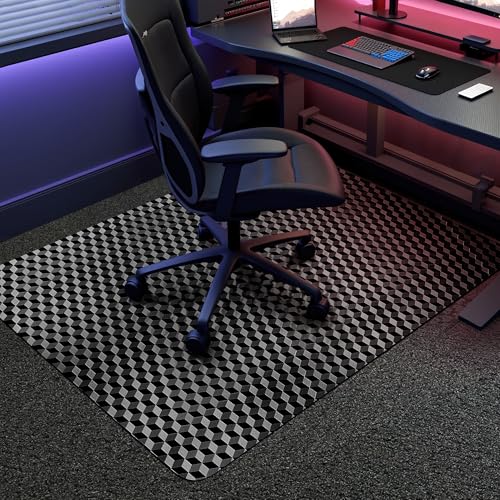

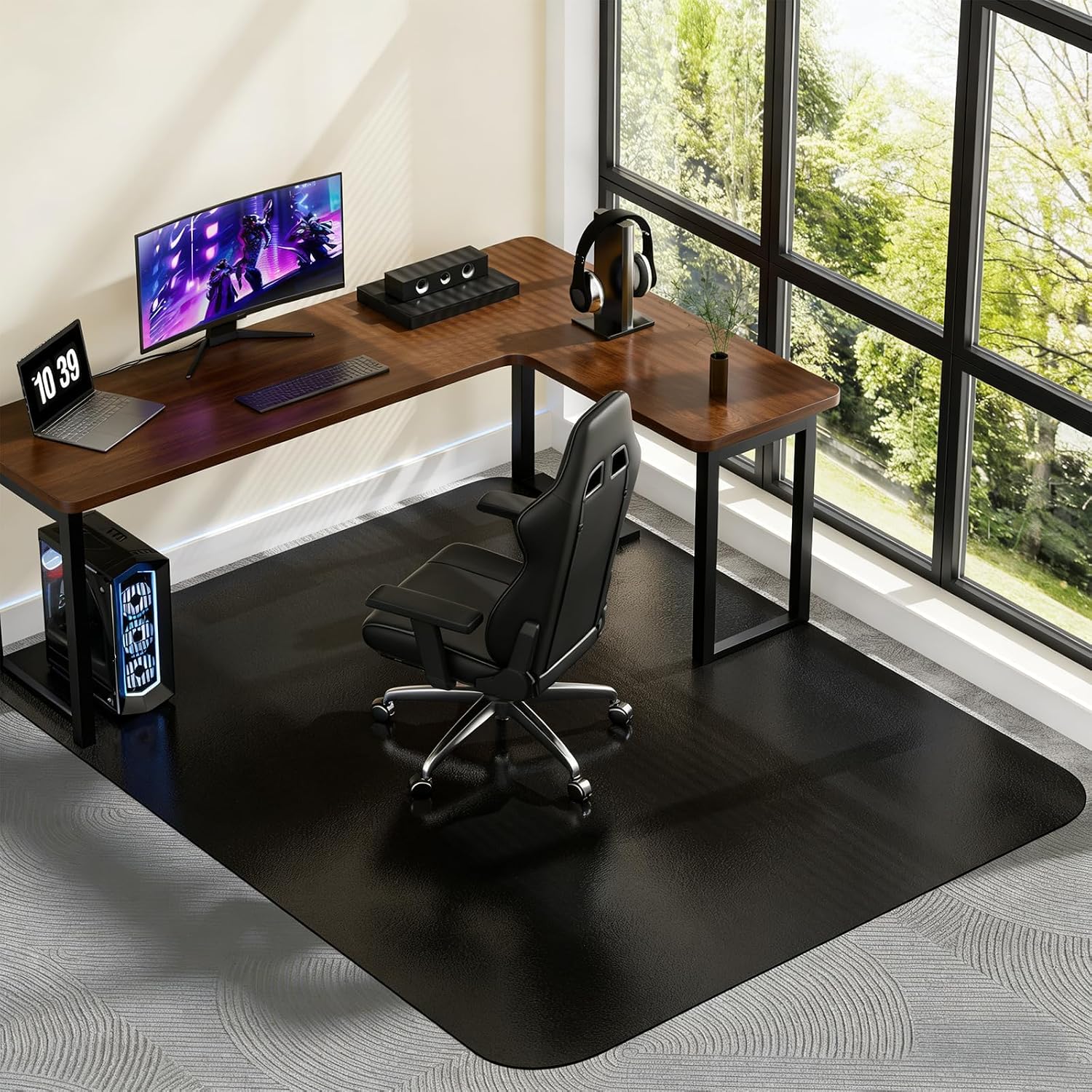


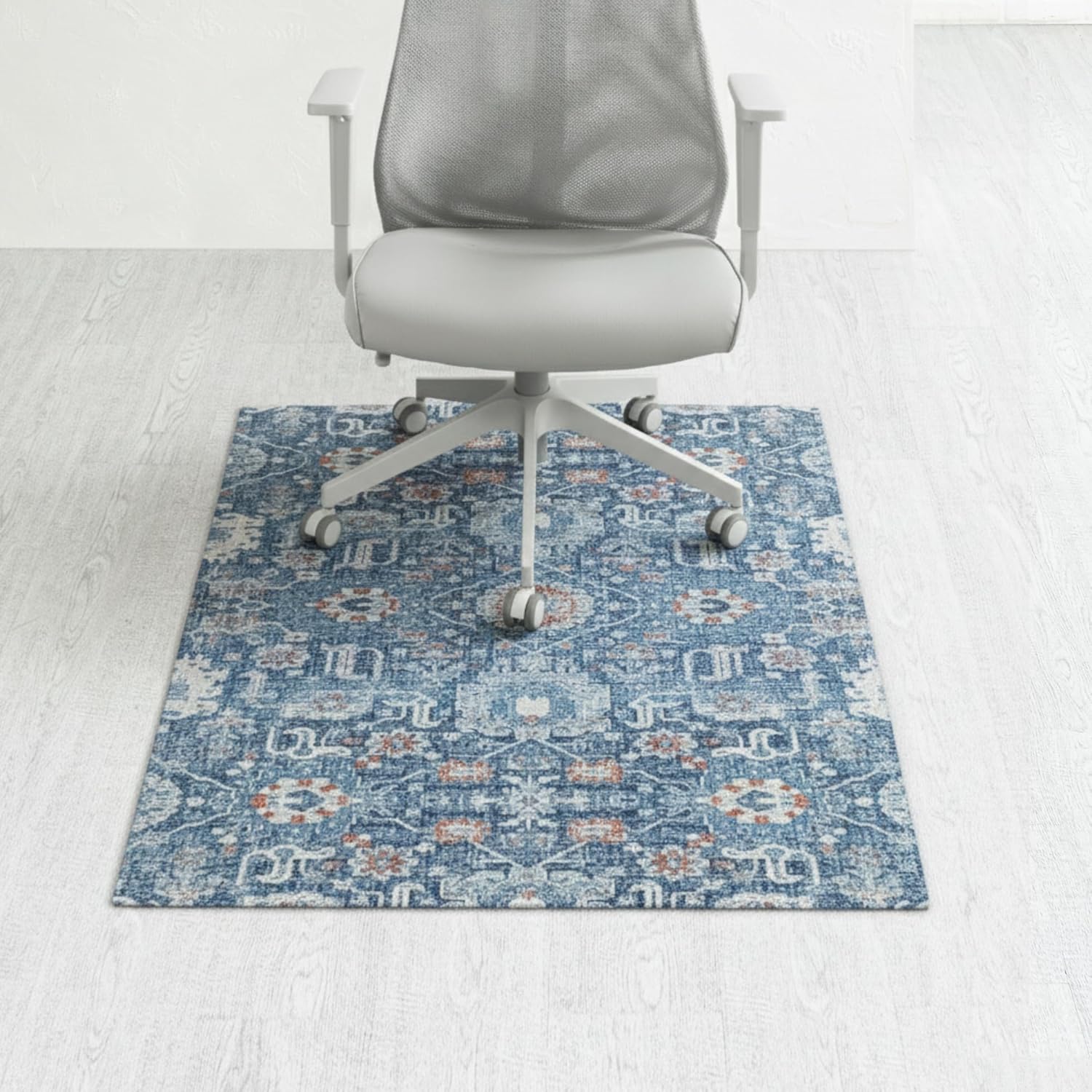

Top Picks at a Glance
- Best Overall: Office Chair Mat for Carpets — a clear PVC chair mat for carpet built for low to medium pile, with an anchor-tooth underside that resists sliding and curling.
- Best Budget: BesWin Office Chair Mat for Carpet — a straightforward, no-frills chair mat for carpet at one of the lowest price points in this lineup.
- Best for High-Pile or Plush Carpet: Marvelux Thick Polycarbonate Office Chair Mat for High Pile Carpets — a rigid, heavy-duty polycarbonate build specifically rated for plush and high-pile carpet that would crack or fail to seat under a thinner mat.
- Best Grip for Low-Pile Carpet: Black Office Chair Mat for Carpet — a heavy-duty low-pile mat with pronounced cleats on the underside for maximum anchoring on flatter carpet.
- Best for Heavy Daily Rolling: GORILLA GRIP Office Chair Mat for Carpet Floors — a slip-resistant chair mat for carpet built for gaming and work chairs that see daily, all-day use.
- Best Trusted Brand: Staples Office Chair Mat for Flat-Pile Carpet — a recognizable office-supply brand with an extended lip for continuous under-desk coverage.
- Best Decorative Pick: Anji Mountain Rug’d Office Chair Mat for Carpet & Hardwood Floor — a jacquard-woven design with an anti-slip backing that looks like a rug instead of a plastic sheet.
- Best for Extended Under-Desk Coverage: HON Office Chair Mat for Carpet — a heavy-duty clear mat with a longer extended lip for reaching further under a desk.
Why Carpet Needs a Different Chair Mat Than Hardwood
The single biggest mistake shoppers make is assuming any clear plastic mat will work on any floor. It won’t. A chair mat built for hardwood, tile, or laminate has a smooth, flat underside designed to sit flush against a hard surface and let a chair glide across it without catching. Put that same smooth-bottom mat on carpet and there’s nothing to stop it from sliding sideways every time you push off from your desk, because carpet fiber offers no friction for a flat plastic surface to grip against.
A true chair mat for carpet solves this with rows of short, angled teeth molded into the underside. Those teeth press down into the carpet pile and anchor the mat in place, so the mat itself stays put while your caster wheels roll smoothly across the flat top surface. It’s a purpose-built mechanical solution, not a coating or an adhesive — which is also why a carpet-gripping mat is the wrong choice for hardwood. Those same teeth would scratch, dent, or leave permanent marks on a hard floor if you set one down there instead. If your workspace has hardwood, tile, or laminate flooring, our chair mats for hardwood floors guide covers the smooth-bottom options built for that surface instead. And if you’re still deciding between floor types or want a broader comparison of every chair mat style, our chair mats overview walks through the full category before you narrow down to a carpet-specific pick.
Matching Mat Thickness and Rigidity to Your Carpet’s Pile Height
Pile height — how tall and dense the carpet fibers stand — is the single most important spec to check before buying a chair mat for carpet, and it’s also the spec buyers skip most often. Low-pile and Berber carpet is short, dense, and relatively flat, so a moderately thick, semi-flexible mat can seat directly against it and anchor cleanly with the grip teeth fully engaged. Thick, plush, or high-pile carpet is a different problem entirely: the fibers are taller and softer, so a mat that’s too thin or too flexible will sit unevenly, rock under the chair’s weight, and never let the anchor teeth bite into the pile the way they’re supposed to.
This is where the trade-off actually shows up in real use. A mat rated for low pile that ends up on thick, plush carpet will typically bow in the middle, curl at the edges, or slide out from under the chair within weeks, because the teeth simply can’t reach a stable grip through taller fibers. Go the other direction — a rigid, high-pile-rated chair mat for carpet sitting on flat commercial-grade carpet — and it usually performs fine, just at a higher price and thickness than the situation calls for. If you know your carpet runs thick or plush, plan on a heavier-duty option like the Marvelux polycarbonate mat above rather than a standard PVC mat sized for flatter pile.
PVC vs. Polycarbonate: Which Material Holds Up Better on Carpet
Most affordable chair mats for carpet are made from PVC, and for good reason — it’s inexpensive, reasonably flexible, and holds up fine for moderate use on low to medium pile. The trade-off is durability under stress. PVC can become brittle over time, especially in cold rooms, and a PVC mat that’s flexed repeatedly over thick padding or uneven pile is more likely to crack along a fold line or at the anchor teeth than a denser material would be.
Polycarbonate is the step up. It’s more rigid and considerably more impact- and crack-resistant, which is exactly why the mats specifically rated for high-pile or plush carpet tend to use it instead of standard PVC — a rigid polycarbonate sheet can bridge taller fibers without bowing or stress-cracking the way a thinner PVC mat would. The trade-off is cost and weight: polycarbonate mats like the Marvelux option in this lineup run well above the price of a basic PVC mat and are noticeably heavier to ship and position. For flatter carpet and lighter daily use, PVC is a perfectly reasonable choice; for thick carpet, heavy chairs, or daily all-day rolling, polycarbonate is the material more likely to still be flat and crack-free a year from now.
Grip Teeth, Anchor Pins, and Anti-Curl Backing Explained
Flip over any genuine chair mat for carpet and you’ll see the same basic feature: rows of short, angled plastic teeth or pins covering the underside. These are sometimes labeled as cleats, anchor pins, or grip teeth depending on the listing, but they all do the same job — pressing down into the carpet fibers so the mat can’t slide when a chair rolls across the top of it. Mats built with denser, longer teeth generally anchor more aggressively, which matters most on carpet that’s prone to shifting or on setups where the chair gets pushed and pulled frequently throughout the day.
A few mats in this category go a step further with an anti-curl backing or a reinforced edge that resists the upward curling most carpet mats eventually develop after months of being rolled over near the same edges. Some also add a contoured lip — a raised, shaped section that tucks further under the desk — so the mat provides continuous coverage from where your chair sits all the way to your keyboard tray, instead of leaving a gap where the caster wheels have to cross bare carpet. If you frequently scoot your chair in and out from under the desk, a mat with both strong anchor teeth and a lip design will feel noticeably more stable than a basic rectangular mat without either feature.
Sizing a Carpet Chair Mat to Your Desk and Chair
Before ordering, measure the full area your chair actually covers when you roll back, lean side to side, and pivot to reach a shelf or filing cabinet — not just the footprint of the chair when it’s sitting still. Most chair mats for carpet run in the 36 x 48 inch to 48 x 60 inch range, and undersizing is a common regret; if your elbows or casters routinely land past the edge of the mat, you’re rolling directly onto carpet and losing the entire benefit of buying one.
Shape matters almost as much as overall size. A plain rectangular mat is the simplest option and works well for open floor plans, while a mat with a contoured or lipped edge is worth the extra planning if your desk has a fixed footprint you want the mat to tuck against. Measure the gap under your desk before choosing a lipped design, since a lip that’s too long can buckle against furniture instead of lying flat, and a lip that’s too short won’t close the gap it’s meant to cover.
How We Evaluated These Picks
These picks are based on a review of publicly available Amazon listing data pulled specifically for carpet-rated products — stated pile-height compatibility, material (PVC or polycarbonate), thickness, grip-teeth or cleat design, dimensions, and pricing — cross-checked against each product’s live Amazon page before inclusion. We deliberately excluded listings that were actually smooth-bottom mats marketed for hardwood or tile, since those belong in a separate category covered in our hardwood-specific guide, and we did not include any product name, ASIN, or spec that isn’t verified directly from the source listing. This is a specification and listing-data comparison rather than a hands-on durability test, so treat pile-height ratings and crack-resistance claims as a starting point, and confirm current details on the product page itself — especially if your carpet sits at the extreme end of low-pile or high-pile.
Common Mistakes to Avoid
The most common mistake is buying a hardwood-floor mat by accident because it was cheaper or showed up first in a search, then being surprised when it slides across the carpet instead of anchoring. The fix is simple: confirm the listing explicitly says it’s built for carpet, not just that it “works on multiple surfaces.”
The second most common mistake is ignoring pile height entirely. A mat rated for low-pile carpet that ends up on thick, plush carpet will often rock, bow, or fail to seat properly, and the anchor teeth won’t hold the way they’re supposed to — which is usually what’s behind a one-star review calling a perfectly good mat “useless” or “keeps sliding.” Skipping the measuring step is another frequent error; a mat that’s too small leaves your casters rolling off the edge onto bare carpet, and a lip that doesn’t match your desk clearance won’t sit flat. Finally, some buyers choose a basic PVC mat for a setup with thick carpet and heavy daily rolling, then are disappointed when it cracks or curls within months — that’s exactly the scenario a polycarbonate mat is built to handle instead.
Carpet Chair Mat Buying Checklist
- Confirm the listing explicitly states it’s designed for carpet, with anchor teeth or cleats on the underside — not a smooth-bottom hardwood mat.
- Check the stated pile-height rating (low, medium, or high/plush) against your actual carpet before buying.
- Choose polycarbonate over standard PVC if your carpet is thick, plush, or sees heavy daily rolling.
- Measure the full area your chair covers when rolling, leaning, and pivoting, not just its resting footprint.
- Decide between a plain rectangular mat and a lipped or contoured design based on your desk clearance.
- Look for reinforced edges or anti-curl backing if you want the mat to stay flat over the long run.
- Match the mat’s dimensions to your desk setup, sizing up rather than buying the smallest option that seems to fit.
Getting the right chair mat for carpet is really about matching two things correctly: pile height and material. Once those are settled, the rest of the decision comes down to size and lip design for your specific desk. If your home or office has a mix of flooring, it’s worth comparing this guide against our chair mats for hardwood floors guide so each room gets the right type of mat rather than one mat trying to do both jobs. And if thick carpet is also giving your chair’s wheels trouble rolling in the first place, our office chairs for thick carpet guide covers caster upgrades that pair well with a properly anchored mat.
FAQ
Do chair mats for carpet actually have teeth on the bottom?
Yes. Genuine chair mats for carpet use rows of short, angled plastic teeth or pins on the underside that press into the carpet pile and anchor the mat in place. This is the main feature that separates a carpet-specific mat from a smooth-bottom mat made for hardwood or tile.
Can I use a hardwood chair mat on carpet, or a carpet mat on hardwood?
Not comfortably in either direction. A smooth-bottom hardwood mat has nothing to grip carpet fibers with, so it slides around under a rolling chair. A carpet-gripping mat has anchor teeth on the underside that can scratch or dent a hard floor, so it isn’t a safe substitute there either.
What happens if I buy a chair mat rated for the wrong carpet pile height?
A mat rated for low-pile carpet placed on thick or plush carpet typically bows, rocks, or fails to seat flat, since the anchor teeth can’t reach a stable grip through taller fibers — this is the most common reason a carpet chair mat ends up sliding or getting returned. Buying a heavier, high-pile-rated mat for flatter carpet isn’t harmful, just unnecessary extra cost.
Is PVC or polycarbonate better for a chair mat on carpet?
PVC is lighter and less expensive and works fine for moderate use on low to medium pile carpet. Polycarbonate is more rigid and crack-resistant, which is why it’s typically used in chair mats built for high-pile or plush carpet and for heavier daily rolling.
Will a chair mat damage or flatten my carpet over time?
A properly sized and pile-matched chair mat for carpet is designed to protect the carpet underneath it from wear caused by rolling casters, rather than damage it. Some light, temporary indentation from the anchor teeth is normal and typically fades once the mat is removed or repositioned.
How do I know what pile height my carpet is?
Press your hand flat into the carpet — if it’s short, dense, and springs back quickly, that’s low pile or Berber. If your fingers sink in noticeably and the fibers are tall and soft, you’re dealing with high-pile or plush carpet, which calls for a thicker, more rigid chair mat for carpet rather than a basic low-pile option.