Selecting the right digital canvas can transform your creative workflow from frustrating guesswork into an effortless, fluid process. Modern illustrators and graphic designers now have access to incredible hardware that brings true studio-grade precision directly to their desks. In September 2026, finding the Best Tablets for Design and Drawing means evaluating whether you need a fully autonomous sketching pad or a dedicated pen display tethered to a powerful workstation.
Many digital creators make the mistake of buying hardware based entirely on screen size without evaluating pen latency or color accuracy. If your display cannot accurately represent print color gamuts or if your stylus introduces line wobble during slow strokes, your final output will inevitably suffer. Before you invest in a new creative setup, taking time to coordinate your equipment with a proper butcher block desk top setup guide ensures you have the necessary room and stability for intensive illustration work.
Our updated guide explores 6 top-tier models from industry innovators such as Huion, XP-Pen, Frunsi to help you make an informed investment. Whether you are crafting intricate vector logos, painting digital concept art, or capturing quick visual notes in client meetings, our detailed breakdown will guide your decision.


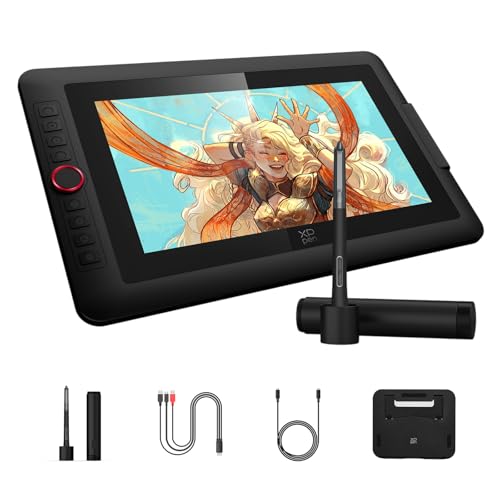
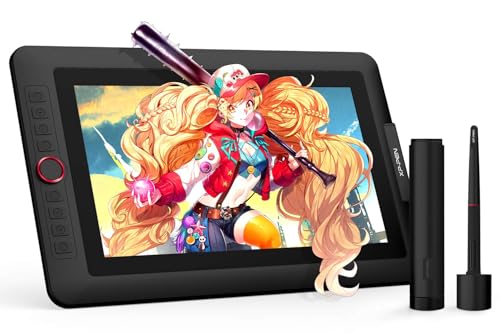
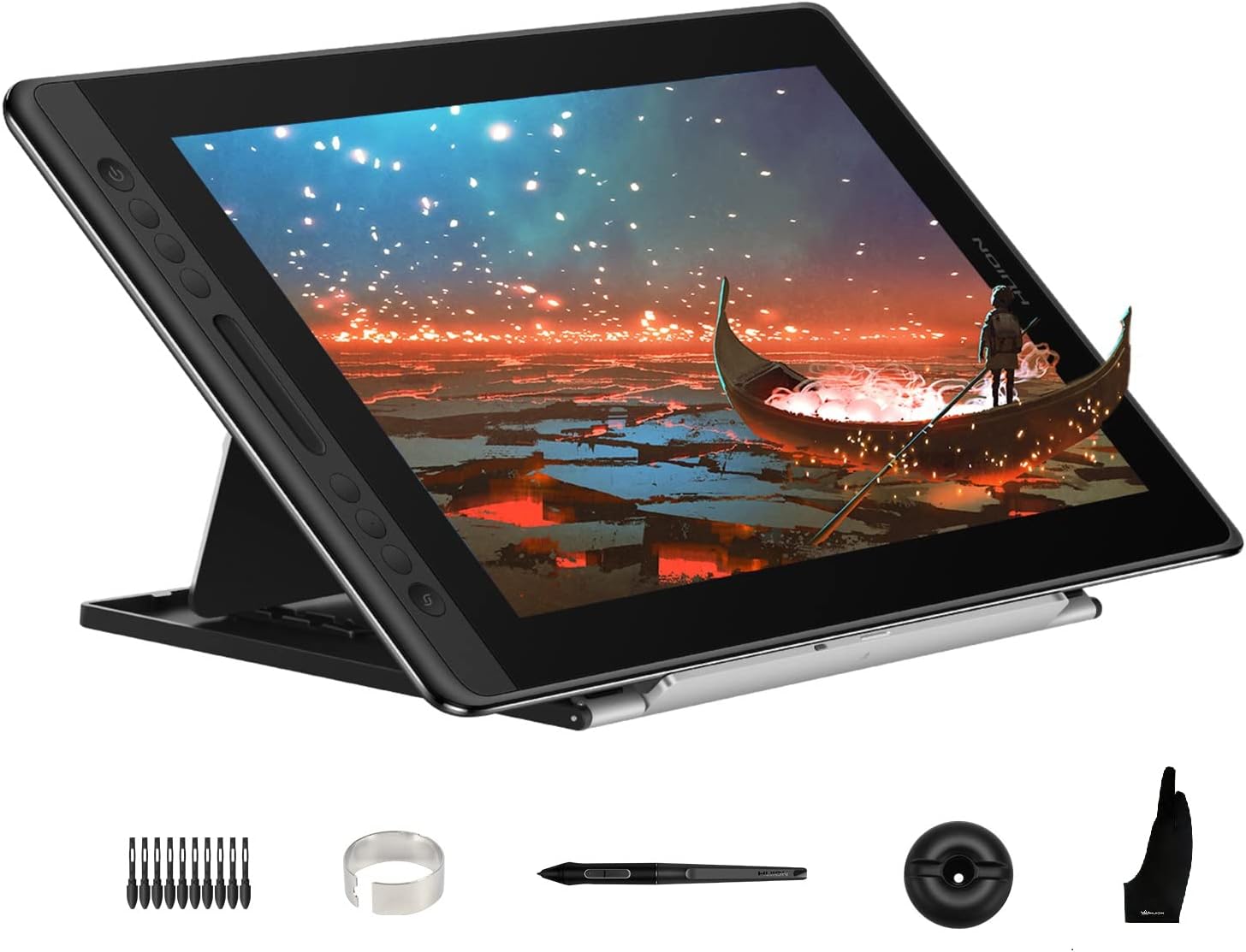

Navigating the technical specifications of digital art hardware requires understanding how physical components impact your day-to-day drawing experience. We have outlined the essential criteria below to help you match your creative discipline with the ideal hardware configuration.
Stylus Pressure Sensitivity and Sensor Technology
Pressure sensitivity defines how naturally a digital stylus reacts when you transition from light wispy strokes to heavy opaque lines. Modern styluses now offer up to 16,384 distinct pressure levels, doubling the traditional industry benchmark of 8,192 gradations. This expanded dynamic range allows vector designers and digital painters to execute delicate line weight transitions without manual brush adjustments.
Beyond raw pressure levels, you should closely evaluate initial activation force, which represents the physical weight required to register a stroke. A stylus equipped with a smart microchip activates with virtually zero gram force, eliminating missed lines when feathering details. In contrast, older stylus designs often demand heavier downward pressure that can fatigue your hand during extended rendering sessions.
Tilt recognition up to 60 degrees provides another vital layer of physical control for traditional shading techniques. By angling your pen naturally, the software dynamically broadens the brush stamp just like graphite on paper. Look for battery-free electromagnetic resonance styluses, which eliminate internal charging batteries and keep the pen lightweight and balanced.
Full Lamination and Parallax Elimination
Parallax refers to the apparent spatial gap between the physical tip of your stylus and the digital line appearing underneath the glass. On non-laminated screens, an air layer separates the outer protective glass from the underlying LCD panel. This air gap causes the digital cursor to drift away from the nib when you draw at shallow viewing angles.
Fully laminated displays solve this issue by optically bonding the cover glass, touch digitizer, and LCD screen into a single cohesive unit. When you press the pen down, the stroke appears directly at the nib with absolute mechanical precision. This seamless integration gives artists an authentic pen-on-paper feeling that is essential for detailed ink linework.
Lamination also eliminates internal light refractions, which significantly improves display contrast and outdoor visibility. When comparing pen displays, verify that the manufacturer explicitly lists full optical lamination in the specifications. Investing in a laminated screen prevents the disorienting visual disconnect that often plagues entry-level graphic monitors.
Standalone Portability versus Dedicated Pen Displays
The choice between a standalone tablet and a tethered pen display is one of the most critical workflow decisions you will make. Standalone drawing tablets operate independently with their own built-in processor, operating system, and internal rechargeable battery. These portable units let you sketch freely on public transit, attend outdoor painting sessions, or capture visual ideas anywhere without carrying a computer.
Dedicated pen displays function as external interactive monitors that require a physical connection to a desktop or laptop computer. Because they rely on host processing power, pen displays let you run demanding full-scale desktop applications like Adobe Photoshop, Illustrator, and Blender 3D without thermal throttling. They provide expansive screen space and dedicated hotkeys that professional studio environments demand.
As a rule of thumb, mobile illustrators who travel frequently should choose a standalone Android device with adequate battery capacity. Studio designers who manage complex multi-layered print documents should invest in a tethered pen display with dedicated graphics card connectivity. Carefully assessing your typical working environment will prevent you from choosing an incompatible form factor.
Color Gamut Coverage and Panel Calibration
Color accuracy is non-negotiable for professional graphic designers who create assets for commercial printing and digital branding. An art tablet must reproduce a broad color spectrum to guarantee that your on-screen hues match the finished physical product. High-performance creative displays typically cover at least 120 percent sRGB, 90 percent Adobe RGB, and 95 percent DCI-P3 color gamuts.
Beyond wide gamut numbers, 8-bit color depth capable of rendering 16.7 million colors ensures seamless gradient transitions across complex illustrations. Without adequate color depth, soft digital gradients will exhibit ugly banding artifacts across shadows and skin tones. An IPS display panel with wide 178-degree viewing angles prevents color shifts when you view your canvas from an angle.
Before publishing client projects, always calibrate your tablet screen using a dedicated hardware colorimeter or verified manufacturer color profile presets. Never rely on uncalibrated default factory settings, as consumer screens tend to oversaturate blues and magentas. True color fidelity protects your brand credibility and eliminates costly printing reprints.
Physical Shortcut Dials and Express Keys
Speed and ergonomic efficiency in digital drawing depend heavily on having your primary software commands readily accessible. Modern pen displays feature programmable express keys alongside multi-function mechanical red dials or smooth touch strips. These tactile hardware inputs eliminate the constant need to reach across your desk for an external computer keyboard.
A mechanical dial allows you to rotate fluidly through incremental adjustments such as brush size, zoom magnification, and canvas rotation. You can program express buttons for universal workflow shortcuts like undo, redo, layer creation, and eyedropper sampling. Customizing these buttons to match your personal software hotkeys significantly accelerates your drafting speed.
When evaluating shortcut layouts, look for distinct tactile bumps on key surfaces so you can locate buttons by touch without breaking visual focus. Position your dominant drawing hand naturally on the screen while your secondary hand rests over the shortcut cluster. A well-designed button configuration minimizes repetitive wrist strain during marathon production sprints.
Ergonomic Tablet Stands and Cable Routing
Drawing on a completely flat surface for hours forces your neck into an unhealthy downward angle that leads to chronic muscle strain. Quality drawing tablets include or support adjustable multi-angle desktop stands capable of positioning the screen between 20 and 90 degrees. Elevating your screen encourages proper spinal alignment and helps you view your perspective lines without optical distortion.
Managing the bundle of HDMI, USB, and power cables is equally important for maintaining a clean and functional creative workstation. Using a streamlined 3-in-1 connection cable or a single full-featured USB-C cord keeps your desk surface clutter-free. If you want to eliminate messy wires under your workstation entirely, review our guide to troubleshoot standing desk cable tray problems for practical wire management advice.
Furthermore, keeping your creative space energized with accessible desktop connections is effortless when you install best desk grommet outlets directly into your tabletop. Proper power placement prevents cord tension from pulling on your tablet ports when you adjust the drawing angle. An ergonomic stand combined with clean cabling creates a distraction-free creative studio.
Screen Texture, Anti-Glare Glass, and Surface Friction
Drawing on smooth, untreated glass feels unnaturally slippery and often makes precise line work difficult to control. Leading creative displays utilize chemically etched anti-glare glass or specialized matte optical films that introduce subtle tactile resistance. This micro-textured friction mimics the traditional resistance of a fine-tip pencil moving across heavy illustration paper.
In addition to enhancing tactile feedback, anti-glare surface treatments diffuse harsh overhead studio lighting and direct sunlight reflections. Minimizing blinding glares allows you to work comfortably in brightly lit offices without experiencing severe eye fatigue. Etched glass finishes offer superior longevity compared to plastic films, which can develop scratches from worn stylus nibs over time.
Always inspect your stylus nibs regularly and replace them as soon as they develop sharp, angled wear facets. Using a fresh nib preserves the anti-glare coating and guarantees consistent stroke resistance. High-grade surface texture directly translates into cleaner vector linework and more controlled hatching strokes.
Operating System Compatibility and Driver Performance
A drawing tablet is only as reliable as the driver software that communicates between the hardware digitizer and your operating system. Top manufacturers provide robust driver support for Windows, macOS, Chrome OS, and various Linux distributions. Stable drivers ensure that pressure curves remain responsive, express keys trigger reliably, and pen tracking stays perfectly synchronized.
When setting up your tablet, explore driver settings to fine-tune the pressure sensitivity curve to match your personal drawing pressure. Heavy-handed illustrators can set a stiffer pressure curve to avoid maxing out line width prematurely, while gentle sketchers can increase input sensitivity. Modern drivers also allow you to create distinct shortcut profiles for individual software programs like Photoshop, Clip Studio Paint, and Blender.
Before updating your computer operating system to a major new version, always verify that your tablet manufacturer has released compatible drivers. Keeping an archive of stable driver installation packages prevents unexpected downtime during critical client deadlines. Reliable software integration ensures a smooth and dependable drawing experience every single day.
Display Resolution, Screen Real Estate, and Pixel Density
Screen size and resolution dictate how much of your digital illustration you can view simultaneously alongside toolbars, layers, and reference images. Compact 13.3-inch displays are highly portable and fit comfortably onto cramped desks, making them great for smaller home studios. Larger 15.6-inch screens provide a spacious drawing canvas that allows you to execute sweeping arm movements without constant panning.
Full HD 1080p resolution provides excellent visual sharpness on displays up to 16 inches without placing excessive computational loads on your graphics card. High pixel density ensures that fine typographic curves and micro-details remain crisp and readable without pixelation artifacts. Having ample canvas room lets you dock multiple tool palettes while still preserving an unobstructed central viewport.
Consider your desk dimensions and transport habits when selecting the overall physical footprint of your drawing display. If you plan to carry your tablet between home and university classes, a lightweight 13.3-inch form factor offers the optimal balance. For dedicated home workstations where maximum screen real estate is paramount, a 15.6-inch panel is the superior choice.
| Tablet Feature | Pen Display (13.3″ to 15.6″) | Standalone Android Tablet (8″ to 10.1″) |
|---|---|---|
| Computer Requirement | Requires PC, Mac, or compatible laptop | Fully independent, no computer needed |
| Pressure Levels | Up to 16,384 levels (16K Smart Chip) | Standard high-sensitivity stylus |
| Color Gamut Range | 99% to 125% sRGB coverage | Vibrant Full HD IPS color reproduction |
| Physical Controls | Express keys and multi-function dials | Touchscreen gestures and virtual tools |
| Primary Best Use | Professional studio design and 3D modeling | Mobile sketching, note-taking, and travel |
Why You Should Trust Us
Our review process relies on rigorous technical analysis and objective hardware benchmarking across the digital art industry. We systematically compare display specifications, optical lamination methods, stylus pressure response curves, and driver stability across various operating systems. Our goal is to provide honest, data-driven recommendations that cut through marketing jargon and highlight genuine performance differences.
We do not accept paid manufacturer placements or let external brands influence our editorial ratings. Every product included in our comparison is evaluated on its build quality, ergonomic design, software versatility, and overall value. This objective approach ensures that both beginning art students and seasoned creative directors receive authentic hardware guidance.
Our database updates continuously throughout 2026 to reflect the latest driver releases, firmware enhancements, and new hardware iterations. By maintaining a dynamic evaluation framework, we keep our recommendations accurate and relevant for artists building high-efficiency creative studios.
Final Thoughts
Selecting the ideal drawing tablet ultimately comes down to matching your artistic workflow with the right form factor and hardware capabilities. For studio professionals who demand maximum screen real estate, next-generation pressure precision, and broad color reproduction, the XPPen 16K Artist 15.6 Pro V2 Drawing Tablet stands as our top recommendation. Its expansive 15.6-inch anti-glare laminated screen and cutting-edge 16K pressure stylus provide the uncompromising control required for detailed client work.
If you prefer a compact desktop footprint with outstanding value and dedicated dial controls, the XPPen Artist 13.3 Pro V2 Drawing Tablet and the HUION Kamvas Pro 16 Drawing Tablet offer phenomenal color fidelity and tactile shortcut efficiency. Alternatively, the XPPen Artist 13.3 Pro 13.3″ Drawing Tablet remains a reliable choice for budget-conscious digital illustrators seeking dependable everyday performance.
For artists who require total freedom from desk cables and computers, standalone units like the Frunsi RubensTab T11 Pro standalone Drawing Tablet and the ultra-compact Frunsi T8 Standalone Drawing Tablet 8inch Drawing deliver complete creative portability. When finalizing your studio layout, building a dedicated workstation with a desk build kit setup will give your new digital art gear the stable foundation it deserves.
FAQs
What are the key advantages of Best Tablets for Design and Drawing with 16K pressure sensitivity?
Styluses featuring 16K pressure sensitivity provide twice the precision of previous industry standards, delivering 16,384 distinct levels of stroke modulation. This granular responsiveness allows digital illustrators to make subtle line weight transitions and delicate opacity fades without altering brush sizes manually. It significantly reduces line jitter and ensures that digital sketching feels identical to traditional ink and graphite work.
Do I need a computer to use every drawing tablet?
No, because drawing hardware is divided into standalone portable tablets and tethered pen displays. Standalone models operate on dedicated mobile operating systems like Android and function completely independently without a host PC. In contrast, pen displays act as interactive secondary monitors and must remain connected to a desktop or laptop to run creative software.
How does full screen lamination improve drawing accuracy on digital tablets?
Full screen lamination bonds the cover glass, digitizer layer, and LCD panel into a single unified piece, eliminating the internal air gap. This optical bonding removes parallax error, ensuring the digital line appears directly at the physical point of the stylus nib. It also increases display contrast and eliminates distracting internal reflections during daylight drawing sessions.
What is the difference between sRGB and Adobe RGB color gamuts for graphic design?
The sRGB color space is the universal standard for digital web content, online gaming, and mobile screens. Adobe RGB features a significantly wider spectrum that encompasses richer cyans and deep greens, which are essential for commercial print production. Graphic designers producing print media should prioritize tablets offering high Adobe RGB coverage to avoid unexpected color shifts during offset printing.
Can I use a standalone drawing tablet for general office productivity and note-taking?
Yes, standalone drawing tablets running modern Android operating systems can install standard productivity applications, note-taking tools, and web browsers. They function effectively for annotating documents during business meetings, capturing handwriting in lectures, and managing email correspondence. Their multi-touch screens and portable profiles make them highly versatile hybrid devices for both work and art.
How do programmable red dials and shortcut keys speed up digital illustration?
Programmable dials and express keys place your most frequent software commands directly at your fingertips on the tablet bezel. You can quickly adjust brush sizes, zoom in and out of the canvas, or trigger undo shortcuts without reaching for a computer keyboard. This streamlined layout maintains your creative focus and accelerates your overall illustration turnaround time.
What is initial activation force and why is it important for digital sketching?
Initial activation force refers to the minimum physical pressure needed for the stylus sensor to register a stroke on the screen. Styluses with low activation force capture extremely light, feather-soft strokes without requiring deliberate downward muscle effort. This delicate sensitivity is crucial for cross-hatching, fine line detailing, and reducing hand fatigue during long drawing projects.
How should I care for my workspace seating while drawing for long hours?
Maintaining ergonomic posture and clean studio equipment is vital for preventing fatigue during intensive creative sessions. Learning how to clean and care for your stackable chair ensures that your seating remains supportive, comfortable, and hygienic over years of use. Pair a supportive seat with an elevated tablet stand to maintain proper spinal alignment while drawing.
Are battery-free styluses better than rechargeable digital pens?
Battery-free styluses utilize electromagnetic resonance technology, drawing their operational power wirelessly directly from the tablet digitizer panel. Because they contain no heavy internal batteries, they are lighter, better balanced, and never require recharging downtime in the middle of a project. This design ensures consistent reliability and a more natural drawing feel in your hand.
How do I prevent parallax lag when drawing on a pen display monitor?
You can minimize parallax discrepancies by running the screen calibration utility found in your tablet driver software. Position your head in your normal drawing posture and carefully tap the center of each calibration crosshair with your stylus tip. Choosing a fully laminated pen display also physically minimizes the optical gap between the glass and the underlying pixels.