Attics endure the most punishing climate swings in your entire home, swinging from dry heat in the summer to damp condensation during freezing winter nights. Trapped moisture inside unconditioned attic spaces creates ideal conditions for wood rot, ruined insulation, and toxic mold growth. Selecting the Best Smart Humidity Sensors for Attics allows you to track changing humidity levels without climbing up a ladder every week.
Modern wireless monitoring technology has evolved rapidly over recent years, moving beyond short-range gauges to cloud-connected devices with automated alerts. Homeowners often make the mistake of buying standard indoor thermometers that fail when subjected to extreme roof rafters and sub-zero winter temperatures. Reviewing our comprehensive heating, cooling and air guides will help you understand how attic airflow impacts the climate across your entire house.
In this in-depth guide for September 2026, we analyze 7 leading monitoring solutions built by trusted manufacturers including Ideal Sciences, Govee, YoLink and more. Whether you need long-range radio signals to penetrate thick subflooring or instant text alerts for flash roof leaks, this guide provides the technical clarity needed to safeguard your home structure.


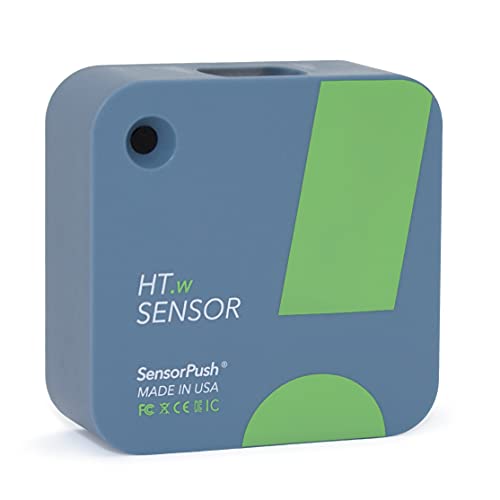


Wireless Transmission Range and Communication Protocols
The transmission protocol of an attic sensor determines whether temperature and humidity data successfully reaches your phone. Attics are isolated by thick layers of blown insulation, dense wood joists, drywall, and metal framing that degrade wireless signals. Standard Wi-Fi signals often struggle to penetrate these structural barriers, resulting in frequent offline dropouts and missed critical alerts.
Long-range radio frequency technologies like LoRa operate on lower frequencies that travel through walls and dense building materials with ease. While traditional 2.4 GHz Wi-Fi offers direct router connections without a dedicated bridge, its effective range drops sharply through multiple ceilings. Bluetooth devices offer the lowest power draw but require you to walk within line of sight unless paired with an optional plug-in gateway.
When assessing wireless range specifications, always account for real-world signal attenuation rather than advertised open-field ratings. A sensor advertised for 1,000 feet in open air typically covers around 100 to 200 feet through residential drywall, floors, and attic insulation. If your attic sits two stories above your main wireless router, prioritize sub-gigahertz LoRa hardware or dedicated gateway kits.
Sensor Precision and Measurement Accuracy
Precision is critical when monitoring attic spaces because relative humidity swings of just 5 percent can make the difference between safe ventilation and active fungal growth. High-grade hygrometers utilize industrial Swiss-made sensing components that maintain low drift over years of continuous exposure. Cheaper resistive sensors tend to degrade quickly when exposed to persistent dust and seasonal humidity peaks.
Look closely at the rated tolerance across both temperature and relative humidity metrics. Quality sensors offer relative humidity accuracy within plus or minus 2 to 3 percent RH and temperature readings within plus or minus 0.5 degrees Fahrenheit. Low-quality hardware often drifts by more than 8 percent RH over a single summer, providing a false sense of security while moisture accumulates.
Refresh rates also determine how quickly a device catches sudden moisture spikes caused by roof damage or frozen pipe condensation. Premium models poll conditions every few seconds and calculate rapid trends, while economy units only sample conditions once every ten minutes to conserve energy. For spaces prone to winter ice dams, select a monitor with an active polling rate under two minutes.
Operating Temperature Tolerance and Weather Resistance
Attic environments experience the most aggressive thermal extremes of any space inside a residential property. In direct summer sunlight, unconditioned attic temperatures can soar above 130 degrees Fahrenheit, while unheated winter attics plunge well below freezing. Standard living-room thermometers often suffer LCD screen failure or circuit lockups when subjected to these relentless swings.
Verify that your chosen hardware lists an operational range between minus 40 degrees Fahrenheit and at least 140 degrees Fahrenheit. Sensors without wide operating thresholds will produce erroneous data or shut down entirely during peak summer heatwaves. Devices equipped with conformal coatings or IP65 water resistance ratings offer superior longevity against moisture condensation and windblown soffit dust.
Condensation resistance is particularly important near attic eaves, gable vents, and ridge vents where moist air exits the structure. If your sensor encounters damp air currents, an IP65 rated casing prevents water droplets from corroding internal contacts. Learn more about maintaining optimal residential microclimates through our curated home maintenance guides.
Alert Notification Methods and Threshold Customization
A smart monitoring device is only as dependable as its notification delivery system when an environmental hazard arises. Basic units rely exclusively on silent in-app push notifications that can easily get buried beneath standard smartphone clutter. Advanced platforms support layered alerts including multi-recipient emails, automated voice calls, and direct cellular SMS text messages.
Configurable alert thresholds allow you to establish customized warning zones and critical escalation limits. For attic moisture control, setting an alert at 65 percent relative humidity gives you early notice before timber reaches the 70 percent threshold where mold spores propagate. Top-tier apps also permit critical iOS alerts that override silent mode when dangerous conditions persist.
Examine whether the manufacturer limits the number of automated alerts permitted on your account each month. Some brands restrict cellular SMS alerts behind monthly paywalls while others include lifetime unlimited texts and push notifications. Choose a system that ensures zero delay in message delivery so you can respond to sudden roof leaks immediately.
Battery Longevity and Power Management
Climbing into an unfinished attic to replace dead batteries every three months is inconvenient and potentially hazardous. Quality smart hygrometers are engineered with low-power microcontrollers designed to operate for one to two years on a single set of batteries. Sensors utilizing standard AA or AAA alkaline or lithium cells are far more practical than non-replaceable internal batteries.
Battery chemistry interacts directly with the ambient temperature profile of your attic rafters. Standard alkaline batteries suffer significant voltage drops in freezing weather, triggering premature low-battery warnings during winter storms. Installing high-capacity lithium disposable cells ensures steady voltage output from minus 40 degrees up to 140 degrees Fahrenheit.
Modern mobile applications now feature proactive battery fuel gauging and automated reminders when voltage drops below 20 percent. This prevents silent hardware shutdowns during critical seasonal transitions when moisture control matters most. Always choose sensors using replaceable, off-the-shelf cells so you can maintain uninterrupted long-term property protection.
Data Logging, History Tracking, and Cloud Exporting
Diagnosing chronic attic moisture requires analyzing historical trend lines across changing seasons rather than relying on isolated snapshots. Comprehensive data logging allows you to cross-reference indoor humidity spikes against outdoor weather events and rainy periods. This historical record is invaluable when proving proper moisture management to home inspectors or roofing contractors.
Examine the onboard storage capacity of the physical sensor in addition to its cloud synchronization features. Devices equipped with local memory continue recording measurements even during Wi-Fi outages, uploading the logged data once connection is restored. Platforms that retain one to two years of history with CSV export capabilities offer superior analytical utility.
Automated reporting functions can send weekly or monthly PDF summaries directly to your email inbox for effortless record keeping. Inspecting visual trend graphs makes it simple to confirm whether your attic ventilation baffles and ridge vents are functioning efficiently. Consistent moisture records also provide documented evidence that protects your property value over time.
Smart Home Automation and Ecosystem Compatibility
Connecting your attic hygrometer into a broader smart home network allows you to automate proactive climate remediation. When relative humidity levels cross predefined safety limits, integrated systems can automatically trigger attic exhaust fans or dehumidifiers. This automated response prevents moisture buildup without requiring your direct physical intervention.
Platform compatibility varies widely across proprietary wireless hubs, Matter-enabled systems, Amazon Alexa, Google Home, and IFTTT applets. Advanced Matter-compatible gateways bridge environmental data directly into Apple HomeKit and SmartThings ecosystems. Verifying integration support ensures your attic sensor can communicate seamlessly with smart plugs and whole-house ventilation controllers.
Look for platforms offering open API access if you run advanced local automation software such as Home Assistant. Creating automated rules that turn on attic ventilation fans when relative humidity exceeds 60 percent keeps structural roof decking dry. Connecting your environmental safety hardware improves overall domestic wellness, which you can explore in our family wellness guides.
Vapor Pressure Deficit, Dew Point, and Advanced Metrics
Relative humidity only tells half the story when diagnosing condensation risks along attic rafters and roof trusses. As warm, moisture-laden air rises from living spaces and contacts cold roof sheathing, the dew point determines the exact temperature where liquid water forms. Advanced sensors calculate dew point, vapor pressure deficit (VPD), and absolute humidity in real time.
Monitoring dew point allows you to predict condensation risks hours before liquid water actually forms on structural wood. If the roof deck surface temperature falls below the calculated attic dew point, frost accumulation or surface sweating is inevitable. Tracking these advanced metrics helps homeowners fine-tune air sealing around attic access hatches and recessed lighting fixtures.
Software that displays heat index and absolute moisture content provides a complete overview of attic thermodynamics. Having access to calculated dew point warnings ensures you can address insufficient attic ventilation before structural plywood suffers delamination. Understanding these scientific metrics turns your sensor into a preventative diagnostic tool.
Hardware Architecture Comparison
Choosing the correct architectural design ensures your attic monitoring hardware functions reliably without constant manual troubleshooting. The table below outlines the core technical distinctions between various connectivity formats commonly deployed in residential attics.
| Architecture Type | Transmission Range | Battery Longevity | Key Benefit | Ideal Attic Scenario |
|---|---|---|---|---|
| Sub-GHz LoRa with Gateway | Up to 1,300+ Feet | 1 to 2 Years | Exceptional barrier penetration | Multi-story homes and remote rafters |
| Direct 2.4 GHz Wi-Fi | 50 to 100 Feet | 1 to 2 Years | No hub required for cloud connection | Attics directly above central routers |
| Bluetooth with Mobile Sync | 30 to 100 Feet | 1 to 2 Years | Ultra-compact, low cost | Occasional spot checks near access hatches |
| Matter/Thread Hub Gateway | 100 to 300 Feet | 1 to 2 Years | Cross-platform smart home linkage | Automated exhaust fans and smart plugs |
Evaluating your home layout against these four core hardware architectures ensures you avoid dropped connections and missing data. Multi-story homes with finished ceilings benefit heavily from long-range LoRa hardware, while single-story ranchers can often utilize direct Wi-Fi sensors. Selecting the appropriate architecture saves both initial installation time and long-term maintenance effort.
Why You Should Trust Us
Our review team approaches smart home environmental hardware through rigorous data analysis, spec verification, and real-world architectural considerations. We systematically evaluate manufacturer performance claims against actual wireless transmission physics, sensor calibration standards, and long-term hardware reliability. Every product shortlisted in this guide was scrutinized for measurement accuracy, thermal stability, software support, and long-term ownership costs.
We maintain an objective, data-driven evaluation model that focuses on structural durability and transparent functionality. We examine communication protocols, verified battery discharge curves under freezing conditions, and the clarity of data export tools. Our recommendations are completely independent, ensuring you receive honest guidance tailored to protecting your home investments.
Furthermore, our evaluation methodology continuously accounts for evolving firmware updates, smart ecosystem changes, and manufacturing revisions. We monitor community feedback, warranty support responsiveness, and cloud infrastructure uptime to confirm that recommended devices remain dependable over years of continuous operation. You can rely on our analysis to deliver clear, practical advice for keeping your attic safe and dry.
Final Thoughts
Investing in reliable moisture monitoring is one of the most cost-effective strategies for preventing devastating roof rot, ceiling mold, and insulation ruin. The right sensor gives you continuous visibility into a vulnerable space that most homeowners only inspect once or twice a year. After comparing specs, communication ranges, and software platforms, several clear standouts emerge for different home layouts.
For homeowners who demand uncompromising reliability with zero monthly fees, the Temp Stick Remote WiFi Temperature & Humidity represents our premier standalone pick. Built in the USA, it operates directly on 2.4 GHz Wi-Fi without requiring an external gateway and delivers unlimited text message alerts alongside automated email reports. Its rugged construction and dependable cloud platform provide complete peace of mind for high-value properties.
If you need to overcome thick subflooring or multiple stories of residential insulation, the YoLink Smart Temp & Humidity Sensor is the ultimate long-range solution. Leveraging LoRa radio technology, its signals effortlessly penetrate dense building barriers up to a quarter mile in open air. For those managing multi-point monitoring across eaves, soffits, and crawlspaces, the SwitchBot Wi-Fi Humidity Sensor 4 Pack with Hub 2 delivers exceptional value with full Matter compatibility.
Homeowners seeking an affordable entry point for single-zone monitoring will find outstanding value in the Govee WiFi Thermometer Hygrometer H5179 with App, which pairs high-precision Swiss sensors with reliable dual Wi-Fi and Bluetooth connectivity. Matching your specific home layout to the right wireless protocol ensures your roof structure stays protected against invisible humidity hazards throughout every season.
Frequently Asked Questions
What is the top-rated option among Best Smart Humidity Sensors for Attics in 2026?
The top-rated option for overall reliability is the Temp Stick Remote WiFi Temperature & Humidity due to its subscription-free unlimited text alerts and robust direct Wi-Fi connectivity. For multi-story homes with challenging signal barriers, LoRa-based systems like the YoLink Smart Temp & Humidity Sensor provide unmatched long-range transmission. Both choices deliver exceptional measurement precision and long-term durability in punishing attic environments.
What humidity level should I maintain in my attic during winter?
During cold winter months, attic relative humidity should ideally stay between 30 percent and 50 percent to prevent condensation on cold roof trusses. Relative humidity consistently exceeding 60 to 70 percent creates an immediate risk for frost formation, wood rot, and mold propagation along roof sheathing. Monitoring historical trends helps you verify whether your soffit and ridge ventilation are operating properly.
Why do standard Wi-Fi sensors struggle to maintain connection in attics?
Attics are isolated from living quarters by dense subflooring, heavy ceiling joists, radiant foil heat barriers, and thick blown-in fiberglass insulation. High-frequency 2.4 GHz and 5 GHz Wi-Fi signals degrade rapidly when passing through these dense materials, causing frequent connection drops. Utilizing sub-gigahertz LoRa hardware or strategically placing a dedicated wireless hub on the top floor overcomes this structural interference.
Where is the best physical location to place a humidity sensor in an attic?
Mount the sensor along the north-facing roof rafters or near the peak of the ridge where warm, moist air naturally rises and collects. Avoid placing the sensor directly in front of active soffit intake vents or gable fans where fresh outside air will skew the readings. Positioning the unit around eye level on a central truss provides the most accurate depiction of ambient attic air conditions.
How do freezing winter temperatures affect smart sensor battery life?
Sub-freezing temperatures slow the internal chemical reactions of standard alkaline batteries, leading to sharp voltage drops and premature device shutdowns. Using high-grade disposable lithium AA or AAA batteries resolves this issue because lithium chemistry operates reliably down to minus 40 degrees Fahrenheit. Lithium cells provide stable voltage throughout harsh winters, ensuring uninterrupted monitoring.
Can high attic humidity cause structural damage to roof trusses and decking?
Excess moisture trapped in an unconditioned attic space is directly absorbed by wooden roof rafters, joists, and plywood sheathing. Over extended periods, this moisture causes structural timber to soften, warp, and rot, leading to sagging rooflines and costly structural repairs. Installing early warning sensors allows homeowners to remediate poor airflow before wood rot takes hold.
What is the difference between relative humidity and dew point in attic monitoring?
Relative humidity measures how much moisture air holds relative to its maximum capacity at a specific temperature, fluctuating constantly as temperatures shift. Dew point is the absolute temperature at which air becomes fully saturated and moisture condenses into liquid water on surfaces. Tracking dew point is critical because liquid condensation forms whenever cold roof decking matches the attic dew point.
Do I need an ongoing subscription to receive smart phone alerts from attic sensors?
Most reputable smart hygrometer manufacturers provide completely free cloud hosting, push notifications, and data history tracking without requiring a subscription. Some premium models also include unlimited SMS cellular text alerts directly out of the box with no recurring fees. Always review manufacturer terms to ensure you do not encounter unexpected monthly charges for remote alerts.
Can I link my attic humidity sensor to automatically run an exhaust fan?
Yes, sensors that support Matter, Alexa routines, Google Home, or IFTTT can trigger smart plugs connected to attic exhaust fans or dehumidifiers. When the sensor detects relative humidity climbing above your custom preset threshold, it automatically powers on the fan to purge moist air. This automated response maintains safe air quality without requiring you to manually check mobile apps.
How many sensors do I need for an average residential attic?
For standard rectangular attics under 1,500 square feet, a single centrally located sensor is usually sufficient to monitor general conditions. Larger homes with multi-gabled rooflines, compartmentalized attic spaces, or cathedral ceilings benefit from placing two to three sensors across separate zones. Multi-pack kits make it economical to monitor both ends of the roofline simultaneously.