Launching a custom apparel venture or expanding an Etsy boutique demands equipment that can produce clean stitches at production scale. Choosing among the Best Beginner Commercial Embroidery Machines for September 2026 requires balancing user-friendly operating software against industrial-grade hardware durability. Modern starter units now pack features once reserved for massive factory floors into compact, approachable packages.
Many novice decorators make the expensive mistake of purchasing a fragile home craft machine that cannot handle structured baseball caps or thick canvas bags. Our detailed review of 5 production-ready models from brands like Poolin, smartstitch, K Fokuse cuts through marketing jargon to highlight systems that maximize uptime and profit margins. We examine needle counts, hoop dimensions, operating speeds, and file management workflows so you can invest with confidence.
Whether you plan to customize corporate polos, varsity jackets, or leather patches, selecting the right machine early prevents costly upgrades down the road. For more workshop planning strategies and space optimization ideas, explore our practical guides covering production space setup and equipment maintenance. Let us explore the leading starter models available today.



Key Criteria for Best Beginner Commercial Embroidery Machines in 2026
Needle Count and Automated Color Switching
Multi-needle setups are the defining characteristic of genuine commercial embroidery gear. A ten-needle machine allows you to pre-thread ten distinct spools, letting the machine execute complex multicolor logos without manual intervention. Single-needle units force you to pause the run, clip thread, re-thread the eye, and pull up slack for every single color change.
When comparing machines, look closely at the automated tension discs and electronic thread catchers. High-end starter machines swap needles and adjust tensions automatically within split seconds, minimizing jump stitch residue and puckering. This automation eliminates human error and frees you to hoop your next garment while the machine continues running.
As a practical rule of thumb, single-needle machines suit personalized single-color monograms, but multi-needle platforms are essential if your daily orders involve complex corporate graphics. Investing in ten needles from day one dramatically lowers labor costs per finished garment.
Maximum Embroidery Field Size and Hoop Variety
The maximum stitching field determines whether you can embroider full jacket backs or only small chest logos and accessories. Entry-level craft machines typically offer modest 4×4 or 4×9.25 inch fields, whereas commercial units extend up to 9.5×14.2 inches or larger. A generous field size allows you to tackle oversized tote bags, large hoodies, and decorative blankets without splitting designs.
Examine the selection of included garment hoops bundled with the machine before making your purchase. Quality commercial packages include multiple hoop sizes such as small chest frames, medium rectangular hoops, and large jacket frames. Having diverse hoops on hand prevents wasted backing stabilizer and prevents hoop burn on delicate garments.
A productive commercial workstation requires at least three hoop sizes to cover pocket crests, sleeve graphics, and full back jacket layouts efficiently. Always verify that your machine uses standard tubular brackets that accept third-party magnetic hoops for faster rehooping.
Cap and Headwear Decoration Capabilities
Decorating structured baseball hats and beanies is one of the highest margin services in custom apparel. However, curved headwear requires specialized cylindrical free-arm engineering that flatbed home craft machines simply cannot provide. Commercial embroidery heads feature a narrow cylinder arm that rotates smoothly beneath curved cap drivers.
Check whether the starter bundle includes a 270-degree cap driver, cap rings, and a solid framing gauge. Quality cap systems hold the buckram crown firmly against the needle plate, preventing needle deflection and distorted embroidery near the brim. Bundled cap tooling saves hundreds of dollars compared to purchasing aftermarket attachments separately.
If structured caps represent more than twenty percent of your projected business volume, choose a machine built around a dedicated cylindrical arm. Flatbed machines with clip-on hat attachments never achieve the structural stability required for crisp, retail-quality cap stitching.
Operating Speed and Stitch Stability
Production velocity directly dictates how many orders you can complete during a standard working day. Commercial embroidery units achieve top speeds between 800 and 1200 stitches per minute, significantly faster than domestic units. Faster stitching allows busy shops to finish bulk team uniform orders in hours rather than days.
Peak rating is helpful, but sustained stitch stability at 850 to 1000 stitches per minute is where everyday work takes place. Running at consistent moderate speeds avoids thread friction, prevents skipped stitches on stretchy performance fabrics, and preserves needle sharpness.
You can estimate turnaround times by dividing total design stitch counts by operational speed. A standard eight-thousand stitch left-chest logo takes approximately nine minutes on a commercial multi-needle machine, including automated trimming cycles.
Touchscreen Interface and On-Board Navigation
Modern commercial equipment utilizes large seven-inch or larger full-color touchscreens powered by dedicated operating systems like Institch OS. A high-resolution display lets operators preview embroidery layers, check stitch progress in real time, and position graphics with precision. Intuitive software helps beginners bypass steep learning curves.
Look for useful on-screen editing tools such as pattern rotation, lettering generators, auto-centering, and color mapping. Being able to adjust a monogram directly on the console saves valuable time by eliminating round trips back to your digitizing computer for simple tweaks.
Touchscreen systems with physical backup buttons offer the best combination of tactile responsiveness and clear digital menus. Clear graphical interfaces minimize human operator error when loading customer files under tight delivery deadlines.
Connectivity and File Transfer Workflow
Commercial embroidery workflows depend on industry-standard DST and DSB stitch files generated by professional digitizing programs. Having flexible data transfer options ensures seamless file delivery from your design computer to the embroidery unit. Modern machines offer combinations of wireless local area network transfer, direct USB drive loading, and Ethernet ports.
Wireless design transfer enables you to push completed embroidery files directly from your office desktop to the shop floor without swapping physical USB drives. Cloud management platforms also allow you to track job history, calculate thread consumption, and organize customer design libraries effortlessly.
To keep your design studio neat and prevent accidents around high-speed machinery, consider routing power and network cables using standing desk cable trays. Well-organized cabling prevents accidental disconnects during active file transfers.
Chassis Rigidity, Vibration Control, and Noise Level
Multi-needle embroidery heads contain heavy cast-metal moving parts that create continuous mechanical oscillation during high-speed runs. A reinforced heavy-gauge steel frame absorbs these vibrations, keeping the needle aligned with extreme precision. Solid chassis engineering prevents jagged satin borders and protects delicate internal gears from early wear.
Compact commercial machines deliver industrial rigidity while maintaining a manageable footprint suitable for home studios, spare bedrooms, or small retail storefronts. Many units include rolling steel stands with locking casters, allowing single operators to reposition the workstation as production needs change.
If you operate your apparel business from a residential home office, installing acoustic dampening such as office wall panels can help absorb motor resonance and keep your workspace quiet for neighboring rooms.
Automated Maintenance and Safety Systems
Downtime hurts profitability, making automated safety and maintenance mechanisms vital for solitary shop owners. Laser positioning pointers show exact needle drop points, allowing foolproof alignment on striped shirts and pocket seams. Optical thread break sensors instantly halt operation if an upper spool snaps, preventing missed stitches.
Advanced models incorporate self-lubrication ports, anti-collision sensors, and automatic thread trimmers that cleanly snip jump stitches underneath garments. These automated safeguards prevent birdnesting under the needle plate and protect your garments from accidental tearing during high-speed movement.
Establishing a daily maintenance routine of clearing bobbin lint and applying designated oil drops ensures your mechanical head runs smoothly. Regular upkeep extends machine lifespan and prevents expensive service calls during peak seasonal rushes.
Technical Support, Community, and Training Resources
Mastering commercial embroidery requires learning stabilizer pairings, hooping tension, tension tuning, and digital file formats. Comprehensive manufacturer backing through video tutorials, detailed manuals, and live engineering assistance is invaluable for beginners. Responsive after-sales support ensures minor technical questions do not delay customer orders.
Look for brands that foster active online user communities where thousands of experienced operators share tips, hooping hacks, and blank garment recommendations. Peer communities help new decorators solve unusual fabric challenges quickly and discover efficient production techniques.
A reputable equipment supplier provides direct one-on-one onboarding support and clear warranty coverage for critical electrical and mechanical components. Investing in a brand with strong customer service gives you a safety net as your business expands.
| Feature Category | Entry-Level Single Needle | Large-Area Hybrid | Multi-Needle Commercial |
|---|---|---|---|
| Needle Count | 1 Needle | 1 Needle | 10 Needles |
| Color Switching | Manual Pause and Rethread | Manual Pause and Rethread | Fully Automatic Switching |
| Max Stitch Speed | 650 to 800 SPM | 800 to 1000 SPM | 1000 to 1200 SPM |
| Cap Embroidery | Flat Brim Only (Limited) | Optional Curved Bracket | 270-Degree Dedicated Cylinder |
| Typical Stitch Field | 4×4 to 4×9.25 Inches | Up to 7.9×15 Inches | 9.5×14.2 Inches |
| Primary Best Use | Hobby and Home Gifts | Large Quilts and Oversized Garments | High-Volume Custom Apparel |
Why You Should Trust Us
Our evaluation framework relies on systematic analysis of mechanical specifications, operating software features, and commercial production requirements. We compare essential data points including stitch speeds, hoop dimensions, needle capacities, and file format versatility across major brands. This rigorous technical comparison identifies machines that deliver genuine long-term value for small businesses.
We analyze user documentation, manufacturer engineering updates, and verified user feedback to assess real-world reliability and ease of maintenance. Our editorial standards prioritize objective build quality, intuitive controls, and accessible technical support channels over marketing claims. We remain completely independent, focusing entirely on helping you choose equipment that accelerates your business goals.
By monitoring the custom apparel landscape continuously, we ensure our comparisons reflect modern technological advancements like Wi-Fi design transfer and laser alignment. You can rely on our insights to build an efficient, profitable embroidery workspace tailored to your unique production volume.
Final Thoughts
Selecting the right production gear is the most critical foundation for building a thriving custom apparel business. For entrepreneurs seeking top-tier commercial performance, the Smartstitch S-1001 Upgraded Embroidery Machine stands as our top overall recommendation. Its ten-needle system, 1200 SPM maximum speed, laser positioning, and dedicated cap package deliver true industrial efficiency for demanding orders.
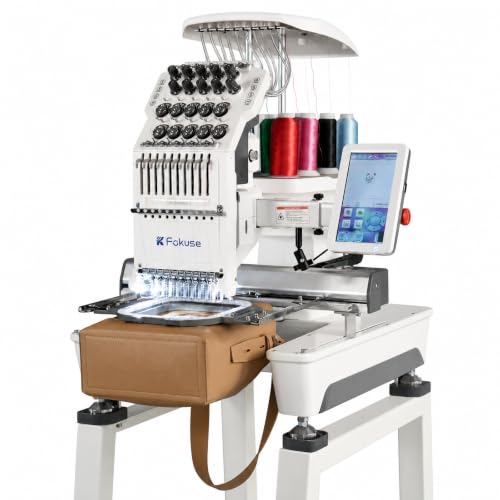
If you require commercial multi-needle capabilities with a complete starter kit and robust memory storage, the Fokuse brand FKS-1001 Commercial Embroidery represents exceptional multi-needle value. It features a generous 14.2×9.5 inch embroidery area, automatic color changes, and a complete assortment of garment frames and stands to get your shop running immediately.
For small studios requiring an oversized stitching field for jacket backs and large banners on a single-needle budget, the Poolin EOC07 Embroidery Machine,with 7″ is a fantastic versatile choice. Meanwhile, decorators focusing strictly on boutique gifts and monograms will appreciate compact starters like the PooLin EOC03 Embroidery Machine 4×4 & 4×9.25 and Poolin EOC05 Embroidery Machine for Beginners.
Investing in reliable embroidery hardware transforms creative ideas into sustainable business revenue. Ensure you equip your workspace with convenient power access by reviewing our recommendations for desk grommet outlets. Browse our equipment archives for additional shop gear updates throughout the season.
FAQs
What defines the Best Beginner Commercial Embroidery Machines compared to home craft units?
Commercial embroidery machines feature multiple needles, cylindrical free-arms for tubular items, and heavy-duty metal chassis designed for continuous daily operation. Home craft units typically have a single needle, flatbed construction, and slower stitch speeds that require frequent manual intervention. Commercial systems automate thread trimming, color switching, and cap hooping to maximize shop throughput.
Can I embroider structured baseball caps on an entry-level commercial machine in 2026?
Yes, commercial machines equipped with a cylindrical arm and 270-degree cap driver can easily stitch structured caps and beanies. The rotating cap system holds the curved front panels taut against the needle plate, preventing fabric distortion. Flatbed domestic machines cannot properly support structured caps without causing puckering and needle breakage.
What stitch file formats do commercial embroidery machines utilize?
Most commercial embroidery equipment operates on industry-standard Tajima DST and Barudan DSB file formats. These universal files contain precise needle coordinate instructions, color stops, and trim commands. You can easily export these formats from popular digitizing software packages and transfer them via USB or Wi-Fi.
How many needles do I need to start a profitable commercial embroidery business?
A ten-needle machine is generally considered the sweet spot for new commercial embroidery businesses. Ten needles allow you to execute multicolor left-chest logos and detailed jacket graphics without manually stopping the machine to swap thread spools. This automated efficiency saves hours of labor on medium to large production batches.
What is the ideal stitch speed for commercial apparel production?
While top commercial models can hit 1200 stitches per minute, running between 850 and 1000 SPM is ideal for everyday production. Operating at moderate speeds ensures consistent thread tension, reduces friction breaks on specialty threads, and delivers clean satin borders across various fabric textures.
Do I need separate digitizing software to create custom corporate logos?
Yes, creating custom logos requires specialized digitizing software like Wilcom, Hatch, or Embrilliance to convert vector artwork into stitch commands. While some machines include basic monogramming fonts and letter templates on board, full logo digitization requires dedicated design software or third-party digitizing services.
How do I prevent thread breaks when embroidering heavy fabrics like canvas or denim?
Preventing thread breaks on dense fabrics requires using sharp titanium needles in size 75/11 or 80/12 paired with heavy tearaway or cutaway backing. Adjusting upper thread tension and lowering machine speed to around 800 SPM reduces friction and prevents needle deflection during penetration.
What type of stabilizer should I use for commercial apparel decoration?
Cutaway stabilizer is standard for stretchy knit garments such as polo shirts, hoodies, and performance t-shirts because it permanently supports stitches through multiple washings. Tearaway stabilizer works well for stable woven materials like denim, twill caps, and heavy tote bags where the excess backing can be easily removed.
How much physical space does a multi-needle commercial embroidery machine require?
A compact commercial machine on a rolling stand typically occupies a footprint of roughly 30 by 30 inches. However, you should allocate a total workspace of at least 5 by 5 feet to accommodate garment staging, hooping boards, stabilizer rolls, and operator movement around the unit.
Is Wi-Fi transfer better than USB flash drives for commercial embroidery workflows?
Wi-Fi file transfer provides greater convenience by letting you send digitized patterns directly from your design computer to the machine instantly. It eliminates the hassle of misplacing thumb drives and reduces wear on physical USB ports. However, USB transfer remains a reliable offline backup when network connections drop.