

Managing intricate ability rotations in competitive gaming often forces players into awkward finger gymnastics across their keyboards. Upgrading to dedicated hardware allows you to trigger spells, equipment swaps, and tactical pings instantly without breaking stride during key encounters. This streamlined control scheme reduces hand travel and keeps your movement keys uncompromised.
Our comprehensive analysis of Best Multi Button Mouse Gaming hardware for September 2026 evaluates 7 standout models across Redragon, UtechSmart, Razer and more. We explore how modern thumb grids, ergonomic chassis contours, and low-latency wireless connections solve the dreaded problem of misclicks in fast-paced titles. Having immediate access to secondary hotkeys reshapes how effectively you navigate complex game environments.
Whether you need an expansive twelve-button thumb pad for complex online raids or a streamlined layout for tactical shooters, this guide identifies the right match for your grip style. For more setup advice on clean desk layouts, review our cable management solutions to keep your battle station organized. The right peripheral balance elevates both your in-game performance and everyday desktop comfort.


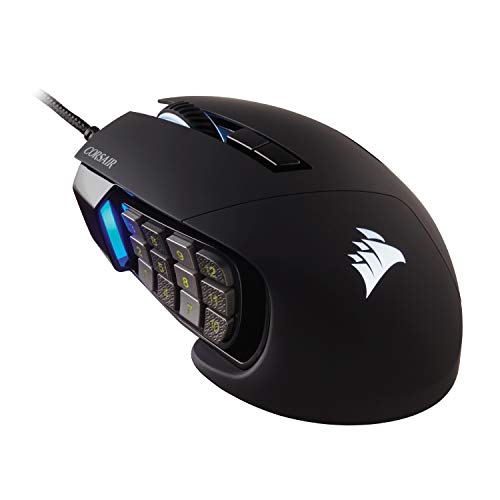

Side Button Layout and Grid Ergonomics
Side button arrangements dictate how effortlessly your thumb navigates through an array of keybinds during high-stakes play. Traditional twelve-button grids pack dense arrays into tight clusters, requiring distinct tactile texturing so your thumb can orient itself blindly without unintended activations. Without proper spacing, pressing a critical defensive skill can accidentally trigger an unwanted cooldown.
Evaluating side panels requires looking closely at angular variations, spacing ridges, and adjustable sliding mechanisms. Designs featuring physical key sliders allow you to reposition the entire thumb block forward or backward to match the natural reach of your hand. This adjustability prevents thumb hyperextension and ensures every single key sits within comfortable reach.
A reliable rule of thumb is to verify whether the central home row buttons feature raised bumps or slanted profiles. If all twelve buttons feel identical under light touch, you will face a steep learning curve and frequent misclicks during pressure moments. Choosing a mouse with varied key angles dramatically accelerates muscle memory acquisition.
Dense number pads provide endless hotkeys for roleplaying games, but they sacrifice the secure thumb purchase required for rapid mouse lifting in fast first-person shooters. Consider whether your primary games demand dozens of spell bindings or just a few utility commands before committing to a crowded side panel. Hybrid layouts strike an effective compromise for varied gaming libraries.
Sensor Precision and Tracking Stability
The optical sensor serves as the engine beneath your cursor, translating physical hand motions into digital tracking without jitter or angle snapping. High-end sensors ensure your reticle moves with absolute fidelity across diverse desk surfaces, including clear glass and textured cloth mousepads. Inconsistent tracking leads to missed skillshots and erratic cursor movements during twitch encounters.
Manufacturers advertise towering dots per inch metrics up to 35000 DPI, yet raw DPI is rarely the real indicator of competitive tracking quality. You should instead evaluate maximum acceleration ratings, tracking velocity measured in inches per second, and true 1-DPI adjustment granularity. These specifications determine whether a sensor maintains calibration during violent mouse swipes across large pads.
In practical gaming scenarios, set your sensor between 800 and 1600 DPI while tailoring in-game sensitivity to maximize sensor resolution without introducing micro-stuttering. Modern sensors like the Focus Pro series provide flawless tracking, meaning smoothing algorithms will not artificially alter your physical aim. This direct input translation keeps your muscle memory consistent across multiple titles.
Stable tracking also depends on having a level gaming surface and a properly aligned posture. Readers building a dedicated battle station can explore our ergonomic comfort guides to optimize desk height and reduce forearm strain during long campaigns. A stable arm position allows you to unlock the full potential of high-precision optical sensors.
Connectivity and Wireless Latency
Input lag between your mouse and computer can mean the difference between landing a crucial skillshot or suffering defeat. Modern wireless gaming mice operate on proprietary 2.4 GHz wireless protocols that match or exceed the responsiveness of standard wired USB cables. Cutting the cord eliminates cable drag, giving you complete freedom across your desk surface.
Look for polling rates of 1000 Hz as the standard baseline, which reports mouse data to your operating system every single millisecond. Advanced competitive models now push polling speeds to 4000 Hz or 8000 Hz, offering fractions of a millisecond responsiveness for ultra-high refresh rate gaming monitors. These ultra-fast reporting intervals deliver exceptionally smooth cursor motion during rapid directional changes.
Keep wireless receivers plugged into extension adapters directly on your mousepad edge rather than into the back of a distant computer tower. Eliminating physical obstructions and keeping the dongle within eight inches of your mouse prevents signal drops caused by crowded domestic wireless networks. This setup maintains a bulletproof connection during tournament scenarios.
Mouse Weight and Hand Fatigue
Total mouse mass influences how quickly you can initiate directional swipes and stop your reticle on target without overshooting. While ultra-light esports mice prioritize weights under 60 grams for rapid flicking, full-featured multi-button units traditionally hover around 100 grams due to internal switch matrices. Heavier shells provide stability for deliberate cursor placement in tactical strategy games.
Examine whether a mouse features a fixed chassis weight or incorporates modular tuning weights beneath a removable hatch. Products with swappable weight cartouches allow players to dial in physical inertia to match their muscle memory and mousepad friction. Finding your ideal balance point prevents unintended cursor drift when clicking dense thumb buttons.
Calculate your typical gaming session length and primary game genre when choosing between featherweight agility and macro density. If you play tactical shooters alongside strategy titles, an 80-gram hybrid mouse offers a forgiving middle ground that prevents wrist fatigue over marathon sessions. Lighter peripherals significantly lower the physical strain on your forearm tendons.
Switch Actuation Type and Durability
Mouse switches register your clicks and directly dictate the tactile crispness and longevity of both primary and secondary inputs. Standard mechanical switches rely on metal contact leaves that can degrade over time, eventually causing phantom double-clicking errors that ruin inputs. Optical switches eliminate this wear point by utilizing infrared light beams to register actuations instantly.
Compare click ratings, which generally range between 50 million clicks for standard mechanical switches up to 90 million clicks for optical assemblies. Optical switches actuate in as little as 0.2 milliseconds because they require no debounce delay to filter out electrical chatter. This instant registration gives you a fraction-of-a-second edge in reactive skirmishes.
Optical switches guarantee zero double-click degradation over years of heavy use, though some players find their acoustic click note slightly hollower than crisp mechanical leaves. For thumb grids, secondary buttons often retain gold-plated mechanical switches to keep total component costs and physical bulk manageable. Ensure the primary left and right clickers provide the snappy tactile feedback you prefer.
Software Customization and Onboard Memory
Dedicated software suites allow you to bind complex macro sequences, remap modifier keys, and assign application-specific profiles to every available button. Without capable management software, an eighteen-button mouse is merely an unwieldy pointer with dead inputs. Robust software enables intricate macros that execute timed ability rotations with a single click.
Check how many onboard memory profiles the mouse hardware can store internally without requiring background companion apps to remain open. Onboard profile storage allows your custom macros and lighting adjustments to function smoothly across tournament laptops or work machines. This portability prevents frustrating software conflicts when switching between different computers.
Create layered shift functions such as Razer Hypershift to double the effective command capacity of your existing side grid. By holding a single designated shift paddle, twelve physical buttons instantly expand into twenty-four distinct macro triggers for secondary abilities. This software feature unlocks virtually limitless keybinding potential without increasing physical clutter.
Grip Compatibility and Shell Contours
The physical silhouette of a gaming mouse must match your hand measurements and preferred grip style to avoid chronic wrist strain. Claw and fingertip players demand shorter humps and tapered sides, whereas palm grippers need wide palm swells and dedicated finger rests. An ill-fitting shell forces your hand into unnatural angles that compromise accuracy.
Inspect the mouse dimensions, paying close attention to overall width across the grip and the height of the dorsal arch. Multi-button chassis designs frequently incorporate a flared right-side shelf that prevents your ring and pinky fingers from dragging along the mousepad. This supportive ledge provides a resting platform that keeps your entire hand relaxed.
Measure your hand from your wrist crease to the tip of your middle finger before selecting a chassis. Hands measuring over nineteen centimeters fit comfortably on wide, contoured MMO bodies, while hands under seventeen centimeters will struggle to reach forward thumb buttons reliably. Proper sizing ensures every macro key remains accessible without shifting your palm.
Battery Endurance and Power Delivery
A wireless gaming mouse must deliver consistent power without abruptly shutting down in the middle of a competitive online match. Efficient internal power management ensures you spend your time gaming rather than tethered to an inconvenient charging cable. Unexpected power loss during a critical raid or ranked match can instantly spoil your game.
Evaluate battery longevity across both 2.4 GHz low-latency wireless modes and high-efficiency Bluetooth connections. Mice powered by disposable AA batteries often provide hundreds of operational hours, whereas rechargeable lithium-ion cells trade extreme endurance for lighter overall weight. Consider whether you prefer long replacement intervals or the convenience of quick cable recharging.
If you opt for an internal rechargeable mouse, look for quick-charge USB-C connections that yield ten hours of gameplay from a ten-minute charge. For mice that utilize standard alkaline cells, switch to lightweight lithium AA batteries to shave off several grams of moving mass. This simple battery swap improves handling without sacrificing operating longevity.
Glides and Surface Friction
The contact skates positioned beneath the mouse determine how smoothly the chassis glides across your desk mat. Premium glide feet reduce initial static friction, allowing effortless micro-adjustments when tracking evasive targets across your display. Sticky or uneven mouse feet introduce unwanted resistance that hinders subtle crosshair corrections.
Check whether the mouse utilizes virgin-grade PTFE skates with rounded edges or standard extruded black plastic pads. Pure PTFE glides feature a translucent white appearance and provide a noticeably lower coefficient of friction compared to cheaper composite materials. Rounded bevels prevent the skate edges from catching or gouging soft cloth mousepads.
Keep your desk surface clean and free of abrasive particles to preserve glide consistency and prevent uneven foot wear. For those seeking to minimize tabletop distractions and manage workspace accessories, our desk power grommet guide offers practical advice for streamlined gaming setups. Maintaining clean surfaces ensures your mouse skates glide predictably year after year.
| Chassis Category | Button Range | Typical Weight | Sensor Performance | Ideal Gaming Focus |
|---|---|---|---|---|
| Full MMO Grid | 16 to 19 Buttons | 95g – 120g | High Precision (16K – 30K DPI) | MMORPGs, MOBAs, Complex Macros |
| Hybrid Ergonomic | 8 to 11 Buttons | 80g – 95g | Esports Grade (30K DPI) | Action RPGs, Battle Royales, Work |
| Ultralight Competitive | 5 to 6 Buttons | 54g – 64g | Hyper-Polling (30K – 35K DPI) | Fast FPS, Arena Shooters, Esports |
| Tunable Value Grid | 16 to 18 Buttons | 100g – 130g | Mid Precision (12K – 16K DPI) | Strategy, Budget MMO, Productivity |
Why You Should Trust Us
Our hardware evaluation methodology centers on objective technical specifications, verified physical dimensions, and rigorous component analysis. We examine key architectural elements including sensor resolution, optical switch debouncing, weight distribution, and real-world battery endurance across diverse gaming genres. By focusing on verifiable performance metrics, we provide recommendations free from manufacturer marketing hype.
Rather than relying on marketing slogans, our team synthesizes verified firmware capabilities, software stability reports, and ergonomics across varying grip styles. We categorize each model based on its practical utility, separating ultra-light competitive esports pointers from heavy macro-driven command stations. This structured classification helps you quickly pinpoint hardware that suits your physical needs.
Because peripheral firmware and retail pricing fluctuate over time, our dynamic comparison system tracks updates continuously. This ensures that every recommendation reflects the current hardware landscape for September 2026 without relying on outdated product metrics. You can rely on our regularly updated insights to make confident hardware purchases.
Final Thoughts
Selecting the right multi-button gaming mouse fundamentally transforms how quickly you execute complex actions in fast-paced games. For players demanding an expansive grid with top-tier wireless connectivity, the Razer Naga V2 HyperSpeed Wireless MMO stands out as our premier recommendation. Its nineteen programmable inputs, long battery endurance, and flawless optical tracking deliver unbeatable command versatility.
Gamers operating on a strict budget who still require comprehensive macro controls will find exceptional value in the Redragon M908 Wired MMO RGB Gaming Mouse 12400 DPI. Offering eighteen customizable inputs, adjustable tuning weights, and durable construction, it provides entry into dedicated macro gaming without premium costs. It proves you do not need to spend heavily to enjoy custom thumb keybinds.
If physical thumb comfort is your primary priority, the Corsair Scimitar RGB Elite Wired MMO MOBA PC offers unmatched customization through its patented key slider mechanism. This allows you to slide the twelve-button array forward or backward to match your exact thumb length. Pairing ergonomic hardware with dedicated peripherals found in our peripheral setup guides ensures your hands remain comfortable through the longest gaming sessions.
Ultimately, your ideal mouse balances button count, chassis weight, and software flexibility to complement your favorite games. Take the time to assess your grip style and primary gaming genres before deciding between dense thumb pads and agile hybrid designs. Investing in the proper tool unlocks greater in-game efficiency and brings effortless control to your fingertips.
FAQs
What defines a dedicated multi button mouse gaming design compared to a standard mouse?
A dedicated multi-button mouse incorporates an expanded cluster of programmable switches, often featuring between eight and nineteen customizable inputs. Unlike basic office mice with two side buttons, these units include complex thumb grids and dedicated remapping software for complex macros. They allow players to bind entire keyboard rows directly to their mouse hand.
How many side buttons do you realistically need for modern gaming titles?
The ideal button count depends entirely on your primary gaming genres. Online roleplaying games and complex strategy titles benefit significantly from full twelve-button thumb grids that accommodate extensive ability bars. First-person shooters and battle royales typically function better with two to six easily reachable thumb switches that do not compromise your grip.
Are multi button mice suitable for competitive first-person shooter games?
While multi-button mice can be used for shooters, their heavier chassis weight and crowded thumb panels can make rapid flick aiming more challenging. Competitive shooter players generally prefer ultralight mice under seventy grams with minimal side buttons to maintain a firm lifting grip. However, hybrid mice with six side buttons offer a versatile middle ground for players who enjoy both genres.
How long does it take to build muscle memory on a twelve-button thumb grid?
Most gamers require one to two weeks of consistent play to develop reliable muscle memory on a dense thumb pad. Starting by binding just three or four essential skills before gradually assigning more commands helps prevent feeling overwhelmed. Choosing a mouse with textured key caps accelerates this adaptation process significantly.
Can you remap side buttons to standard keyboard keys without using third-party scripts?
Yes, all major gaming mouse manufacturers provide official software suites that make button remapping straightforward. Programs like Razer Synapse and Corsair iCUE let you assign alphanumeric keys, media controls, or complex key combinations to any mouse switch. Once assigned, these bindings function natively across all your installed games.
Does a higher wireless polling rate significantly drain battery life during daily use?
Running a mouse at hyper-polling rates like 4000 Hz or 8000 Hz consumes substantially more battery power than standard 1000 Hz operation. The increased reporting frequency requires the wireless transmitter and sensor to process data several times faster, which can cut battery runtime in half. For non-competitive play and daily desktop work, sticking to 1000 Hz preserves battery longevity.
What is the difference between optical mouse switches and mechanical mouse switches?
Mechanical switches use physical metal contact plates to register clicks, which can wear down over time and develop unintentional double-clicking issues. Optical switches utilize an infrared light beam that is interrupted to register an input, eliminating physical contact degradation and debounce delay. This optical mechanism delivers faster response times and extended operational lifespans.
Ensuring your gaming space is acoustically balanced also enhances concentration during gameplay; learn more in our office wall panels guide for superior room acoustics.
How do you prevent accidental button presses during high-intensity battles?
Accidental button presses can be minimized by choosing a mouse with firm switch actuation forces and sculpted thumb rests. Many high-end models position the thumb grid slightly above the base so your thumb has a neutral shelf to rest on when not clicking. You can also leave adjacent, rarely used buttons unmapped to create physical buffer zones.
Are wired multi button mice better than wireless options for input reliability?
Modern 2.4 GHz wireless gaming mice offer transmission speeds and latency levels that are practically indistinguishable from wired connections. While wired models eliminate the need to monitor battery levels or recharge, modern wireless mice feature long battery lives and zero signal lag. Wireless designs also remove cable resistance across your mousepad, granting cleaner movement.
Can you use a multi button gaming mouse efficiently for office productivity and video editing?
Multi-button mice are exceptional productivity tools for graphic design, spreadsheet management, and video editing suites. You can map repetitive keyboard shortcuts like cut, copy, paste, timeline zoom, and undo directly to your thumb buttons. This hardware configuration streamlines daily workflow and significantly reduces repetitive strain from keyboard hotkeys.


