

Managing bookkeeping, tax filing, and inventory audits demands absolute mathematical precision that standard smartphone apps cannot match. Physical printing calculators give bookkeepers and accountants an instant physical audit trail on paper tape. We evaluated 7 options for September 2026 to pinpoint the most dependable desktop hardware.
Modern office desks benefit greatly from dedicated calculating hardware that speeds up long number sequences. Pairing these units with ergonomic workspace setups helps prevent physical fatigue during marathon accounting sessions. Our team analyzed leading models across Sharp, Canon, Casio to discover which units provide the smoothest key action and sharpest printouts.
Choosing between heavy-duty commercial machines and compact battery-powered calculators requires understanding your daily workflow volume. This detailed review explores the Best Adding Machines currently available, helping you avoid jammed printers and sluggish keypads.


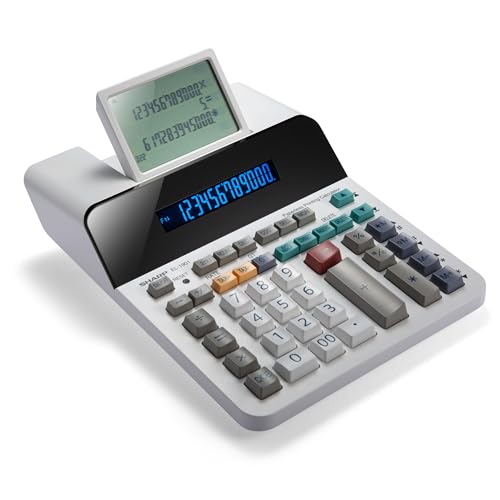

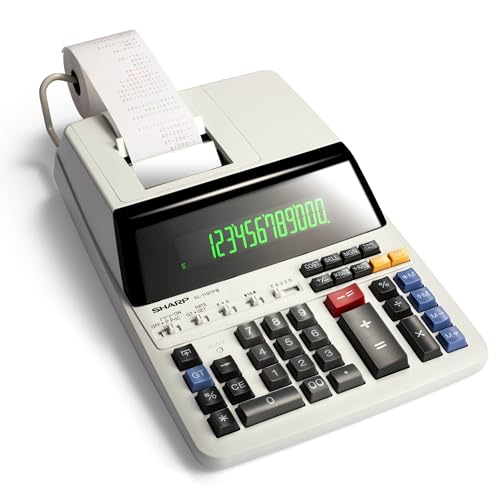
Print Speed and Mechanical Output Rate
Print speed determines how quickly the internal impact roller registers figures onto standard paper rolls. High-volume environments require fast print mechanisms that keep pace with rapid ten-key data entry without lag. Slow printers can bottleneck experienced operators who enter tax figures at professional speeds.
Speed is measured in lines per second, with commercial units reaching 4.5 lines per second and portable devices operating near 2.0 lines per second. Faster motors ensure that numbers print as quickly as your fingers depress the keypads. If your daily routine involves long columns of ledger entries, prioritizing higher speed prevents operational delays.
High-speed mechanical printers produce slightly more operational sound due to their rapid hammer action. A solid rule of thumb is selecting at least 3.5 lines per second for busy corporate accounting departments. For light weekly receipt balancing, moderate speeds around 2.3 lines per second deliver dependable accuracy with quieter operation.
Two-Color Printing and Ribbon Systems
Two-color impact printing utilizes black ink for positive entries and bright red ink for deductions or negative values. This color division provides an immediate visual audit trail on paper tape, allowing auditors to spot financial credits instantly. Single-color thermal units cannot provide this clear distinction on physical records.
Traditional ribbon spools and twin-spool ink cartridges deliver dark, permanent impressions that resist fading over many years in filing cabinets. Verifying ribbon compatibility before buying ensures you can source affordable replacement spools easily. Standard two-color ribbons remain the benchmark for long-term document archiving.
Cartridge-style ink rollers install in seconds and minimize accidental ink stains on your desk or fingers. When comparing models, check whether the unit uses standard universal ribbons or proprietary cartridges. Investing in dual-color printing saves significant time during end-of-month reconciliations and tax season reviews.
Paperless Digital Tape vs. Physical Paper Rolls
Traditional adding machines feed physical paper tape that provides a permanent, tangible receipt for every ledger calculation. However, modern paperless adding machines offer editable digital scrolling screens that mimic paper tape without generating clutter. Choosing between them depends on whether your organization requires physical file attachments.
Digital scrolling tape models allow operators to scroll back through hundreds of entries on a multi-line secondary LCD screen. You can spot an erroneous input, edit that specific line, and the machine recalculates the grand total automatically. This capability eliminates the frustration of tearing off paper tape and re-entering massive columns.
Paperless devices operate almost silently, making them outstanding choices for quiet cubicles and shared home offices. If your tax records require stapled paper tapes on receipts, stick with physical ribbon units. For personal budgeting and waste-conscious offices, digital tape units offer unbeatable convenience.
Key Travel, Tactile Feedback, and Ergonomics
Ten-key touch typists rely heavily on physical key feedback to enter numbers without looking down at the keypad. Well-spaced, contoured keys with natural spring resistance prevent double strikes and finger fatigue during long sessions. Flat or mushy membrane keys slow down data entry and cause frequent calculation mistakes.
Professional desktop calculators feature sculpted keytops that guide fingertips back toward the central home row key. Commercial workstations in sound-damped office settings benefit from cushioned key mechanisms that balance tactile feedback with moderate acoustic levels. A tactile click confirms input without demanding excessive finger pressure.
Look for calculators that include oversized plus and enter bars situated along the right perimeter of the keypad. Double-zero keys and wide zero bars also accelerate currency entry significantly. Test the spacing between numeric keys to ensure comfortable operation that matches your natural hand size.
Display Technology and Ambient Readability
Display readability directly influences visual comfort when checking sub-totals and grand totals under bright office fluorescent lighting. Fluorescent displays emit vibrant green or blue digits that remain crisp from wide side viewing angles. Liquid crystal displays rely on ambient light and may require built-in backlighting or adjustable tilt angles.
Twelve-digit display capacity is standard for business accounting, accommodating figures well into the hundreds of billions. Punctuation indicators such as thousands separators and decimal markers should stand out clearly on the screen. High-contrast screens prevent common reading errors between similar numbers like six and eight.
If your workstation experiences direct window glare, an angled or adjustable display helps maintain optimal visibility throughout the day. Fluorescent displays consume slightly more electricity but deliver superior clarity in dim rooms. For standard brightly lit offices, high-contrast LCD screens provide crisp visuals with minimal energy draw.
Step Checking and Error Correction Memory
Checking functions allow accountants to review past calculation sequences step by step before committing them to final printout. Advanced memory systems store anywhere from 150 to 300 sequential calculation steps in internal cache. This buffer allows operators to fix a mistyped figure without clearing the entire calculation.
The reprint feature lets you produce multiple identical paper receipts for client billing, inventory files, and internal records. After-print functions let you perform all calculations silently on screen and print the completed receipt only when finished. These smart memory tools save substantial paper and ink ribbon over time.
When evaluating error-correction features, verify how many prior steps the machine retains in its active memory. High-volume invoicing demands at least a 150-step check buffer to handle extensive itemized lists. Having robust correction controls prevents starting complex tax calculations over from scratch.
Dedicated Business and Financial Functions
Purpose-built financial keys turn complicated multi-step formulas into instantaneous single-button operations on modern adding machines. Cost-sell-margin keys allow retail managers to calculate markup percentages and profit margins in seconds. Dedicated tax calculation keys automatically apply preset municipal or federal sales tax rates to sub-totals.
Currency conversion keys streamline international transactions by storing exchange rates directly in the calculator memory. Item counter keys track the total number of entries in a receipt, simplifying inventory tallies and batch processing. Decimal selector switches let operators choose between floating decimals or fixed currency decimal places.
Grand total switches accumulate totals across multiple separate calculation batches into a unified master sum. Rounding switches give accountants precise control over rounding up, rounding down, or standard 5/4 rounding. Prioritize models with dedicated hardware switches over complex software menus for faster daily operation.
Chassis Stability and Weighted Desktop Construction
A lightweight calculator tends to slide across smooth desk surfaces during aggressive, high-speed numeric entry. Heavy-duty commercial units incorporate weighted metal sub-chassis and heavy rubber footing to anchor the device securely. Stability is vital for accountants who use rapid touch-typing methods with heavy keystrokes.
Larger footprints provide enough surface area to support heavy external paper roll holders without tipping backward. Durable ABS plastic housings withstand daily physical impacts in demanding commercial retail environments. Look for solid structural seams and reinforced paper arms that resist bending under stress.
Keep your workspace organized by routing necessary power cords through standing desk cable management trays behind your workstation. For permanent office desks, choose machines weighing at least three pounds for rock-solid stability. If you frequently move between meeting rooms, compact two-pound models offer better portability.
Power Supply Options and Energy Consumption
Desktop adding machines are powered either by dedicated AC wall adapters, internal transformers, or standard AA alkaline batteries. Dedicated AC power delivers consistent voltage to high-speed print motors, preventing sluggish operation during heavy workloads. Battery-powered units provide valuable flexibility for mobile inventory managers and off-site tax preparers.
Dual-power calculators combine AC wall connectivity with battery backup, protecting active memory caches during unexpected power outages. Automatic power-off features place the machine into low-power sleep mode after several minutes of inactivity to conserve energy. Look for models with instantaneous wake-up keys that resume work without delay.
For primary workstations, direct AC line power eliminates the ongoing expense and environmental waste of disposable batteries. If field mobility is essential, verify whether the AC adapter is included in the box or sold separately. A dependable power system ensures your audit calculations never shut down unexpectedly midway through a ledger.
| Machine Category | Average Print Speed | Power Source | Display Type | Primary Application |
|---|---|---|---|---|
| Heavy-Duty Commercial | 3.7 to 4.5 Lines/Sec | Direct AC Power | Fluorescent Digit Tube | Corporate Accounting, Tax Firms |
| Standard Desktop | 2.3 to 2.5 Lines/Sec | AC Adapter Included | 12-Digit Large LCD | Small Business, Daily Ledgers |
| Compact Portable | 2.0 Lines/Sec | AA Batteries / AC Optional | Standard LCD | Field Auditing, Retail Counters |
| Paperless Digital | Silent Electronic Scroll | AC Power / Battery Backup | Dual-Line Scrolling LCD | Quiet Offices, Eco-Conscious Desks |
Why You Should Trust Us
Our review team analyzes office equipment and accounting hardware through rigorous evaluation of verified technical specifications and real-world performance benchmarks. We break down mechanical print speeds, ribbon longevity, tactile key actuation, and internal memory capabilities across leading manufacturers.
We continuously monitor product revisions, firmware updates, and component changes across brands like Sharp, Canon, and Casio. Our recommendations stay current through systematic data updates that track price-to-performance ratios and hardware reliability over time.
We maintain complete editorial independence and focus on practical functionality that directly benefits professional bookkeepers, small business owners, and home office managers. Our goal is providing transparent, data-backed buying guidance that simplifies your desktop equipment decisions.
Final Thoughts
Finding the right calculating hardware depends on your daily transaction volume, recordkeeping requirements, and workspace layout. Equipping your desk with desk grommet power outlets ensures steady AC power for heavy-duty printing hardware. For commercial accounting departments needing maximum durability and rapid output, the Sharp EL-1197PIII Heavy Duty Color Printing remains the standout heavy-duty desktop performer.
Budget-conscious professionals and mobile tax preparers will appreciate the compact convenience of the Casio HR-10RC Mini Desktop Printing Calculator. It combines portable battery operation with a clear 12-digit LCD screen and practical 150-step check capabilities. This unit delivers exceptional value without cluttering smaller desktop workspaces.
If you prefer to eliminate paper waste and noisy mechanical hammers entirely, we recommend the innovative Sharp Paperless Printing Desk Calculator w/Check. Its full-sized keyboard and 300-step digital scrolling tape provide all the audit benefits of physical tape with modern digital convenience.
For balanced everyday office workflows, the Canon P23-DHV-3 Printing Calculator with Double offers reliable dual-color printing and integrated currency conversion. Exploring our comprehensive office productivity guides can help you further optimize your overall administrative workspace.
FAQs
Why should I use an adding machine instead of a computer spreadsheet or standard calculator?
Adding machines provide tactile feedback and an immediate, unalterable physical paper trail for every transaction. This prevents manual copy-paste errors and allows bookkeepers to verify long receipt tallies without switching between software windows.
What is the difference between an adding machine and a standard scientific calculator?
Adding machines utilize specialized accounting logic where addition and subtraction operate sequentially on entry rather than requiring standard algebraic syntax. They also feature motorized paper tape printers and dedicated keys for financial taxes, gross profit margins, and item counts.
How does two-color ribbon printing work on Best Adding Machines?
Two-color printers use an internal ribbon with distinct black and red horizontal ink stripes. The mechanical hammer shifts position automatically to strike the red portion for negative values and deductions, keeping credits visually prominent on the audit tape.
What is the advantage of paperless digital tape calculators?
Paperless models display calculation history on an electronic scrolling screen instead of spitting out paper receipts. This eliminates ongoing paper roll costs, prevents paper jams, reduces noise, and allows operators to edit mistyped figures in past steps.
How do cost-sell-margin keys work on business calculators?
Cost-sell-margin keys allow retail managers to enter any two variables to calculate the third automatically. Entering your inventory cost and target margin instantly reveals the required selling price without manual percentage algebra.
Can I use Best Adding Machines without loading paper tape?
Most desktop printing calculators include a dedicated print switch that toggles the printer motor on or off. Switching to display-only mode allows you to compute numbers quickly on the main screen without running out of paper.
How often do ink ribbons or roller cartridges need replacement?
Under moderate daily business use, standard ribbon spools last between six months and two years before text begins to fade. Replacing ribbons promptly ensures that archived paper receipts remain legible for future audit inspections.
What is the ideal print speed for daily commercial bookkeeping?
Professional accountants should look for speeds between 3.5 and 4.5 lines per second to match rapid touch-typing cadences. Slower speeds around 2.0 lines per second are perfectly adequate for periodic home budgeting and small retail shops.
How do check and correct memory functions prevent accounting errors?
Check and correct systems store prior keystrokes in temporary internal memory so you can scroll backward through past entries. If you discover an incorrect number, you can modify that single entry, and the machine automatically recalculates the grand total.
Do Best Adding Machines in 2026 require special paper rolls?
The vast majority of desktop adding machines use standard 2.25-inch plain bond paper rolls available at any office supply store. Only thermal printing models require heat-sensitive thermal paper rolls, so always verify your machine type before ordering refills.


