
When someone stops by your desk for a quick conversation — a coworker with a question, a candidate for a 20-minute interview, a client dropping off paperwork — the chair they sit in is a guest chair, not a desk chair and not a lounge piece. A good pick is compact enough to fit beside a single workstation, armless or slim-armed enough to tuck close without banging into the desktop, and comfortable enough for a sit that usually runs somewhere between fifteen minutes and an hour. It doesn’t need casters, a swivel base, or all-day ergonomic adjustment — it needs to look tidy, stay out of the way when empty, and hold up to regular use. We compared 8 guest chairs currently listed on Amazon, looking at footprint, arm style, upholstery, stackability, and how each one is actually described and rated by buyers, so you can shortlist one without guessing.




Top Picks at a Glance
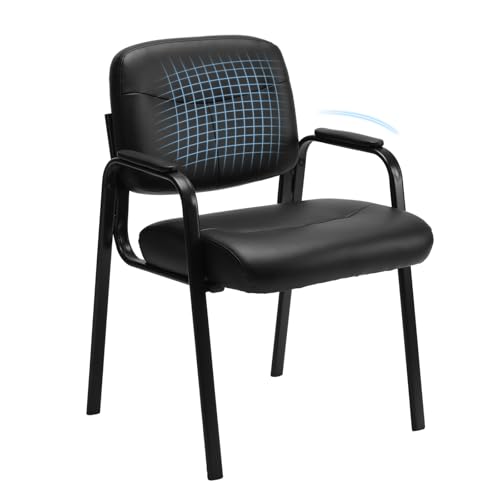
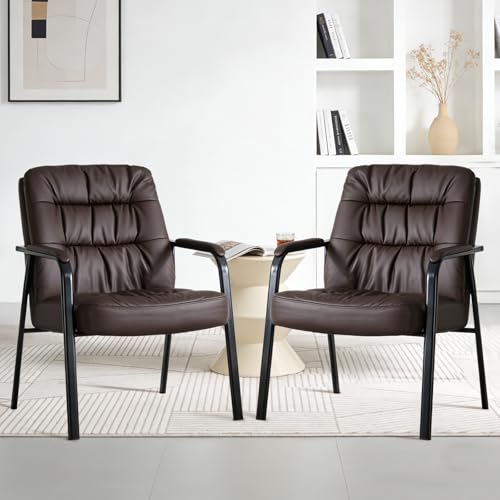
- Best Overall: CLATINA Leather Guest Chair with Padded Arm Rest, 2 Pack — a widely reviewed pick with a padded arm rest and a stationary frame built for desk-side use.
- Best Budget: Sweetcrispy Office Guest Chair, Set of 1 — a single no-wheel chair sized for one desk rather than a full waiting area.
- Best Sled Base for a Single Desk: Boss Office Products Leather Sled Base Side Chair — a stationary, non-rolling frame from an established office furniture brand.
- Best Stackable: VINGLI 5-Pack Stackable Waiting Room Chairs — an armless design meant to nest and store when the extra seats aren’t in use.
- Best for Larger Frames: CLATINA Big & Tall 500 lb. Guest Chair — a reinforced sled-base build rated for higher weight capacity.
- Best Value 2-Pack: CLATINA Waiting Room Guest Chair, 2 Pack — one of the highest review counts in this shortlist at a lower per-pair price.
- Best Premium: OLIXIS Waiting Room Guest Chairs, Set of 2 — heavier stated capacity and thicker padding than most entry-level pairs.
- Best High-Back Option: Leather Office Guest Chair, High Back, 1 Pack — added back height for taller guests, sold as a single chair.
What Makes a Chair a “Guest Chair” (Not an Accent Chair or a Conference Chair)
The word “guest chair” gets used loosely on Amazon, but for the purpose of this guide it means something specific: a chair placed across from or beside a single employee’s desk for one-on-one conversations, quick meetings, or client visits — not a shared table and not a decorative corner. That distinction matters because two other categories on this site cover adjacent but different needs. If you’re furnishing a lounge, waiting nook, or lobby corner where the chair itself is meant to make a design statement, our guide to accent chairs for offices is the better fit — those picks lean into bold upholstery and silhouette over compact, desk-side practicality. If you’re outfitting a shared meeting table where several people need to roll in, swivel, and sit together for longer stretches, our guide to conference room chairs covers that use case, since those chairs are almost always bought in matched sets with casters and swivel bases. This kind of seating sits between those two: more understated than an accent chair and more stationary than a conference chair, built to do one job well — give a visitor a decent place to sit next to your desk for a short amount of time.
Compact Footprint — Why Desk-Side Space Is Different
Space next to a personal desk is rarely generous, which is the main reason a guest chair can’t simply be a smaller conference chair. Most home offices and individual workstations have room for one, maybe two chairs tucked against a wall or angled toward the desk, and every extra inch of width or depth eats into walking room. When comparing options, pay attention to the stated overall width and depth rather than just the seat dimensions — a wide sled-base frame can take up noticeably more floor space than the seat width suggests. A compact pick generally sits in the 22–26 inch overall width range, narrow enough to slide next to a desk without blocking a doorway or filing cabinet. If you’re only seating one visitor at a time, a chair with a tight footprint will almost always serve a personal office better than a bulkier one pulled from a conference set.
Armless and Slim-Arm Designs That Tuck Neatly
Arms are one of the biggest differences between a guest chair meant for a single desk and one meant for a shared table. A fully armless design slides all the way under a desk overhang or tucks flush against a wall when it’s not in use, which matters more in a personal office than in an open conference room where chairs are pulled out and left in place. Slim-arm versions split the difference — they give a visitor somewhere to rest their forearms during a longer conversation without adding the bulk of a full armrest that can catch on a desk edge. The trade-off is real: armless chairs are more compact and easier to store, but they offer less support if someone is sitting and reviewing paperwork for a full hour. If your desk-side visits tend to run short, going armless is usually the more practical choice; if visitors regularly stay closer to an hour, the extra width of a slim-arm chair is worth it.
A Professional, Understated Look
Guest chairs are meant to blend into a personal workspace rather than draw attention to themselves, which is a meaningfully different design goal from accent seating. Where an accent chair might use a bold color, a curved silhouette, or a statement fabric, this category typically sticks to black, gray, or brown upholstery, a simple frame, and clean stitching — the goal is a chair that looks appropriate whether the visitor is a client, a job candidate, or a coworker. That doesn’t mean it has to look identical to your desk chair, but it should read as part of the same professional environment rather than as a separate design choice. If you want the room to make a visual statement, that’s exactly what the accent chair category is for; this one’s job is to look competent and stay out of the way.
Stackability and Storage for Extra Chairs
Not every office needs a guest chair sitting out permanently. Some workspaces only need extra seating occasionally — for a busier week, a small team meeting pulled into someone’s office, or a client visit that needs two chairs instead of one — and that’s where stackable designs earn their keep. Stacking lets you keep one or two chairs out for daily use and store the rest against a wall or in a closet until they’re needed, which is a real space saver in smaller offices. The trade-off is usually a lighter frame and thinner cushioning compared to a sled-base design built to stay in one spot permanently, so if you need a chair that’s in constant use, a stationary sled-base frame will typically hold up better over time than a stacking one.
Comfort for Short Visits, Not All-Day Sitting
It’s easy to over-shop for a guest chair by applying the same standards you’d use for your own desk chair. This kind of seating is almost never sat in for a full workday — most visits run somewhere between fifteen minutes and an hour, whether it’s a quick status update, a phone screen, or a client signing paperwork. That means features like adjustable lumbar support, multi-point recline, or a headrest are largely unnecessary here, even though they matter a lot for the person sitting behind the desk all day. What actually matters for short-duration comfort is decent foam density so the seat doesn’t feel thin or bottom out quickly, a back that supports an upright posture without feeling stiff, and a seat height that roughly matches a standard desk chair so the conversation feels level. Spending extra for ergonomic features you won’t use for a fifteen-minute meeting is one of the more common ways people overpay on this kind of chair.
How We Evaluated These Guest Chairs
This roundup is built from Amazon listing data rather than in-person testing. For each chair, we looked at the stated dimensions and footprint, whether the design is armless or slim-arm, frame type (sled base, stacking, or fixed leg), upholstery material, stated weight capacity, and the volume and average of customer star ratings. We prioritized listings with a meaningful number of reviews so the rating reflects real usage rather than a handful of early buyers, and we cross-checked every product name and ASIN directly against Amazon’s search results before including it here. We did not physically sit in or load-test any of these chairs ourselves — treat the picks above as a shortlist for further comparison against your own desk-side space and expected visit length, not a guarantee of comfort or durability for your specific office.
Common Mistakes When Choosing a Guest Chair
- Buying a conference-room-style chair with casters and a swivel base for a single desk, when a stationary guest chair takes up less space and stays where you leave it.
- Choosing a bold, design-forward accent chair for a professional desk-side setting where something more understated would look appropriate.
- Overlooking overall width and depth and ending up with a chair that’s too wide for the available floor space next to the desk.
- Paying for ergonomic features — deep recline, adjustable lumbar, headrests — that a chair used for short visits will rarely need.
- Picking a full-arm design that doesn’t tuck under the desk overhang, leaving it sticking out into a walkway.
- Buying a stackable chair for a spot where it will stay in constant use, then finding the lighter frame wears faster than a sled-base design would have.
Guest Chair Buying Checklist
- Measure the floor space next to your desk before choosing the chair’s overall width and depth.
- Decide between armless and slim-arm based on how long visitors typically sit and whether it needs to tuck under a desk overhang.
- Match the upholstery color and frame style to the rest of your office for a professional, understated look.
- Check whether you need one guest chair or a small set, and compare per-chair cost across single and multi-packs.
- Consider a stackable design only if you plan to store it away between uses; choose a sled-base frame if it will stay out permanently.
- Confirm the stated weight capacity comfortably covers the range of visitors who will use the chair.
- Check the review count behind the star rating, not just the rating itself, before making a final decision.
Related Reading
If this isn’t quite the right fit for what you’re furnishing, it’s worth checking our other seating guides before you buy. Our roundup of accent chairs for offices is the better starting point for a lounge or reception corner where design matters more than desk-side footprint, and our guide to conference room chairs covers matched, rolling sets for a shared meeting table. If your guest chair is going near a front desk, our guide to reception desks covers the surface it will likely sit beside, and if you need seating that moves between rooms or gets stored away between uses, our roundup of portable office chairs covers lighter-weight options built for exactly that.
FAQ
What’s the difference between a guest chair and a regular desk chair?
A desk chair is built for the person working at that desk all day, with a swivel base, casters, and often adjustable ergonomic features. This one is for the visitor sitting across from them for a short period, so it’s typically stationary, simpler, and doesn’t need to roll or adjust.
Do these chairs need arms?
Not necessarily. Armless designs are more compact and tuck closer to a desk, which works well for short visits. Slim-arm versions add a bit of support for longer conversations without the bulk of a full-size armrest.
Should a guest chair match my desk chair?
It doesn’t need to match exactly, but a similar color palette and a similarly professional, understated look will generally fit the space better than a chair that clashes with the rest of the office.
Is a stackable option worth it for a small office?
Yes, if you only need extra seating occasionally. Stacking lets you store extras out of the way and bring them out only when a meeting or visit calls for more seats. If it will be in constant use, a sled-base frame generally holds up better over time.
How much does this kind of chair usually cost?
Single chairs commonly range from around $45 to $150, while multi-packs of two, four, or more are priced per set — it’s worth dividing the set price by the chair count to compare fairly against single-unit listings.
Do these chairs need casters or a swivel base?
Generally no. Most use a sled base or fixed legs so they stay in place next to a desk. Casters and swivel bases are more common on conference room chairs, where multiple people need to roll in and turn toward a shared table.