Kitchen countertop real estate is precious, especially in studio apartments, rental units, and college dorm rooms. Standard kitchen appliances often occupy excessive workspace, leaving minimal room for meal preparation and daily cooking routines.
Choosing from the Best Small Capacity Countertop Microwaves in September 2026 provides dependable heating power without sacrificing your limited prep area. We analyzed 10 compact models from leading brands like Galanz, COMFEE’, GE to determine which appliances offer the best blend of compact dimensions and reliable performance.
Modern compact microwave engineering ensures that smaller units handle common tasks like reheating leftovers, popping popcorn, and defrosting proteins with ease. If you want to organize your small kitchen or breakroom setup further, explore our guide on office snack organizers to keep countertops completely tidy.



Buying Guide for Best Small Capacity Countertop Microwaves
Interior Capacity and Usable Cavity Dimensions
Interior capacity determines the size of dinner plates, bowls, and storage containers you can fit inside the appliance. Compact countertop microwaves generally offer between 0.7 cubic feet and 0.9 cubic feet of internal cooking space.
A 0.7-cubic-foot unit is ideal for single servings, coffee mugs, and standard frozen dinner trays. Stepping up to a 0.9-cubic-foot cavity provides slightly more vertical clearance and width, accommodating larger dinner plates without adding substantial bulk to the exterior footprint.
Always measure your most frequently used dishware before selecting a microwave model. Checking the interior height and width ensures that tall mugs and covered bowls can rotate freely on the turntable without colliding with the inner walls.
Power Output and Wattage Ratings
Wattage controls how quickly and evenly food cooks or reheats during daily use. Small capacity countertop microwaves typically operate between 700 watts and 900 watts of cooking power.
A 700-watt microwave requires slightly longer cooking cycles for dense foods, but it draws significantly less electrical current. This lower power requirement makes 700-watt models safe for older household circuits, dorm rooms, and recreational vehicles.
Choosing a 900-watt appliance reduces overall heating times by twenty to thirty percent compared to smaller motors. If you regularly defrost thick cuts of meat or steam fresh vegetables, higher wattage provides deeper and more consistent heat distribution.
Exterior Footprint and Ventilation Clearance
Exterior measurements dictate whether a microwave fits onto your available counter space, cart, or pantry shelf. Most small capacity units measure between seventeen and nineteen inches wide, ten to twelve inches tall, and twelve to fifteen inches deep.
Proper airflow is critical to prevent internal electrical components from overheating during extended cooking cycles. Installing a compact microwave without adequate ventilation space can shorten the lifespan of the magnetron and create safety concerns.
Ensure you maintain at least three inches of clearance along both sides and above the microwave, along with one inch at the rear. For additional room planning and layout tips, check our helpful buying guides before finalizing your setup.
Turntable Diameter and Plate Compatibility
The rotating glass turntable ensures that microwave energy penetrates food evenly to eliminate cold pockets. In small capacity models, turntable diameters usually range from 9.6 inches to 10.6 inches.
A ten-inch turntable comfortably accommodates standard nine-inch dinner plates and average soup bowls. If a plate is wider than the turntable path, it can catch against the interior walls and halt rotation, leading to unevenly heated meals.
Look for sturdy roller rings and recessed glass trays that remain securely seated during loading and unloading. Removable glass turntables also make cleaning food splatters and sauce spills fast and hassle-free.
Specification Comparison for Compact Microwaves
Balancing power ratings, interior capacity, and outer dimensions is essential when shopping for limited kitchen spaces. Below is a specification comparison outlining typical compact microwave tiers.
| Category | 0.7 Cu. Ft. Models | 0.9 Cu. Ft. Models |
|---|---|---|
| Power Output | 700 Watts | 900 Watts |
| Average Width | 17.0 to 17.5 Inches | 18.5 to 19.5 Inches |
| Average Height | 9.5 to 10.5 Inches | 11.0 to 12.0 Inches |
| Turntable Diameter | 9.6 to 10.0 Inches | 10.5 to 10.8 Inches |
| Target Environment | Dorms, Small Kitchenettes, RVs | Apartments, Breakrooms, Small Families |
Opting for a 0.9-cubic-foot unit delivers faster cook times and accommodates larger dishware at the expense of a slightly larger footprint. If counter space is your strictest limitation, a 0.7-cubic-foot unit provides the most compact placement possible.
One-Touch Presets and Express Cooking Controls
One-touch express controls allow you to begin cooking instantly by pressing a single number pad key. Popular presets include automatic programs for popcorn, baked potatoes, pizza slices, beverages, and frozen dinners.
Express buttons from one to six minutes start heating immediately without requiring you to manually adjust power levels or program the digital timer. A dedicated plus-thirty-seconds button lets you extend heating cycles quickly without interrupting operation.
Evaluate whether the included presets correspond to the foods you prepare most often on a daily basis. Well-calibrated factory presets eliminate guesswork and simplify meal preparation for busy households.
Defrost Functionality by Weight and Time
Effective defrost settings thaw frozen poultry, meat, and vegetables gently without cooking the exterior layers. Quality small microwaves feature both automated defrost by weight and manual defrost by time.
Defrosting by weight requires entering the item weight in ounces or pounds so the internal controller can cycle power intervals automatically. This pulsing action prevents food edges from turning gray and tough while the center thaws.
Manual time defrost offers complete control when thawing delicate breads, pastries, or non-standard portion sizes. Having access to both defrost methods ensures versatile food preparation from the freezer to the plate.
Sound Control and Mute Functions
The repetitive beeping of microwave timers can be distracting in studio apartments, shared living spaces, and quiet work environments. Modern compact microwaves increasingly include a dedicated sound on-and-off feature or mute toggle.
Silencing keypad presses and end-of-cycle alerts lets you heat food early in the morning or late at night without disturbing others. This feature is particularly valuable for parents with sleeping infants and roommates on opposing work schedules.
If minimizing ambient noise is a priority in your living or office space, consider reading our guide on office wall panels to improve overall acoustic comfort.
Child Safety Locks and Security Mechanisms
Child safety locks prevent unsupervised children from activating the microwave or changing preset cooking parameters. When engaged, the lock mode disables the keypad entirely until a designated button combination is entered.
Recent appliance standards incorporate multi-step child lock features to prevent accidental button presses in busy kitchen areas. These safety protocols ensure that the microwave cannot be run while empty, which could damage internal components.
Keypad locks are also helpful in shared dorm lounges and rental properties to prevent unintended operation. Make sure the lock and unlock procedures are easy to understand by reviewing the appliance manual.
Energy Efficiency and Eco Standby Modes
Microwaves consume a steady trickle of electrical energy to illuminate digital clocks and power standby circuits. Eco standby modes allow the appliance to turn off the digital display when the unit remains idle.
Deactivating standby displays cuts down on phantom energy consumption and helps prolong the life of LED screen components. Over months of regular use, this feature reduces electrical waste without affecting heating performance.
Look for appliances with an easily accessible Eco button on the front control panel. Pressing any button or opening the door instantly reactivates the display when you are ready to heat food.
Why You Should Trust Us
Our appliance recommendations are based on detailed analysis of technical specifications, exterior dimensions, and verified feature sets. We evaluate compact microwaves on heating consistency, operational ease, build quality, and spatial efficiency.
We compare real-world performance metrics across major appliance manufacturers to maintain complete objectivity. Our analysis focuses on usable turntable space, electrical safety compliance, and long-term reliability across different living environments.
Our product matrices and comparison records are reviewed continuously to reflect recent appliance updates and manufacturing revisions. This methodical approach ensures that our buying guidance remains accurate, practical, and dependable for compact kitchens.
Final Thoughts
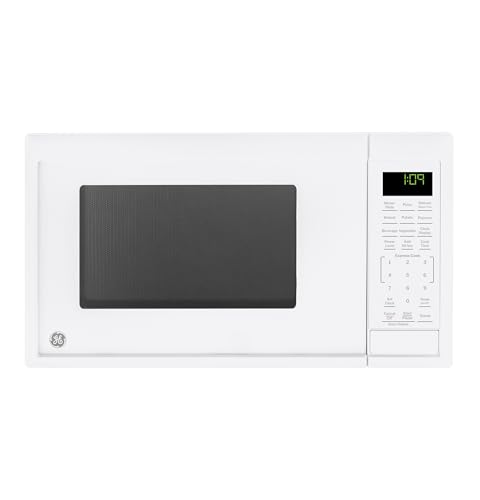
Selecting the right compact microwave involves balancing available counter depth against daily cooking needs. If you want a dependable mix of power and capacity, the GE Countertop Microwave Oven stands out as our top overall recommendation. Its 900-watt power output and 0.9-cubic-foot interior accommodate full-sized plates comfortably while maintaining a clean countertop footprint.
For shoppers seeking maximum space savings and budget efficiency, the COMFEE’ EM720CPL-PMB Countertop Microwave Oven is our favorite value pick. It delivers 700 watts of heating power, straightforward one-touch presets, and a convenient mute button that fits easily into small dorm rooms and kitchenettes.
If you prefer a unique vintage look alongside modern functionality, the Galanz GLCMKZ07RDR07 Retro Countertop Microwave provides stylish retro aesthetics combined with multi-stage defrost and auto-cook menus. For additional inspiration on outfitting compact living spaces, explore our complete product index.
Frequently Asked Questions
What wattage is sufficient for small countertop microwaves?
A power rating between 700 and 900 watts is sufficient for standard reheating, defrosting, and beverage warming tasks. While 700-watt models take slightly longer to heat dense meals, they draw less power and operate safely on standard residential circuits.
Can a standard dinner plate fit inside a 0.7-cubic-foot microwave?
Most standard nine-inch to ten-inch dinner plates fit inside a 0.7-cubic-foot microwave with a 10-inch turntable. Oversized plates exceeding 10.5 inches may catch on the interior cavity walls and should be measured prior to purchasing.
How much ventilation space is required around a compact microwave?
You should leave at least three inches of open space on the sides and top, along with one inch at the rear. Maintaining adequate clearance allows heat to escape and prevents the magnetron from overheating during extended cycles.
What makes the Best Small Capacity Countertop Microwaves of 2026 ideal for college dorms?
Compact microwaves are ideal for dorms because they draw modest electrical wattage and fit onto small desks or storage carts. Their lightweight frames and compact footprints make them easy to transport during seasonal student moves.
How does the sound mute function work on compact microwaves?
Pressing the mute button or holding a designated keypad number disables all button beeps and completion alerts. This allows silent operation during early mornings or late nights without waking family members or roommates.
Why do small microwaves take longer to heat frozen meals?
Most commercial packaged meals include cooking instructions calibrated for standard 1100-watt commercial microwaves. When cooking in a 700-watt or 900-watt compact unit, you generally need to extend the heating time by one to two minutes.
Can you safely place a small microwave on a rolling cart or shelf?
Small microwaves can be safely placed on sturdy kitchen utility carts and dedicated shelving units that support their weight. Make sure the supporting furniture meets furniture and comfort essentials guidelines for stability and ventilation clearance.
What is the difference between time defrost and weight defrost?
Weight defrost automatically calculates the power pulsing cycle based on the exact weight you enter on the keypad. Time defrost runs power pulses for a duration you set manually, which is ideal for delicate or non-uniform food items.
How do you clean the interior of a compact microwave properly?
Wipe the interior with a damp cloth and mild dish soap, or heat a bowl of water with lemon slices for two minutes to loosen dried splatters. The removable glass turntable and roller ring should be washed separately in warm soapy water.
Are small microwaves safe to run on shared electrical circuits?
Compact 700-watt microwaves pull around six to eight amps, making them relatively safe on shared circuits when high-draw appliances are not running simultaneously. Avoid running a microwave simultaneously with an electric kettle or toaster on the same outlet branch.