

Turning an empty garage bay into a dedicated indoor golf studio lets you practice your swing in any season without booking range time. Modern garage setups fit within standard residential ceiling clearances while providing accurate ball flight data and reliable ricochet protection.
Choosing among the Best Golf Simulators for Garages requires balancing room dimensions, launch monitor tracking technology, and enclosure safety padding. We analyzed 9 options for September 2026 to help you find the right system for your space and budget.
Many golfers make the mistake of measuring floor space while overlooking overhead clearance and rebound buffering. Setting up power infrastructure in your workspace requires planning, much like organizing gear through our standing desk cable tray troubleshooting guide to keep power cords safe from stray swings.


Ceiling Height and Room Clearance
Vertical clearance is the single most critical dimension when planning a garage simulator bay. Most adult golfers require at least nine feet of ceiling height to comfortably swing a driver without clipping drywall or overhead door tracks.
If your garage has eight-and-a-half foot ceilings, you can often still practice comfortably with irons and shorter woods. Taller golfers with upright swings will want ten feet or more to ensure full, unrestricted follow-through on every stroke.
Always take test swings with your longest club in the designated garage stall before ordering hardware. Remember to account for standing on a thick hitting mat, which typically raises your stance by one to two inches above the concrete floor.
Launch Monitor Technology: Optical vs. Doppler Radar
Launch monitors track your ball and club data using either high-speed optical cameras or Doppler radar sensors. Optical camera systems sit next to the hitting mat and excel in confined garage spaces because they require almost no ball flight distance to capture accurate spin.
Radar-based units sit several feet behind the player and require significant ball flight distance downrange to read trajectory reliably. In compact garages with less than sixteen feet of total depth, photometric monitors usually deliver superior data consistency.
When selecting a tracking unit, verify that it measures club path, face angle, and spin axis accurately. Reliable data feedback ensures you fix swing flaws during practice sessions rather than grooving bad habits indoors.
Impact Screen Durability and Noise Dampening
Impact screens absorb high-velocity golf ball strikes while doubling as high-definition projection surfaces. Commercial grade multi-layer polyester weaves offer superior tear resistance and lower decibel levels compared to basic single-layer mesh sheets.
A dense triple-layer screen significantly dampens the loud pop created when a ball strikes at over one hundred miles per hour. This acoustic reduction prevents noise from echoing through adjacent living spaces during early morning practice rounds.
Look for screens featuring tight webbing and reinforced perimeter grommets that prevent sagging over hundreds of hitting sessions. Sagging screens distort your projected course visuals and cause unpredictable low rebounds across the concrete floor.
Frame Padding and Rebound Safety
Steel frame tubing creates the rigid structure for simulator enclosures, but bare metal presents a severe ricochet risk. High-velocity golf balls striking exposed steel can bounce back toward the golfer at dangerous speeds.
Quality simulator enclosures feature high-density foam padding and wrapped safety cushions over every interior frame pole. This padding absorbs impact energy instantly and drops the ball safely onto the turf without violent kickback.
When evaluating safety packages, check if the bottom crossbar has angled foam to direct stray low shots down. Protecting your electronics and work areas is just as vital as managing equipment using a desk grommet outlet installation to keep cords protected from loose bouncing balls.
Side Shank Netting and Overhead Protection
Errant golf shots happen to players of every skill level, especially during aggressive swing changes. Side shank nets extend forward from the main enclosure to capture high pushes, slices, and severe mishits before they hit garage walls.
Overhead baffles or ceiling nets catch high-lofted wedge shots that pop straight up off the clubface. Without top protection, high wedge impacts can easily damage garage door openers, ceiling lighting, or exposed rafters.
Choose enclosure kits that provide triangular side nets with weighted sandbag anchors at the base. These weighted bottoms prevent the netting from billowing open when a hard shank strikes the side wall barrier.
Hitting Mat Cushioning and Turf Feel
Hitting off hard garage concrete requires a dedicated golf mat with substantial joint-protecting foam backing. Repetitive strikes on thin turf can cause wrist strain, elbow tendinitis, and lower back soreness over time.
Premium mats feature realistic synthetic fibers that simulate fairway turf and allow the clubhead to glide through without catching abruptly. Some packages also incorporate dedicated putting turf sections for practicing flat rolls and short chips.
Ensure the hitting mat allows the insertion of real wooden or plastic tees rather than forcing you to hit exclusively from rubber tees. A level stance area large enough for both feet ensures your weight transfer mirrors authentic outdoor conditions.
Projector Brightness and Blackout Enclosures
Garages often have ambient light leaks from overhead windows, side doors, and light fixtures. A projector with at least three thousand lumens of brightness delivers vivid colors and crisp course details despite ambient lighting.
Blackout side fabric and top canopies block peripheral light from washing out the projected image. Heavy dyed fabric panels increase perceived contrast ratios so you can clearly see fairway undulations and water hazards.
Pair your projector with short-throw optics so you can mount the unit forward without casting a player shadow onto the screen. Maintain clean power delivery to overhead projectors using proper routing, similar to advice found in our butcher block desk setup guide for clean equipment integration.
Software Compatibility and Course Libraries
The virtual software platform drives your practice experience, offering realistic physics engines, skill challenges, and championship courses. Top launch monitors integrate with major simulation titles like E6 Connect, GSPro, and proprietary apps.
Some software platforms require recurring annual subscriptions, while others offer lifetime licenses with basic driving ranges included. Compare the available game modes to see if the platform supports target games, bag mapping, or multiplayer online tournaments.
Check the computing hardware requirements before committing to a specific software ecosystem. While some mobile-friendly monitors run on tablets or smartphones, photorealistic 4K simulation software demands a dedicated computer graphics card.
Assembly Speed and Garage Modularity
Setting up an enclosure should not require specialized tools, metal cutting, or permanent structural alterations to your home. Quick-connect push-button frames and elastic bungee ball attachments allow single-person assembly in under an hour.
If you need to park vehicles in the garage when the simulator is idle, modularity becomes crucial. Look for freestanding cages that can be pushed back or disassembled quickly without leaving permanent floor anchors.
Inspect the corner joint fittings to confirm they use heavy-gauge steel rather than brittle plastic connectors. Durable steel corners maintain square enclosure geometry through hundreds of high-speed ball strikes.
Garage Simulator Specification Comparison
To help you evaluate space requirements and package components across different styles, we have summarized the primary enclosure configurations below. Use this comparison to match your garage ceiling height and available bay depth to the appropriate setup.
| Setup Type | Minimum Ceiling | Minimum Depth | Tracking Type | Best Suited For |
|---|---|---|---|---|
| Compact Enclosure Cage | 8 ft 6 in | 14 ft | Photometric Camera | Single-car garage bays with limited ceiling clearance |
| Full Studio Package | 9 ft 0 in | 16 ft | Dual Radar / Optical | Dedicated garage simulators with projector integration |
| Modular Practice Net | 8 ft 0 in | 12 ft | Radar Launch Monitor | Multi-use garages requiring quick takedown and storage |
| Wide Blackout Bay | 10 ft 0 in | 18 ft | Overhead / Photometric | Spacious two-car garages accommodating left and right golfers |
Why You Should Trust Us
Our editorial team analyzes golf technology, enclosure materials, and spatial dynamics to provide objective buying advice for home players. We cross-examine manufacturer specifications, structural load ratings, and impact fabric weave densities across top industry brands.
We evaluate real-world dimensional footprints, bounce-back safety metrics, and software ecosystem compatibility. By reviewing structural tolerances and verified user experiences, we help you avoid costly mistakes and incompatible equipment combinations.
Our guides remain continuously updated with dynamic product data, tracking hardware changes and software updates across 2026. We maintain editorial independence to ensure every recommendation focuses purely on build quality, player safety, and training performance.
Final Thoughts
Building a garage golf bay requires picking the right combination of enclosure durability, launch monitor precision, and room safety. Matching your ceiling clearance and available depth to the equipment guarantees a smooth setup without unexpected spatial bottlenecks.
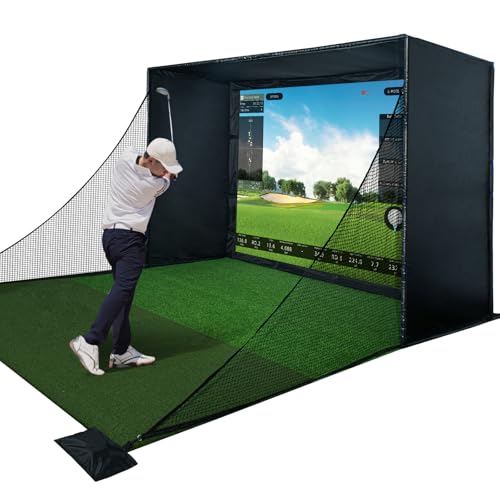
For golfers seeking an uncompromising turnkey studio, the SkyTrak ST MAX Golf Simulator Ultimate Studio delivers exceptional photometric accuracy, a bright laser projector, and commercial grade turf. If you already own a launch monitor and need heavy-duty ricochet protection, the GoSports Golf Simulator Enclosure with Impact provides dependable blackout fabric and side shank netting.
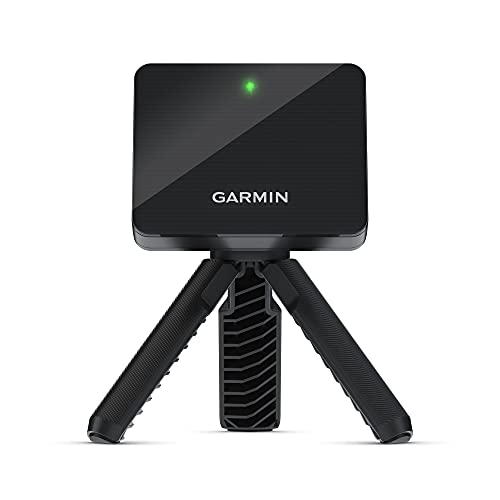
Players building on a tighter budget will appreciate the versatility of the 2 in 1 Golf Simulator Net System, which includes dual practice surfaces for chipping and full projection play. Meanwhile, mobile players who travel between the garage and the driving range can pair any cage with the Garmin Approach R10, Portable Golf Launch Monitor for portable metric tracking.
As you finalize your garage training bay, keep your seating and accessories organized using advice from our stackable chair care guide to maintain comfortable seating during long practice sessions.
Frequently Asked Questions
How much ceiling height is required for Best Golf Simulators for Garages in 2026?
Most garage setups require a minimum ceiling height of nine feet to comfortably swing full drivers. Golfers using flatter swing planes or practicing exclusively with irons can sometimes manage in spaces with eight-and-a-half foot ceilings.
Can I leave a golf simulator setup permanently in an unheated garage?
Enclosure frames, netting, and commercial impact screens can easily handle cold and humid garage environments year-round. However, sensitive electronics like launch monitors and projectors should be stored indoors at room temperature when not in use.
What is the difference between radar and camera launch monitors in small garages?
Camera monitors sit beside the ball and measure launch metrics instantly at impact, requiring very little room depth. Radar units sit behind the player and need at least eight feet of open ball flight to calculate spin and path accurately.
How far should the impact screen sit from the garage back wall?
You should position the impact screen at least twelve to sixteen inches away from the rear wall to allow the fabric to deform safely. Placing a screen too close to concrete can cause ball contact with the hard wall and create harsh rebounds.
Will golf balls damage the garage concrete floor over time?
Repeated high-speed ball impacts on bare concrete can scuff balls and leave white powder marks on the floor surface. Placing EVA foam interlocking tiles or putting turf beneath the landing zone absorbs impact and extends ball life.
What projector throw ratio works best for a garage golf simulator?
Short-throw projectors with a throw ratio between 0.5:1 and 0.8:1 are ideal for garage bays. They allow you to place the projector close to the screen so you can swing without casting your own shadow over the projected image.
Can left-handed and right-handed golfers share the same garage simulator bay?
Accommodating both left and right-handed players requires a wider enclosure, typically twelve to fourteen feet wide, and a center-aligned hitting mat. Camera units sitting beside the ball must be relocated when switching between left and right stances.
How do I prevent golf ball rebound ricochets inside a garage cage?
Rebound control relies on proper screen tension, thick frame foam padding, and avoiding over-tightening the corner bungees. Allowing the screen to hang with slight slack absorbs impact energy and causes the ball to drop gently to the floor.
Is a dedicated gaming PC required to run golf simulator software?
While advanced 4K simulator titles require a dedicated graphics card and computer, many launch monitors operate directly with iPad or Android apps. Keeping your gear safe and having emergency supplies ready is covered in our first aid kit maintenance guide for home workshop spaces.
What are the Best Golf Simulators for Garages for tight single-car spaces in 2026?
For single-car stalls measuring ten feet wide, compact enclosure kits paired with photometric camera monitors provide the most space-efficient setup. These configurations maximize hitting width while leaving enough side clearance for garage storage shelves.


