Hot flashes and nocturnal temperature surges create disruptive sleep cycles that leave you feeling exhausted the next morning. Navigating hormonal shifts requires targeted bedding solutions that actively disperse excess thermal energy before it traps moisture against your skin. You can discover specialized wellness tips in our health and family resources to pair with your sleep environment upgrades.
Standard heavy duvets and synthetic fleece blankets trap radiant heat, which quickly amplifies the intensity of nighttime hot flashes. Switching to modern phase-change textiles and high-conductivity fabrics offers continuous cooling without requiring you to lower your thermostat to extreme temperatures. Our curated breakdown of 3 options for September 2026 highlights modern textile technologies from top brands like Elegear.
Many shoppers mistakenly purchase standard lightweight throws that lack genuine thermal conductivity or active moisture management properties. Understanding the science behind cool-to-touch fabrics helps you identify bedding that provides sustained relief throughout the entire sleep cycle. This guide will walk you through essential specifications so you can select the right bedding for your personal comfort needs.


Selecting bedding for severe nocturnal temperature spikes requires looking beyond subjective softness and marketing slogans. You need objective metrics and engineering features that directly combat overheating and sweat buildup. Use the following key criteria to evaluate which models will give you the most consistent night of rest.
1. Q-Max Rating and Thermal Conductivity
The Q-Max value measures the instantaneous cooling sensation when your warm skin touches the fabric surface. Standard cotton fabrics typically rate around 0.15, whereas advanced cooling textiles achieve scores exceeding 0.40 or 0.50. Higher numbers represent faster heat dissipation away from your body at the very onset of a hot flash.
When reviewing product specifications, always look for lab-verified Q-Max ratings to ensure the fabric delivers real thermal conductivity. Fabrics with a rating above 0.45 transfer body heat rapidly, providing instant relief during sudden temperature surges. You can learn more about ambient climate management in our heating and cooling guide.
As a practical rule of thumb, prioritize bedding with a Q-Max rating of at least 0.40 for moderate to severe hot flashes. Keep in mind that initial coolness will equalize over time, requiring breathable structures that continuously release trapped heat into the surrounding air.
2. Moisture-Wicking and One-Way Flow Architecture
Night sweats often accompany hot flashes, creating a damp environment that disrupts sleep and causes post-flash chills. Traditional materials absorb moisture and hold it against your skin, leading to a clammy and uncomfortable sensation. One-way moisture flow technology pulls liquid sweat away from the body to the outer surface where it evaporates rapidly.
Look for layered knit patterns or specialized channel weaves that promote unidirectional liquid movement away from your torso. This construction keeps the inner sleep surface completely dry, preventing sticky fabric cling during intense sweat episodes. A dry microclimate also prevents the sudden shivering that often follows severe nighttime hot flashes.
When comparing options, verify whether the moisture-wicking property is inherent to the fiber structure or applied as a temporary topical wash. Inherent fiber structures maintain their rapid evaporation performance across dozens of laundry cycles without degrading.
3. Dual-Sided Reversible Construction
Menopausal temperature fluctuations are rarely static, swinging unpredictably between intense heat spikes and shivering chills. A dual-sided blanket solves this challenge by offering an active cooling textile on one side and a gentle neutral fabric on the reverse. This versatility allows you to adapt instantly by flipping the blanket without needing multiple bedding layers.
The neutral side typically incorporates breathable Egyptian cotton, bamboo viscose, or ultra-fine microfibers. These natural or semi-synthetic fibers provide comforting warmth during milder room temperatures or cool recovery phases after a flash passes. Having two functional sides makes the bedding practical throughout all four seasons of the year.
Check that the perimeter stitching holds both fabric layers securely together to prevent twisting or bunching during nighttime movement. High-density edge binding ensures the blanket maintains structural integrity even after frequent flipping and laundering.
4. Antimicrobial and Silver-Ion Integration
Repeated night sweats introduce moisture, skin oils, and bacteria into the blanket matrix on a nightly basis. Without antimicrobial protection, damp bedding quickly develops persistent odors and requires aggressive, frequent washing that wears down the fibers. Silver-ion infusions built directly into the yarn naturally neutralize odor-causing bacteria before colonies can form.
Silver-infused textiles maintain a fresh sleeping surface between wash cycles and provide a more hygienic sleep space. Unlike chemical surface sprays, mineral infusions bonded into the filament structure do not wash out easily during laundry routines. This creates a safer, cleaner environment for sensitive sleepers dealing with compromised skin barriers.
When selecting a silver-treated option, ensure the treatment is integrated at the fiber extrusion stage rather than applied as a topical finish. Extruded mineral particles remain effective for the entire lifespan of the product without irritating delicate facial or neck skin.
5. Fabric Weight and Air Permeability
A blanket that is too heavy restricts air circulation and traps warm air in the microclimate under the covers. Conversely, an excessively flimsy throw might lack the drape needed to provide comforting tactile pressure while resting. Balancing lightweight construction with high air permeability ensures steady ventilation while maintaining comfortable body contact.
Evaluate the fabric weave density to ensure that warm, humid air can pass easily through the textile barrier. Open-structure single-layer weaves or perforated knit patterns facilitate rapid passive airflow across your entire body. For additional bedroom styling and comfort ideas, explore our furniture and comfort suggestions.
Aim for a total blanket weight that feels reassuring without creating a restrictive thermal seal around your legs and torso. A lightweight design also makes it convenient to reposition the cover half-asleep without fully waking yourself up.
6. Safety Certifications and Skin Friendliness
Hormonal shifts during menopause often increase skin sensitivity, making coarse weaves and synthetic chemical residues deeply irritating. Premium bedding utilizes hypoallergenic materials that glide smoothly across the skin without causing friction, static cling, or prickly heat sensations. Looking for verified safety certifications protects you against harsh manufacturing chemicals.
The OEKO-TEX Standard 100 certification guarantees that the textile has been tested for hundreds of harmful substances and toxic dyes. This certification is crucial for items placed in direct contact with your face, neck, and arms every single night. Non-toxic production also ensures that heat and sweat do not leach irritating compounds onto your skin.
Always inspect product descriptions for OEKO-TEX certification labels before finalizing your purchase decision. Investing in certified skin-friendly fabrics ensures that your cooling bedding supports restorative health rather than adding dermatological irritation.
7. Sizing, Drape, and Thermal Distribution
Choosing the correct blanket dimensions depends heavily on whether you share your bed with a partner who does not experience hot flashes. A twin or throw size allows you to regulate your personal sleeping temperature independently without chilling your partner. A queen or king size provides full mattress coverage if both sleepers prefer a cooler sleeping environment.
The drape of the blanket determines how closely the cooling fibers maintain contact with your skin during sleep movements. Fluid, silk-like textiles conform naturally to body contours, ensuring maximum surface area contact for continuous heat absorption. Rigid or stiff fabrics create air pockets that can insulate warm air rather than dissipating it.
If you sleep with a partner who prefers heavy blankets, consider using a separate twin-sized cooling layer on your side of the bed. This dual-zone sleeping arrangement prevents nocturnal thermostat disputes and gives you unrestricted temperature control.
8. Maintenance, Washing Resilience, and Fiber Longevity
Frequent laundering is unavoidable when dealing with chronic night sweats, making durable construction essential. Delicate cooling fibers can snag, pill, or lose their conductive shape if they cannot withstand regular machine wash cycles. Reinforced edge seams and snag-resistant knit structures ensure the blanket endures weekly laundry routines.
Most advanced cooling fabrics require cold water washing on a gentle cycle to protect the structural integrity of the polymers. High heat from tumble dryers can melt or deform conductive synthetic filaments, permanently diminishing their cooling capacity. Air drying in a shaded area or tumble drying on an unheated air-only cycle preserves the fabric properties.
Always review the manufacturer care instructions prior to cleaning your cooling bedding. Using a mesh laundry bag during the wash cycle prevents zipper snags and significantly extends the usable lifespan of the textile.
| Feature Spec | Standard Cotton | Arc-Chill 3.0 Fabric | Silver-Infused Tech |
|---|---|---|---|
| Q-Max Rating | 0.12 to 0.18 | 0.45 to 0.52 | 0.48 to 0.54 |
| Moisture Handling | Absorbs & Holds | Rapid Evaporation | One-Way Transfer |
| Odor Resistance | Low | Moderate | Very High |
| Skin Contact Feel | Soft & Warm | Crisp & Silky | Ultra-Smooth |
Why You Should Trust Us
Our evaluation process focuses on transparent, data-driven analysis of modern sleep textiles and thermal regulation technologies. We cross-examine manufacturer material certifications, lab-tested Q-Max ratings, and real-world durability standards to identify superior bedding options. For broader research and household buying insights, take a look at our complete guides section.
We analyze customer feedback across thousands of verified purchase records to uncover how materials perform over months of heavy laundering. By assessing fabric wear, seam strength, and long-term cooling retention, we filter out temporary gimmick fabrics from genuine cooling solutions. Our editorial team remains entirely objective and independent throughout every product comparison.
We continuously monitor updates in material science and textile engineering to ensure our recommendations reflect current market innovations. Every product highlighted in our list must meet rigorous safety standards and demonstrate proven efficacy against nocturnal temperature surges.
Final Thoughts
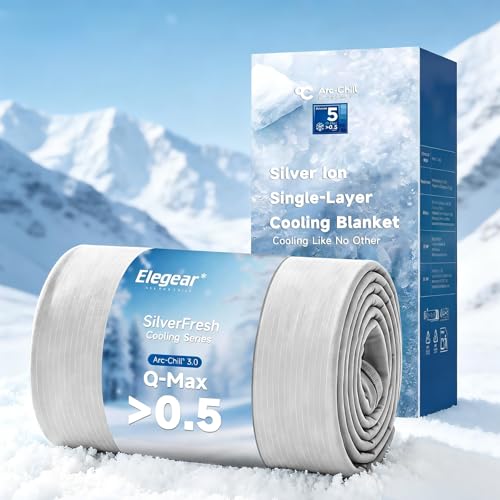
Finding relief from persistent night sweats starts with replacing heat-trapping bedding with scientifically engineered cooling fabrics. For the best overall balance of rapid heat dissipation and freshness, we recommend the Elegear Silver-Infused Cooling Blanket for Hot. Its built-in silver ions actively prevent sweat-induced odors while the high Q-Max fabric provides instantaneous relief during severe hot flashes.
If you need maximum moisture management over a larger surface area, consider the Elegear Cooling Blanket for Hot Sleepers. Its one-way moisture flow construction pulls heavy perspiration away from your body, preventing sticky discomfort and subsequent chills. This model is especially well-suited for warm climates and sleepers who experience frequent nocturnal sweating.
Budget-conscious shoppers or those looking for personal versatility will appreciate the Elegear Arc-Chill 3.0 Cooling Blanket for Hot. With its reversible dual-sided build combining cooling fibers and natural Egyptian cotton, it seamlessly adapts to every stage of your sleep cycle. You can browse our general categories for additional home comfort upgrades.
Frequently Asked Questions
How do Best Blankets for Menopause actually cool the body?
These blankets utilize advanced fibers with high thermal conductivity that immediately pull radiant heat away from your skin upon contact. The specialized weave allows ambient airflow to disperse that absorbed heat into the bedroom air rather than trapping it around you.
What does a Q-Max rating mean when shopping in 2026?
A Q-Max rating measures the peak thermal transfer that occurs the moment your warm skin makes contact with the fabric surface. A higher number above 0.40 indicates that the blanket provides an immediate, noticeable sensation of crisp coolness.
Can I use a cooling blanket with a top sheet?
For optimal results, cooling blankets should be placed directly against your skin without an intermediate flat sheet. Placing a standard cotton sheet between your body and the cooling textile blocks the conductive fibers from pulling away your excess heat.
How do silver ions improve cooling blankets for night sweats?
Silver ions integrated into the textile fibers naturally inhibit the growth of bacteria that feed on nocturnal perspiration and skin oils. This antimicrobial action prevents persistent sour odors from forming, keeping your bedding cleaner and fresher between regular washings.
Will a cooling blanket stay cold all night long?
Cooling fabrics absorb heat rapidly until they equalize with ambient room temperature, but shifting slightly against the fabric reactivates the crisp cool sensation. High-breathability weaves ensure that continuous air circulation rapidly resets the blanket surface temperature throughout the night.
What is the best way to wash and dry cooling bedding?
Machine wash your cooling blanket in cold water on a gentle cycle, preferably placed inside a protective mesh laundry bag to prevent snags. Always air dry the blanket in a well-ventilated shade area because high dryer heat can damage conductive synthetic polymers.
Are Best Blankets for Menopause safe for sensitive skin?
Yes, premium models carry OEKO-TEX Standard 100 certifications, verifying they are completely free from toxic dyes and harmful manufacturing chemicals. The smooth, silk-like texture also minimizes friction and mechanical irritation on delicate skin during sleep.
How does one-way moisture flow fabric prevent post-flash chills?
One-way moisture fabrics draw liquid sweat away from the inner surface touching your skin and push it outward for rapid evaporation. This prevents wet fabric from clinging to your torso, which is the primary cause of shivering chills once a hot flash subsides.
Should I choose a twin size or queen size cooling blanket?
If your sleep partner prefers warm covers, selecting an individual twin size allows you to stay cool without affecting their sleep climate. Choose a queen or king size if both sleepers run hot or if you sleep alone and want full bed coverage.
Can I use these cooling blankets during winter months?
Reversible dual-sided models feature a neutral cotton or microfiber side that provides comfortable insulation when bedroom temperatures drop. You can flip between the cooling side and the warm side according to your immediate thermal comfort needs.