

Small food-scrap bins work best with liners that fit securely, stay intact through daily use, and suit the way your community processes organic waste. Best Eco Friendly Compostable Bags can reduce cleanup, but the right choice depends on certification, capacity, material strength, storage, and disposal rules.
We compared 7 options from UNNI, superbio, GreFusion, and more, focusing on specifications that affect everyday performance rather than vague environmental claims. This guide also explains common mistakes, including confusing biodegradable language with certified compostability or buying a bag that is too small for your container.
If you are organizing a more sustainable workspace alongside your kitchen, our guide to office snack organizers for 2026 offers another practical way to reduce disposable clutter.


How to Choose Best Eco Friendly Compostable Bags
1. Composting Certification and Local Acceptance
Certification is the clearest way to separate a compostable liner from a conventional bag described only as green or biodegradable. BPI and ASTM D6400 generally indicate commercial composting suitability, while OK compost HOME addresses backyard conditions when the specific certification applies.
Do not assume every certified bag belongs in your municipal collection. Commercial facilities often use controlled heat, moisture, and microbial conditions, so check your local program before placing a certified liner inside the organics cart.
Among these products, UNNI and ANECO list home-composting credentials, while SUPERBIO, TERRACOR, and GreFusion emphasize commercial or combined certification standards. Treat the certification printed on the package as more important than a broad marketing phrase.
2. Bin Capacity and Physical Dimensions
Capacity determines whether a liner stays open around the rim and whether its bottom reaches the container correctly. A bag marked 1.2, 1.6, 2.6, or 3 gallons is not automatically interchangeable because width, height, gussets, and sealing shape vary between brands.
Measure your bin at its widest point, then compare the listed bag width and length. Allow enough extra material to fold over the rim without stretching the seams, especially when the container has a thick lip or an unusually deep interior.
GreFusion targets smaller countertop containers, SUPERBIO offers a compact 1.6-gallon option, and UNNI, ANECO, and SUPERBIO also cover common 2.6-gallon bins. TERRACOR provides a slightly larger three-gallon format for households that collect scraps less frequently.
3. Leak Resistance and Material Strength
Food scraps release liquid as they warm, so leak resistance often matters more than maximum capacity. Coffee grounds, melon pieces, cooked vegetables, and wet leftovers can create concentrated pressure at the bottom of a liner.
Compare thickness when it is disclosed, but do not treat mil measurement as the entire durability story. A reinforced bottom, star seal, strong handles, and appropriate loading technique can matter just as much as a slightly thicker film.
SUPERBIO bags use handle ties and reinforced star-sealed bottoms, while UNNI lists a 0.71 mil construction for everyday scraps. ANECO describes an extra-thick design intended for wet waste, but any compostable liner should avoid sharp bones, hot liquids, and overfilling.
4. Handles, Tie Closures, and Removal
Handles make removal cleaner because you can close the opening before carrying scraps to a larger collection container. They are particularly useful when the small bin sits under a sink or when organic waste must travel outside.
Handle bags may use slightly more material and sometimes provide less interior volume than a simple open-top liner. Decide whether convenient tying is worth that trade-off based on how often you empty the bin and how far you carry it.
Both SUPERBIO formats identify handle ties, which can be useful for routine kitchen collection. If your bin has a tight lid, confirm that the extra material will not prevent the lid from closing securely.
5. Bag Count and Replacement Frequency
Pack count affects convenience because compostable liners are normally emptied more frequently than a dry household trash bag. Moist organic waste should not sit indefinitely, since odor, liquid, and weakening material can become larger problems over time.
Estimate your use by dividing the number of bags in a roll by the number of emptying days each week. A household emptying its bin daily will value a larger count, while occasional cooks may prefer a smaller roll that gets used before storage-related degradation.
UNNI, TERRACOR, and several SUPERBIO or GreFusion formats provide substantial roll counts, while the smaller SUPERBIO format is designed for compact bins. Always verify the current package quantity because packaging and promotional contents can change.
6. Storage Conditions and Shelf Life
Plant-based compostable materials are more sensitive to heat, moisture, and sunlight than many conventional plastics. Poor storage can reduce flexibility and strength before the bag ever reaches your bin.
Keep unused rolls sealed in a cool, dry, dark cabinet rather than beside an oven, dishwasher, radiator, or sunny window. Buy a quantity you can realistically use within the stated shelf-life guidance instead of stockpiling several years of supply.
The listed products commonly recommend use within roughly nine months to one year for best performance. That guidance is practical, not merely administrative, because the material may gradually lose reliability after prolonged exposure.
7. Plant-Based Material and Environmental Claims
Plant-based inputs can reduce dependence on fossil-derived plastic, but the environmental outcome still depends on disposal. A certified compostable bag sent to landfill may not receive the oxygen, heat, and moisture required for meaningful breakdown.
Look for specific material descriptions such as PLA, PBAT, corn starch, or plant-based biopolymers, then connect those claims with recognized certification. Avoid judging performance solely by color, package artwork, or the word natural.
TERRACOR identifies a PLA and PBAT blend, while ANECO and GreFusion describe plant-based or corn-starch materials. These details are useful, but local collection instructions remain the final authority for responsible disposal.
8. Intended Use and Waste Type
Most liners here are designed for food scraps, coffee grounds, peels, and plant material rather than general household garbage. Using them for glass, metal, sharp packaging, or heavy construction debris increases puncture risk and can contaminate compost.
Some products can also serve bathrooms, offices, gardening areas, camping setups, or vermicomposting bins. Consider the waste density and moisture level before choosing a size, because a bag suitable for dry paper may fail with saturated scraps.
For shopping or takeout applications, the OrangeBio format is much larger and lists a heavy-duty 20-pound carrying capacity. It should not be treated as a direct substitute for a small countertop food-scrap liner.
9. Odor Management and Emptying Routine
A compostable liner does not eliminate odor by itself, because odor comes from decomposition, trapped moisture, and the length of time scraps remain inside. The best solution combines a properly fitted bag with frequent emptying and airflow around the bin.
Drain excess liquid when possible, freeze especially wet scraps, and avoid leaving acidic or alkaline waste inside for extended periods. SUPERBIO guidance recommends disposing of filled bags within a few days, which is a sensible routine for most kitchens.
GreFusion specifically describes odor-control benefits, but storage and ventilation still matter. If odor is your main concern, choose a smaller bag that encourages more frequent removal rather than a larger liner that remains full.
10. Quick Specification Comparison
The table below organizes the most decision-relevant differences without treating one specification as universally superior. Match capacity, certification, closure style, and intended use to your own collection routine.
| Product | Listed capacity | Notable fit or feature | Certification emphasis |
|---|---|---|---|
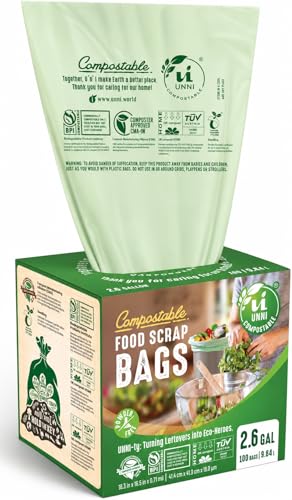
| UNNI 2.6 Gallon Compostable Bags, 100 Count | 2.6 gallons | 0.71 mil, compact kitchen bins | BPI, CMA, OK compost HOME |
| TERRACOR 3 Gallon Compostable Food Scrap Bags | 3 gallons | 100 bags, larger countertop format | BPI and ASTM D6400 |
| SUPERBIO 2.6 Gallon Compostable Bags with Handles | 2.6 gallons | Handle tie, reinforced bottom | BPI and OK compost INDUSTRIAL |
| (Include 10 Bonus Bags) ANECO 100% Compostable | 2.6 gallons | Home and industrial composting claims | ASTM D6400, BPI, OK Compost Home |
| (Large) OrangeBio Certified Home Compostable | Shopping bag format | 20-pound carrying capacity | BPI, DIN CERTCO, OK Compost |
| SUPERBIO 1.6 Gallon Compostable Food Scrap Bags | 1.6 gallons | Handle tie, compact bin use | BPI and OK compost HOME listed |
| GreFusion Compostable Bags 1.2 Gallon,125 Count | 1.2 gallons | Small cans and countertop bins | BPI, ASTM D6400, OK Compost |
Use this comparison as a screening tool, then confirm dimensions against your actual bin. For more workspace sustainability ideas, the guides category provides additional organization and equipment advice.
Why You Should Trust Us
We shortlisted these liners by comparing published dimensions, capacity, thickness where available, closure design, material descriptions, certifications, storage advice, and intended applications. We also separated small food-scrap products from the larger OrangeBio shopping-bag format so comparisons remain useful.
Our approach does not claim physical testing when the available product data does not support that statement. Instead, we evaluate verifiable specifications and identify trade-offs, such as home versus commercial composting, compact fit versus carrying capacity, and open liners versus handle closures.
Because availability, packaging, certifications, and specifications can change, readers should review the current product information and local composting rules before purchasing. The comparison is designed to remain useful by emphasizing durable buying principles rather than temporary promotional language.
Final Thoughts
Our best overall choice is UNNI 2.6 Gallon Compostable Bags, 100 Count because it combines a common countertop size, everyday thickness, plant-based construction, and multiple certification references. It is a balanced option for households wanting dependable daily food-scrap collection without an unusually large liner.
For value-focused shoppers, (Include 10 Bonus Bags) ANECO 100% Compostable stands out for its stated home-composting suitability, durable construction, and additional bag quantity. Choose it when you want flexibility between backyard composting and an accepted commercial program.
For smaller containers, GreFusion Compostable Bags 1.2 Gallon,125 Count is the specific-use pick because its dimensions target compact cans and countertop bins. Its smaller profile can reduce excess material and help prevent a liner from collapsing into a shallow container.
If tying the bag matters most, consider SUPERBIO 2.6 Gallon Compostable Bags with Handles for its handle closure and reinforced bottom. Readers comparing household setup ideas can also browse the Uncategorized collection for related product guides.
FAQs About Best Eco Friendly Compostable Bags
Are compostable bags the same as biodegradable bags?
No. Compostable bags are expected to break down under defined conditions without leaving problematic residues, while biodegradable can be a broad, poorly defined claim.
Can compostable bags go in every compost bin?
No, acceptance depends on the facility and its operating conditions. Check whether your service accepts certified liners, and follow its instructions even when the package lists multiple certifications.
What does BPI certification tell shoppers?
BPI certification indicates that a product meets recognized commercial compostability requirements associated with applicable standards. It does not automatically mean the bag will break down in a backyard pile or every local facility.
How long should food scraps remain inside a liner?
Empty the bag frequently, especially when it contains wet or acidic scraps. A daily or every-few-days routine usually helps limit odors, leaks, and material weakening.
Can I store compostable bags under the kitchen sink?
You can if the cabinet stays cool and dry, but avoid locations exposed to leaks, heat, or direct sunlight. Keep rolls in their packaging and use them within the stated shelf-life guidance.
Which size fits a typical countertop compost bin?
Many countertop bins use liners between about one and three gallons, but actual dimensions matter more than the printed capacity. Measure the rim and interior depth before selecting a roll.
Are compostable liners strong enough for wet scraps?
Certified liners can handle normal food scraps when used within their intended capacity, but wet waste increases stress on seams. Avoid sharp objects, hot liquids, and overfilling, and choose reinforced construction when available.
Should I tie a compostable bag before carrying it outside?
Tying the opening helps contain odors and loose scraps during transport. Handle-equipped designs make this easier, although an open-top liner can still work when emptied carefully.
What is the top-rated option among Best Eco Friendly Compostable Bags in 2026?
UNNI is a strong overall candidate because it combines a familiar 2.6-gallon format, useful thickness information, and several certification references. Your local composting rules and bin dimensions should still determine the final choice.
Can these bags be used for bathroom or office waste?
Several small formats can serve bathrooms and offices when the waste is light and free from sharp items. Confirm the product guidance, and do not place non-compostable waste in an organics collection stream.


