Outdoor living spaces demand flexible protection from blazing sunlight and sudden weather shifts during warm afternoons. Choosing among the Best Freestanding Patio Umbrellas allows homeowners to create cooling retreats over sectionals, chaise lounges, and dining areas. Modern models deliver versatile coverage across expansive yards without requiring a central table hole for mounting.
In September 2026, manufacturers have shifted toward sturdier cantilever designs and heavy-duty solution-dyed fabrics that resist sun bleaching. Many buyers make the costly mistake of underestimating base ballast requirements or selecting thin polyester fabrics that deteriorate after one summer. Our breakdown of 8 leading models highlights durable hardware from trusted brands like SUPERJARE, Hoteel, PHI VILLA and more.
Investing in the right outdoor setup transforms your backyard into a functional extended living room or open-air workspace. Protecting your outdoor furnishings requires thoughtful planning, much like learning how to clean and care for your stackable chair collection to prevent seasonal wear. This comprehensive guide details frame stability, fabric ratings, and rotation mechanics to help you make an informed investment.



Canopy Size and Coverage Footprint
Sizing your canopy correctly determines how effectively your seating or dining zone stays protected throughout the day. Standard round and square options typically span ten to thirteen feet, while elongated double-sided canopies reach up to fifteen feet in width. Measuring your deck perimeter ensures the extended ribs clear railings, exterior lighting, and overhead tree branches.
When calculating your shade footprint, allow an extra two feet of canopy overhang beyond the outer edge of your furniture grouping. A ten-foot square canopy provides one hundred square feet of dense shade, which easily shelters a four-person lounge arrangement. Larger fifteen-foot double-sided models shelter extensive banquet tables or two adjacent chaise lounges simultaneously.
Matching umbrella dimensions to your deck shape prevents awkward spatial cramps and blocked walking pathways. Rectangular yards and narrow balconies gain the most utility from slim double-sided models that follow property boundaries. Round canopies excel over circular conversation fire pits and central gathering points where symmetry matters.
Cantilever Offset vs. Central Pole Configuration
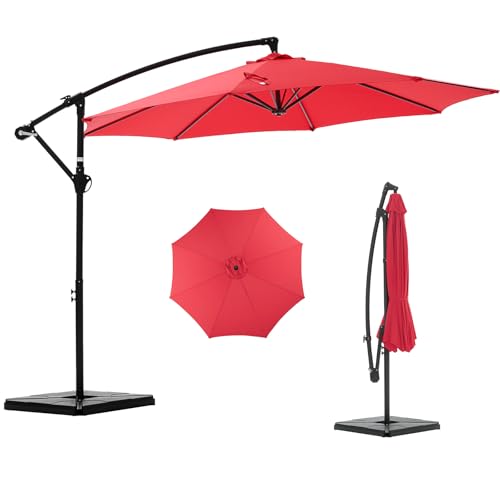
Understanding structural geometry helps you choose between offset cantilever arms and traditional center-post layouts. Center-pole options feature vertical poles that rise directly through an umbrella table or stand beside your chairs. Cantilever models suspend the canopy from an arched overhead arm positioned entirely outside the usable seating area.
Cantilever designs provide unobstructed ground space, making them ideal for covering low coffee tables, hot tubs, and sectional sofas. You can position modular furniture without navigating around an intrusive vertical support beam. However, the cantilever arm experiences significant leverage force, which demands heavier ground anchoring to avoid tipping over.
Center-pole umbrellas offer symmetrical balance and handle moderate wind gusts with less mechanical deflection than long cantilever arches. They work exceptionally well when paired with outdoor workstations, similar to how workers set up a butcher block desk top for sturdy baseline utility. Choose cantilever designs for maximum seating freedom and center poles for compact spots.
Fabric Weight, Density, and UV Protection
The quality of the canopy textile dictates both sun protection levels and how many seasons the material will endure. Budget canopies typically utilize standard 180 GSM polyester, which provides baseline water resistance but fades quickly under intense ultraviolet rays. Premium canopies feature 220 to 240 GSM yarn-dyed or solution-dyed polyester that locks color directly into the raw fibers.
Always verify the Ultraviolet Protection Factor rating before finalizing your outdoor purchase for the season. Look for fabrics labeled UPF 50+, which block more than 95 percent of harmful UVA and UVB radiation. Thicker textiles also offer polyurethane coatings that prevent sudden rain showers from dripping through the woven material onto your cushions.
Color selection also plays an influential role in fabric longevity and heat accumulation under the canopy. Darker hues like navy blue absorb solar heat yet provide deeper shade contrast, while lighter beige canopies reflect ambient light. Ensure the fabric meets American standard level 4 color fastness to guarantee rich tones across multiple summers.
Base Weight Requirements and Ballast Anchoring
A freestanding umbrella requires adequate ballast weight to counterbalance both overhead gravity and sudden wind drafts. Many manufacturers supply a metal cross base in the box, but you must supply heavy weighted plates or sandbags. Operating a cantilever umbrella without substantial weight will cause structural failure and severe property damage.
As a reliable rule of thumb, cantilever umbrellas between ten and thirteen feet require at least 80 to 120 pounds of ballast. Massive double-sided models frequently require dual sandbags totaling over 130 to 180 pounds of wet sand for proper stability. Water-filled plastic weights work in sheltered patios, but dense sand provides superior density during changing weather conditions.
Precise ballast measurement prevents tipping accidents when unexpected breezes sweep across open decks. Weighing your sandbags before seasonal placement provides reassurance, taking inspiration from precise calibration tools like best postal scales to verify exact load numbers. Always secure all base locking knobs tightly against the pole to minimize shifting play.
Frame Material and Rib Construction
The internal skeleton of your shade structure must resist high tension without bending or snapping under environmental loads. Powder-coated aluminum and heavy-duty alloy steel represent the two dominant frame materials found in premium patio umbrellas. Aluminum offers natural rust immunity and lightweight operation, while thickened steel delivers dense rigidity against turbulent gusts.
Examine the rib count and reinforcement points located inside the canopy ceiling before making your choice. Standard models employ eight sturdy ribs, whereas elongated double-sided frames utilize complex configurations with twelve or more supporting arms. High-stress joints should feature anti-oxidation coatings and heavy rivets to eliminate metal fatigue along primary pivot sections.
Look for powder-coated finishes that resist chipping, flaking, and oxidation caused by humidity and lawn irrigation spray. Smooth powder coatings prevent moisture from reaching bare metal surfaces, extending frame lifespan across several outdoor seasons. High-grade polymer brackets at joint intersections also absorb structural flex without developing permanent deformation under moderate breezes.
Rotation Mechanisms and Multi-Angle Tilt Systems
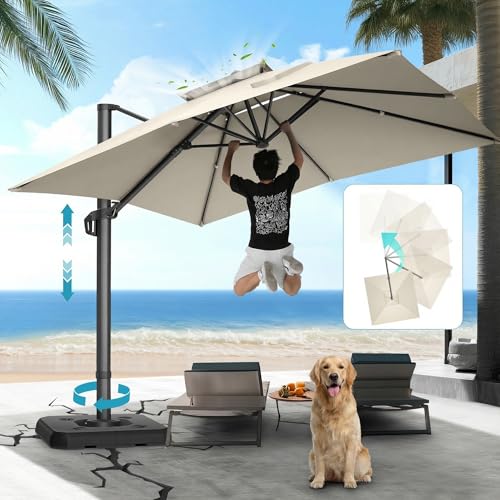
Solar movement requires continuous canopy adjustments if you want uninterrupted shade from morning through late evening. Fixed canopies force you to drag chairs across your patio as the sun descends toward the horizon. Modern cantilever models integrate 360-degree foot pedal rotation and multi-position vertical tilt locks along the central spine.
Vertical tilt mechanisms typically offer four to five pre-set locking notches or infinite slide tracks for customization. A pistol-grip handle allows users to glide the canopy up or down the support spine with minimal effort. This vertical articulation blocks low-angle morning sunlight and blazing western glare during evening outdoor dinners.
Foot-pedal swivel systems unlock the horizontal axis, allowing smooth 360-degree rotation without lifting the heavy weighted base. You can pivot shade from your swimming pool loungers over to an adjacent dining table in seconds. Ensure the rotation locking pin engages firmly into the base plate to prevent unwanted drifting during mild breezes.
Wind Resistance and Canopy Ventilation
Wind remains the greatest environmental hazard for any freestanding outdoor canopy regardless of total build quality. Solid canopies act like giant parachutes, capturing passing air currents and exerting immense upward force against the mounting hardware. Modern umbrellas combat this aerodynamic lift by incorporating single or double-tier canopy air vents at the peak.
A double-top ventilation design allows rising warm air and turbulent breezes to exhaust cleanly through the roof. This open pathway relieves upward pressure on the rib structure and dramatically improves airflow around seated guests below. Enhanced air circulation also prevents trapped pocket heat, creating a noticeably cooler microclimate on hot summer afternoons.
Even the sturdiest models possess mechanical limits that demand proactive care during severe weather events. Always crank down and securely tie your umbrella canopy when ambient wind speeds exceed twenty miles per hour. Installing integrated tie-down straps prevents fabric flapping and protects delicate rib connections from sudden microbursts.
Crank Lift Durability and Operating Mechanics
Opening and closing a heavy ten to fifteen-foot umbrella canopy requires a reliable internal mechanical system. Quality units incorporate smooth aluminum crank assemblies paired with high-tensile internal lift cables. Flimsy internal cords can fray inside hollow poles, causing frustrating mechanical failures that render the canopy inoperable.
Test the crank action for smooth resistance and listen for clean gear engagement without grinding sounds. A dependable crank should open an expansive double canopy within five to ten seconds without straining your wrist. Detachable crank handles offer an extra layer of child safety and prevent unauthorized adjustments in commercial settings.
Cable maintenance ensures your lift mechanism functions smoothly season after season without binding up. Periodically inspecting internal cord tension prevents slack lines from snagging on interior rib mounts during opening cycles. Smooth mechanical performance makes daily operation effortless for every family member regardless of physical strength.
Weather Resistance and Protective Care
Extended exposure to moisture, fallen foliage, and solar radiation eventually degrades outdoor hardware if neglected. Applying water-repellent fabric treatments and storing canopies during winter months preserves vibrant fabric colors and clean seams. Pairing your umbrella with a tailored waterproof storage sleeve prevents dust accumulation and moisture rot during wet spells.
Routine frame care involves wiping down metal poles with mild soapy water to remove corrosive environmental residues. Keeping safety gear and maintenance supplies accessible in your garage follows smart habits like how to maintain your office first aid kit for quick domestic repairs. Inspecting locking bolts and tightening loose thumb screws twice per season keeps structural tolerances within safe operating limits.
Storing canopies completely dry before winter confinement stops mildew spores from colonizing fabric fibers. Damp fabric packed into tight covers creates dark staining and weakens polyester tensile strength over time. Storing the detachable canopy indoors during freezing winter months ensures your umbrella opens in pristine condition next spring.
| Design Feature | Standard Cantilever | Double-Sided Market | Single Center-Pole |
|---|---|---|---|
| Coverage Area | 100 sq ft (Square / Round) | 130 to 160 sq ft (Rectangular) | 65 to 80 sq ft (Round) |
| Recommended Ballast | 80 to 120 lbs | 120 to 180 lbs | 40 to 60 lbs |
| Tilt and Rotation | 360-degree swivel, 5 tilt angles | Fixed or single-axis tilt | Push-button manual tilt |
| Best Application | Poolside lounges, sectional sofas | Long dining tables, large decks | Bistro tables, tight balconies |
| Wind Tolerance Limit | 15 to 20 mph | 15 to 20 mph | 20 to 25 mph |
Why You Should Trust Us
Our product research methodology centers on transparent, data-driven analysis across the outdoor living and home improvement sector. We systematically evaluate manufacturers based on material specifications, structural engineering tolerances, and real-world owner feedback. Every model shortlisted in our comprehensive comparison underwent rigorous scrutiny across fabric densities, rib thickness, base engineering, and hardware durability.
Rather than accepting generic marketing claims, we verify exact component details directly from technical documentation and factory schematics. We compare yarn-dyed fabric weights against raw polyester coatings, inspect weld joints, and evaluate counterweight ballast ratios for safe backyard use. This rigorous analytical approach isolates marketing hype from genuine structural stability so you invest with confidence.
Outdoor furniture trends and component designs evolve continuously, bringing improved weatherproofing and simplified ergonomics to market. Our editorial team revisits product performance metrics, warranty backing, and hardware updates to keep this guide fresh. We never accept free products or corporate sponsorships in exchange for favorable reviews, guaranteeing impartial buying advice.
Final Thoughts
Selecting among the Best Freestanding Patio Umbrellas comes down to matching your deck layout with appropriate shade mechanics. Whether you need massive coverage for an expansive barbecue area or flexible rotation over a pool deck, stability remains paramount. Factoring in canopy dimensions, ballast weight, and frame construction will ensure your outdoor retreat remains comfortable for years.
For shoppers seeking the best overall performance and adjustability, the HOTEEL 10x10ft Patio Umbrella Cantilever Umbrella stands out as our top pick. Its massive double-top canopy, 240 GSM yarn-dyed fabric, and five-angle tilt system provide unmatched coverage for lounge sets. The 360-degree rotation pedal allows seamless adjustments as the sun moves across your property throughout the day.
If you need reliable shade on a friendlier budget, consider the NEWBULIG 10FT Patio Umbrella with Base Included as our top value selection. It provides reliable 180g water-resistant fabric, durable iron ribs, and an included four-piece base setup right out of the box. While it offers fewer tilt angles than premium alternatives, it delivers excellent baseline shade for modest patios.
When extensive shade is the primary requirement for large banquets, the PHI VILLA 15ft Large Patio Umbrellas with Base delivers expansive horizontal coverage. Its double-sided rectangle architecture shields multi-seat dining arrangements that standard round models cannot accommodate. Pairing heavy shade structures with durable deck furniture keeps outdoor living comfortable, similar to maintaining high-traffic indoor equipment like best floor scrubbers in professional facilities.
FAQs
What are the Best Freestanding Patio Umbrellas for high wind areas in 2026?
Umbrellas featuring double-vented canopies and reinforced eight-rib steel frames handle ambient breezes much better than unvented models. However, even the Best Freestanding Patio Umbrellas must be closed when wind speeds exceed twenty miles per hour. Heavy counterweight bases exceeding one hundred pounds are mandatory to prevent tipping.
How much base weight do I need for a cantilever patio umbrella?
Most ten-foot cantilever models require at least 80 to 120 pounds of ballast weight to remain steady against unexpected gusts. Larger thirteen to fifteen-foot umbrellas often require 150 pounds or more of wet sand in dedicated base plates. Never attempt to operate an offset canopy using only an unweighted cross stand.
Is water or sand better for filling an umbrella base?
Sand provides significantly greater mass and structural stability than water because it is nearly 30 percent denser by volume. While water is easier to fill and drain at the end of the season, it can evaporate or crack plastic containers during freezing winter temperatures. Using moist play sand provides the heaviest, safest anchoring solution for freestanding canopies.
What is the difference between cantilever and market patio umbrellas?
Cantilever umbrellas suspend the shade canopy from an arched side pole, leaving the ground underneath completely open for furniture. Traditional market umbrellas feature a straight center pole that passes directly through a patio table into a weighted floor base. Cantilevers offer superior positioning versatility, while market models offer compact footprints and simpler operation.
Which canopy fabric offers the highest resistance to sun fading?
Solution-dyed and yarn-dyed polyester textiles provide the highest fade resistance because pigment permeates the entire synthetic fiber during production. Basic piece-dyed polyester only carries color on the outer surface, causing noticeable fading after a single summer of intense ultraviolet exposure. Look for fabrics rated at 220 to 240 GSM with UPF 50+ certification.
Can freestanding patio umbrellas be left outside during rain?
Most modern canopies feature water-repellent polyurethane coatings that shed light to moderate rain showers easily. However, heavy downpours can accumulate on top of fabric folds and exert excessive downward weight on delicate ribs. Closing the canopy during storms protects both the fabric seams and the mechanical lift joints.
How do I clean and maintain my patio umbrella canopy?
Clean your canopy fabric by brushing off loose dirt and scrubbing gently with a soft sponge, warm water, and mild dish soap. Avoid harsh chemical cleaners or pressure washers, which can strip away protective waterproof and UV-blocking coatings. Regular surface maintenance preserves outdoor fabric, just as routine maintenance protects commercial fixtures discussed in our guide to best ESD safe chairs.
What is the top rated option among Best Freestanding Patio Umbrellas in 2026?
The top-rated model in our 2026 comparison is the HOTEEL 10x10ft Patio Umbrella Cantilever Umbrella thanks to its robust build and multi-angle articulation. Its 240 GSM heavy-duty fabric and full 360-degree rotation provide complete sun tracking throughout the day. It balances professional-grade materials with smooth mechanical crank operation.
Why does my umbrella tilt handle feel stiff when adjusting angles?
A stiff tilt mechanism usually indicates friction along the aluminum slide track or debris caught inside the locking notches. Spraying the track with dry silicone lubricant restores smooth vertical gliding without attracting dust or outdoor grit. Never force a stuck locking lever, as excess pressure can bend internal steel guide pins.
Do double-sided patio umbrellas need special base stands?
Yes, double-sided rectangular umbrellas require specialized elongated or dual-compartment bases to balance their wider canopy wings. These models distribute wind drag across a broader profile, requiring balanced sandbags on both sides of the center pole. Always verify that your included or aftermarket base meets the minimum 88 to 130-pound weight specification.